

Today’s manufacturers operate in environments where production demands, maintenance needs, supply chain pressure, and workforce readiness must move in sync. The People / Process / Product (PPP) framework has guided manufacturing for decades because it creates clarity, helping teams understand how daily actions influence long-term results.
When manufacturers evaluate service offerings from automation partners, the challenge is understanding how those services connect to specific operational problems. The PPP framework bridges this gap by mapping services to operational needs, from preventive maintenance to workforce readiness.
A Proven Manufacturing Framework
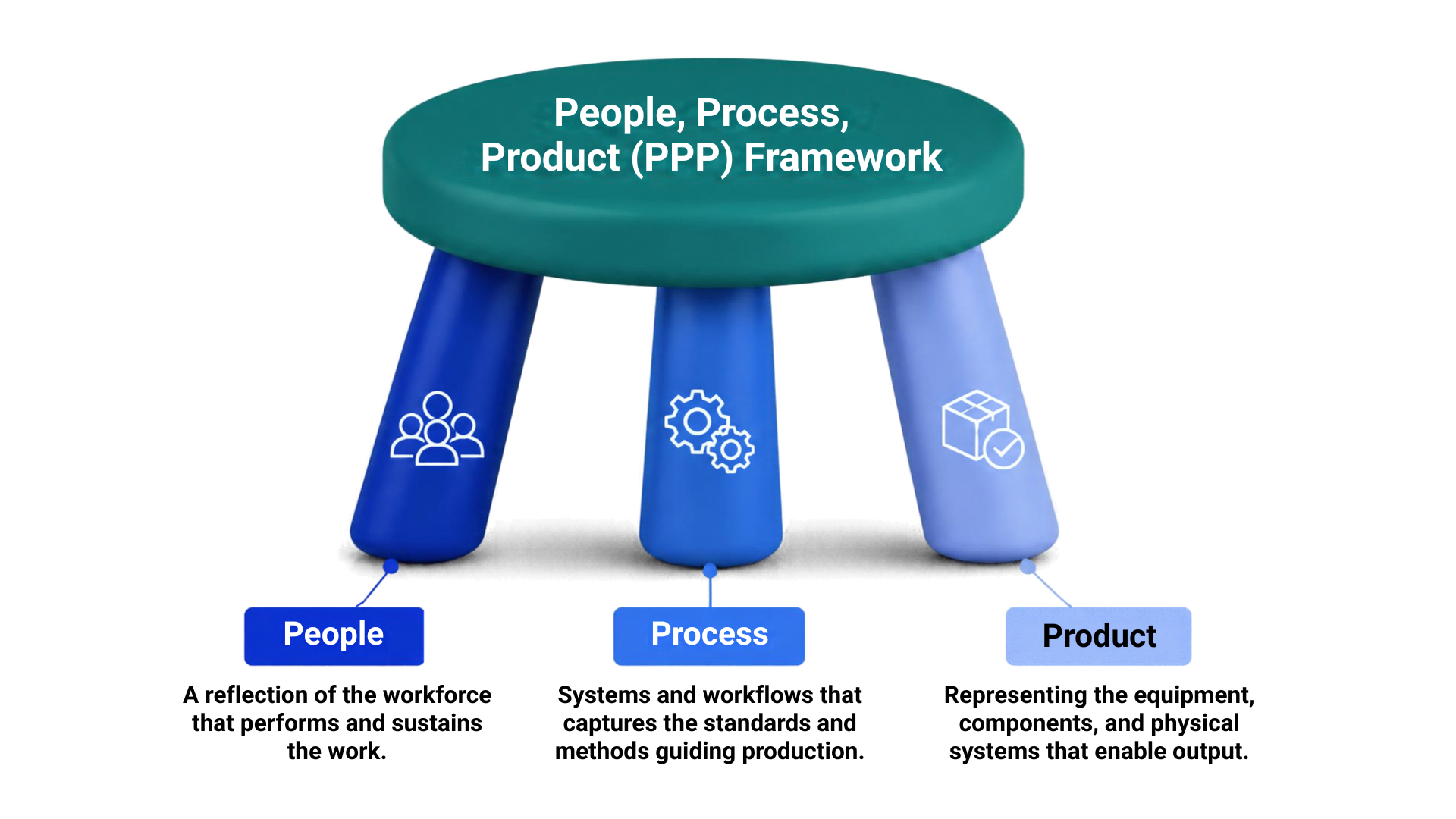
No single pillar can sustain long-term performance. Strong spare parts strategies cannot overcome weak processes, and optimized workflows fail without trained teams. Each pillar of the PPP framework represents a core responsibility:
- People reflect the workforce that performs and sustains the work.
- Process captures the standards, workflows, and methods guiding production.
- Product represents the equipment, components, and physical systems that enable output.
Together, these pillars help teams assign clear ownership, define priorities, and determine who must be involved in each decision.
Manufacturers often use scoring systems to rank risks, areas of improvement, or investment needs. Using PPP to categorize work gives teams a more integrated, consistent way to compare options and determine next steps.
The framework also reduces common misconceptions. Some leaders view services as isolated tasks rather than tools that support operational goals. PPP reveals how each service connects to manufacturing needs and highlights risks like unplanned downtime, unnecessary spending, or underused solutions.
Let’s examine them in reverse order.
Product: The Foundation
In PPP, Product represents what the manufacturer brings to market. It defines the purpose of the operation and shapes every decision, from infrastructure and equipment selection to production methods and skill development.
Services that Support the Product Pillar
An experienced automation partner will offer Product-focused services that keep equipment performing as designed. They reinforce asset reliability, strengthen spare parts strategies, and reduce risks tied to equipment obsolescence.
Some examples include:
- Maintenance Kits: Complete sets for efficient routine servicing.
- eCommerce Portal: 24/7 access to spare parts and consumables.
- Recommended Spare Parts List (RSPL): Critical spares aligned to asset criticality.
- Spares Inventory Management: Reviews, analysis, and action recommendations.
- Annual Obsolescence Checks: Proactive component lifecycle insights.
These offerings provide stability for the systems that deliver the finished product.
What Happens When Product Isn’t Supported
When this pillar is weak, strong teams and processes cannot prevent failures. Poor spare parts strategies or outdated components lead directly to unforeseen downtime and—ultimately—impact customer trust. A strong Product Pillar helps stabilize ongoing performance and direction.
Process: The Core
Process represents the proven sequence of activities that enable consistent execution. Strong processes organize priorities and streamline workflows. They guide task execution, decision-making, and coordination across operations.
How Services Support the Process Pillar
Services aligned with the Process Pillar provide structure, visibility, and tools to ensure work is completed efficiently. They reduce uncertainty and help teams plan a consistent rhythm for ongoing performance. Process-focused services include:
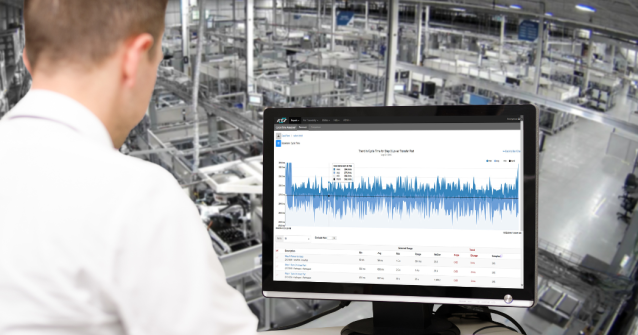
- Illuminate™ Manufacturing Intelligence: Digital visibility into system health and performance.
- Comprehensive Maintenance Plan: Risk-based preventive maintenance program.
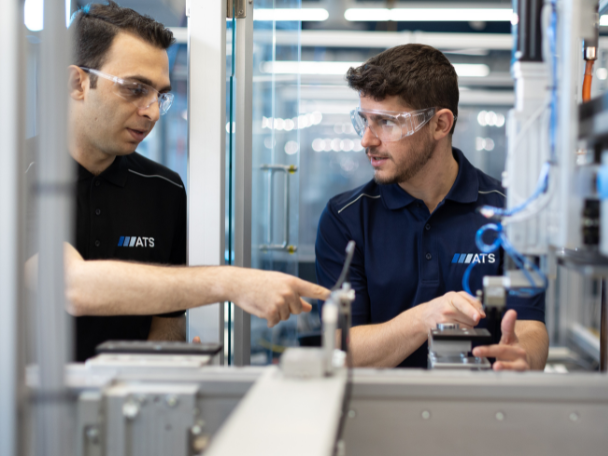
- Onsite Embedded Services: ATS personnel work as part of the customer team.
- Health Check: Proactive system assessments.
- Testing and Validation: Accurate, reliable test equipment.
These services reveal actions that allow manufacturers to strengthen daily workflows and create reliable mechanisms that optimize performance.
What Happens When Process Isn’t Prioritized
Weak processes cause misalignment and costly delays. Even strong teams and reliable equipment are at risk without a clear, practical method that guides day-to-day work. When processes are clear, manufacturers can move forward with clarity and purpose.
People: The Key Resource
People are the most valuable asset. They bring the entire PPP structure to life: executing processes, operating equipment, and making decisions that ultimately drive performance. Even highly automated operations depend on the confidence and capability of the workforce.
Services that Support the People Pillar
People-centered services strengthen technical skills, build confidence, and offer employees the support needed to make effective decisions. They expand a team’s capability and ensure workers are equipped to manage both routine tasks and unexpected challenges, such as:
- Tier 1 Hotline: Priority remote access to skilled automation support.
- Tier 2 SME Remote: Deep technical support from system experts.
- Onsite Ramp-Up Support: Assistance during commissioning and early production phases.
- Onsite Emergency Support: Rapid deployment during critical downtime.
- Hands-on Training: Customized operator, maintenance, and service instruction.
These services develop technical strength. They help teams respond confidently, troubleshoot faster, and operate equipment with greater consistency.
What Happens When People Aren’t Supported
Without training or embedded support, employees become overwhelmed. This can lead to low morale, higher scrap rates, and turnover, costing manufacturers critical talent, time, and money. People-first services empower teams to work with confidence and create a culture of continuous improvement.
Using the PPP Framework as One System
PPP is an interdependent system. When all three pillars align, manufacturers gain clarity, consistency, and balanced improvement. Without one of the pillars, the framework becomes unstable, like a stool with a missing leg.
Understanding where a service fits within this structure helps teams choose solutions that address the right operational needs.
Manufacturers can use the following evaluation to determine which pillar a service reinforces:
- Identify the primary focus. Does the service support technicians, planners, or equipment itself?
- Clarify the intended impact. Does the service strengthen equipment performance, streamline workflows, or build team capability?
This assessment ensures each investment aligns with operational goals instead of creating fragmented, short-term support.
Frequently Asked Questions (FAQ)
Can a service support more than one pillar?
Yes. Many offerings naturally overlap. For example, embedded support helps build team capability (People) while reinforcing consistent execution and standard work (Process).
What happens if I only invest in one pillar?
Focusing on just one pillar might provide short-term improvements, but long-term performance declines because the system will eventually become unbalanced. Common outcomes include:
- Great equipment and weak processes → inconsistent output
- Great processes and untrained people → underutilized systems
- Great people and no spares or maintenance → downtime and frustrated teams or customers
Sustainable performance requires all three pillars working together.
How do I start aligning my workflows to this framework?
A trusted automation partner can help manufacturers begin with a quick, honest assessment of:
- Team capability (People): Do employees feel confident and prepared?
- Workflow clarity (Process): Are tasks, checks, and ownership clearly defined?
- Equipment health (Product): Are assets supported with the right maintenance, spares, and visibility?
Many manufacturers begin with hands-on training or embedded support. These early steps strengthen the People Pillar and create momentum for improving Process and Product in a more structured way.
Turning Insights into Action
Manufacturers don’t need to align the right solutions alone. A trusted automation partner can help teams navigate the People, Process, and Product framework to better understand where their opportunities lie—and how services can drive measurable improvements.
Mapping services to the correct pillar strengthens ROI: People-focused support builds capability; Process-focused services improve consistency; and Product-focused offerings protect throughput.
At ATS, we partner with manufacturers to assess their current state and determine the services that will help them accelerate and sustain daily operations.
Reach out to us today to see how the PPP framework can support your operational goals.
Every project is unique. Allow us to listen to your challenges and share how automation can launch your project on time.

Keith Hyatt
Project Manager
ATS Industrial Automation
Keith combines hands-on manufacturing plant experience with strong project leadership to deliver automation solutions that work in real production environments. As a project manager at ATS, he helps teams strengthen workflows, improve reliability, and achieve smoother execution from launch through daily operation.