

Decommissioning nuclear reactors is one of the most complex engineering challenges in the energy sector. It involves dismantling highly radioactive components, managing large volumes of waste, and ensuring worker safety—all under strict regulatory oversight.
For CANDU® reactors, the task is even more intricate due to their unique design, which uses hundreds of smaller, horizontal fuel channels within a large, unpressurized tank (or calandria). This configuration demands a specialized approach for segmentation and waste management—one that prioritizes safety, cost efficiency, and technological innovation.
PWRs/BWRs vs CANDU® Reactors: Key Differences
Understanding the structural and operational differences between Pressurized Water Reactors (PWRs) or Boiling Water Reactors (BWRs) and CANDU® reactors is essential for planning decommissioning strategies.
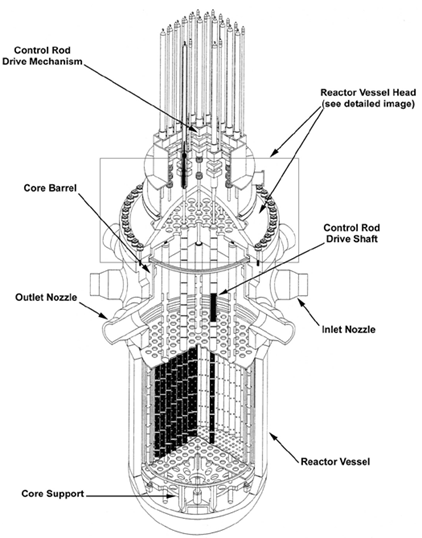
Typical PWR Reactor by NRC File Photo
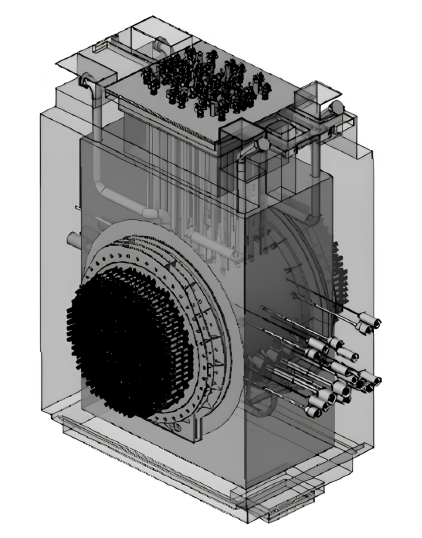
CANDU® Reactor
Design Structure
- PWR/BWR: Uses a single large, thick-walled pressure vessel to contain the entire reactor core.
- CANDU® Reactor: Employs hundreds of horizontal fuel channels running through a large, unpressurized calandria vessel filled with deuterium oxide (D₂O) or heavy water as moderator.
Fuel and Coolant
- PWR/BWR: Fueled by enriched uranium and cooled by light water under high pressure.
- CANDU® Reactor: Fueled by natural uranium and cooled by heavy water in individual pressure tubes.
Segmentation Complexity
- PWR/BWR: Decommissioning focuses on dismantling one large vessel.
- CANDU® Reactor: Decommissioning requires removal and segmentation of multiple components—pressure tubes, calandria tubes, end fittings, and lattice tubes—making the process more intricate.
Operational Advantage
- CANDU® reactors allow online refueling and use natural uranium, offering flexibility during operation but adding complexity during decommissioning.
Current Status of Nuclear Reactor Segmentation
Traditionally, CANDU® reactor segmentation has relied on highly automated, precision tooling developed for refurbishment projects, where preserving reactor integrity is critical for reinstalling new components after removal.
Decommissioning CANDU® reactors requires a different approach. Unlike refurbishment, the condition of residual components is irrelevant. Instead, the priority shifts to:
- Reducing occupational dose
- Minimizing costs
- Streamlining waste handling
To date, no CANDU® reactors have been segmented for decommissioning. Lessons learned from segmenting PWRs and BWRs show that CANDU® refurbishment-driven approaches would add unnecessary complexity to decommissioning, and could involve elaborate, expensive tooling and extended timelines which would drive up cost and increase risk for workers.
Why Change Is Needed in Nuclear Decommissioning
The nuclear industry faces mounting pressure to improve efficiency and reduce costs in decommissioning projects. Several factors make change imperative:
- Aging Reactor Fleet: Many reactors worldwide are approaching end of life, creating a surge in decommissioning demand.
- High Waste Management Costs: Long-term storage of intermediate-level waste (ILW) is one of the most significant cost drivers.
- Worker Safety Concerns: Manual operations in high-radiation environments increase occupational dose and risk.
- Regulatory Compliance: Stricter safety and environmental standards require more robust planning and execution.
To address these challenges, the industry is moving toward simplified tooling, advanced robotics, and digital technologies that enable remote operations, optimize waste handling, and reduce overall project costs.
Why Decommissioning Presents Unique Challenges
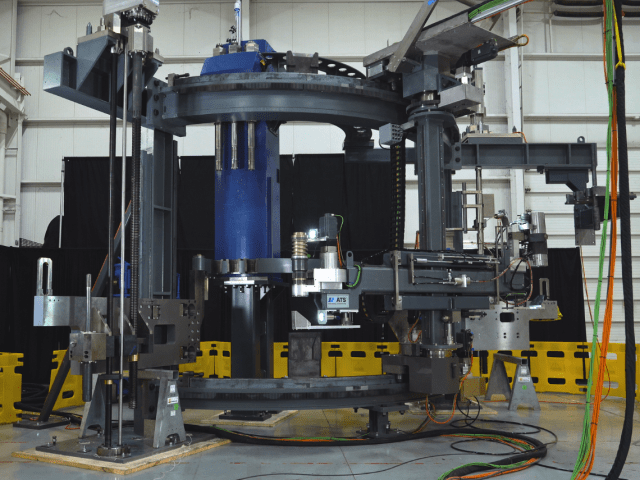
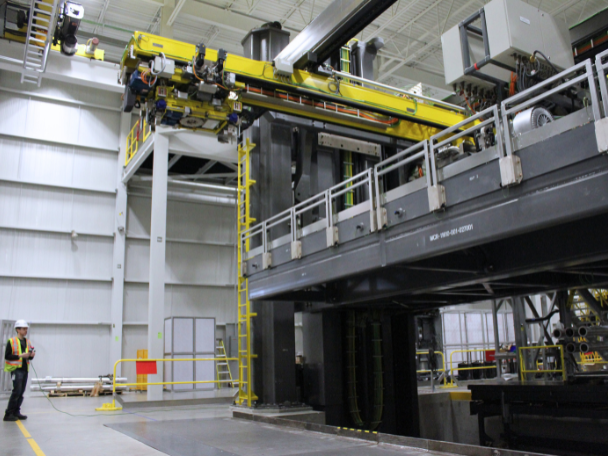
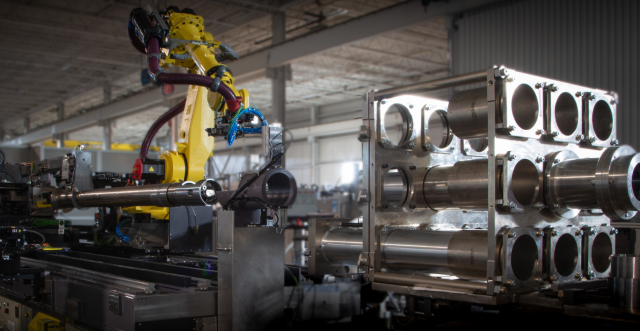
Pressurized Water Reactors (PWRs) and Boiling Water Reactors (BWRs) rely on a single, large pressure vessel to contain the reactor core. Decommissioning largely focuses on segmenting this thick structure into smaller sections—an approach suitable for solutions such as the MultiFlex™ Nuclear Segmentation System, a multi-functional tool designed for PWR/BWR decommissioning.
MultiFlex™ Nuclear Segmentation System
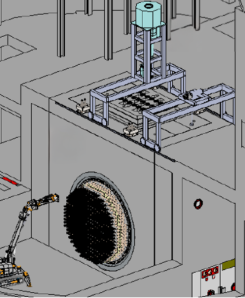
CANDU® Reactor Decommissioning Approach
However, CANDU® reactors are very different. They consist of up to 480 individual fuel channels running horizontally through a heavy water-filled calandria. This means that instead of targeting just one primary structure such as the calandria vessel, decommissioning requires segmenting hundreds of smaller fuel channel components, significantly increasing complexity and scope.
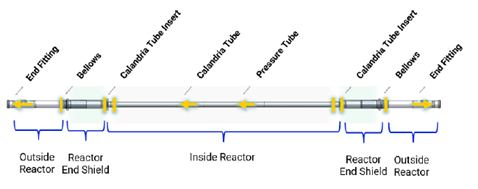
Decommissioning each fuel channel adds further challenges. Each fuel channel includes:
- Pressure tubes housing fuel bundles and heavy water (D2O) coolant.
- Calandria tubes surrounded by heavy water of the moderator system.
- Annulus bellows providing a seal for low-pressure carbon dioxide circulating between the pressure and calandria tubes.
- End fittings and lattice tubes integrated into end shields for radiation protection.
Because these parts are packed closely together and built into heavy end shields, they can be difficult to access and remove. This intricate structure means traditional refurbishment tools—designed for precision and reactor preservation—are not optimal for decommissioning CANDU® reactors.
The New Approach: Advanced Tooling and Robotics for CANDU® Decommissioning
Decommissioning a CANDU® reactor requires more than dismantling—it demands precision, safety, and efficiency. The approach begins with the remote segmentation and removal of the most highly radioactive components, including pressure tubes and calandria tubes, to significantly lower radiation levels and enable safer, easier removal of remaining components.
ATS enables this with innovative tooling systems and remote-operated technologies that redefine how segmentation is performed. These solutions minimize radiation exposure, reduce costs, and streamline operations.
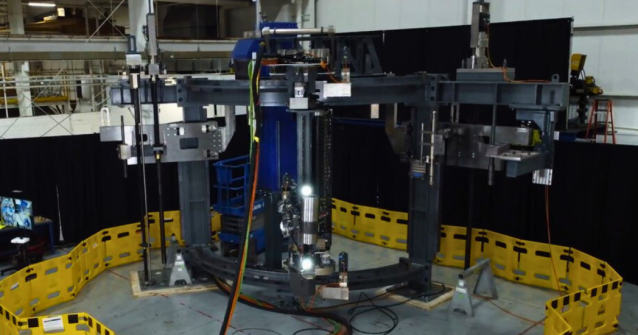
Gantry and Mast Delivery System
At the heart of the new approach is the Gantry and Mast system, installed on the Reactivity Mechanism Deck above the calandria.
This robust platform serves as the primary delivery mechanism for multiple specialized tools. It enables vertical access to reactor internals and supports a variety of end effectors designed for specific segmentation tasks, including:
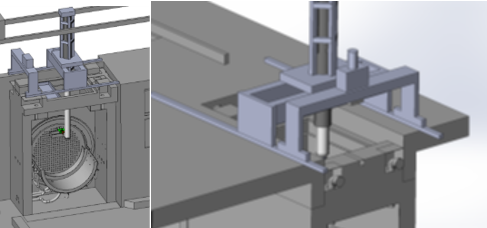
Gantry and Mast Delivery System
- Reactivity deck plug removal
- Calandria shell segmentation
- Pressure tube and calandria tube cutting
- Calandria tube sheet removal
- End shield ball retrieval
By centralizing operations on the Reactivity Mechanism Deck, this system allows operators to work from low-dose areas, significantly reducing occupational exposure.
Calandria Grip and Cut Tool
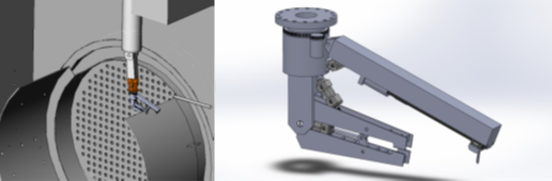
Calandria Grip and Cut Tool
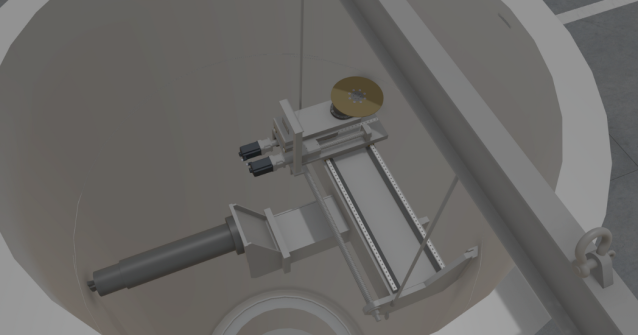
This tool is engineered to segment and remove the top half of the calandria shell and associated nozzles. It grips the shell or nozzle securely and then articulates a cutting mast to perform precise cuts. Once the cut is complete, the Gantry and Mast system lifts the tool and deposits the segmented piece into a waste container. This process ensures controlled handling of large, highly radioactive components.
Calandria Tube and Pressure Tube Grip and Cut Tool
Designed for the intricate removal of fuel channel components, this tool uses hydraulic cylinders to crush the calandria tube into the pressure tube, followed by a vertical saw blade cut. If necessary, the tool can rotate 180° to perform additional cuts. After severing, the tubes are lifted to the Reactivity Mechanism Deck and placed into waste containers. This innovation simplifies what was once a highly complex operation.
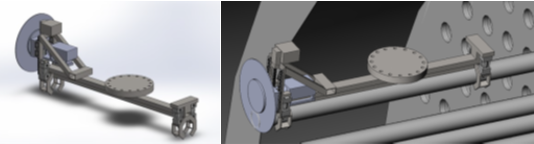
Calandria Tube and Pressure Tube Grip and Cut Tool
Calandria Tube Sheet Segmentation Tool
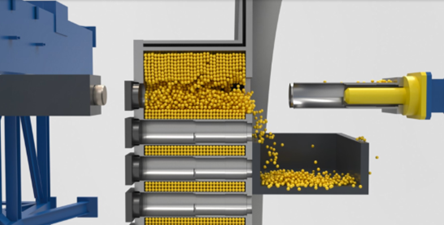
Calandria Tube Sheet Segmentation Tool
One of the most challenging tasks in decommissioning is removing the calandria side tube sheet due to its confined location, high radiation levels, and the precision needed to cut and extract components without damaging surrounding structures. The remote manipulator extends into the lattice tube site, cuts a rectangular segment around the tube, and extracts both the lattice tube and the surrounding sheet. Loose end shield balls, used in CANDU® reactors to help block radiation, are captured by a collector or retrieved later using an electromagnetic end effector. This tool exemplifies precision engineering for high-radiation environments.
Remote Demolition Robot
Positioned at the face of the reactor, the Brokk remote demolition robot brings over 50 years of industrial demolition expertise to nuclear applications. Equipped with custom-designed end effectors, it performs tasks such as:
- Removing end fittings
- Severing lattice tubes
- Segmenting tube sheets for both fueling machine and calandria sides
- Cutting embedment rings
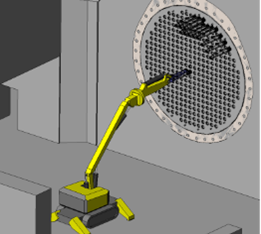
Brokk Remote Demolition Robot Located at Reactor Face
This rugged robot ensures safe, efficient operations in areas where manual work would pose unacceptable risks.
Specialized Cutting Tools
Additional decommissioning solutions from ATS include:
- Bellows Sever Tool: Performs circumferential cuts around annulus bellows for end fitting removal.
- End Fitting Removal Tool: Extracts end fittings to enable subsequent segmentation and classification of low-level radioactive waste (LLW) vs intermediate-level radioactive waste (ILW).
- Lattice Tube Sever Tool: Clamps and rotates cutting heads for precise lattice tube removal.
- Fueling Machine Tube Sheet Grip and Cut Tool: Mirrors the calandria side tool, enabling design and training efficiencies.
- Embedment Ring Cut Tool: Uses diamond wire saw technology to handle composite materials (i.e., concrete and steel), ensuring clean segmentation.
These innovations fundamentally change how CANDU® reactor decommissioning is approached. By integrating advanced robotics, modular tooling, and remote-operated systems, the process significantly reduces radiation exposure to workers while improving operational safety.
Building on these advances, efficiency and cost performance are improved through a combination of strategies and technologies. Simplified tooling and cut-and-pack strategies optimize waste handling, lowering the number of radioactive waste containers and reducing long-term storage costs. Leveraging commercial off-the-shelf components and proven demolition technologies helps control development time and expenses, while precision-engineered end effectors ensure efficient segmentation of complex reactor structures. Together, these advancements deliver a safer, faster, and more cost-effective solution for nuclear decommissioning projects worldwide.
Lessons Learned from Past CANDU® Automated Tooling Projects
Over decades of nuclear tooling projects, several best practices have emerged:
- Automated tooling significantly reduces radiation dose and labour costs.
- Commercial off-the-shelf (COTS) equipment accelerates development and reduces costs.
- Early site characterization (2–3 years prior) is critical for accurate planning.
- Digital twins and high-fidelity mock-ups improve training and troubleshooting.
Supporting Plans for Safety and Efficiency
Decommissioning is not just about dismantling—it’s about planning every step to ensure safety and cost control. Supporting plans include:
- Waste Management Plans: 3D reactor models characterize components for accurate waste stream planning and volume reduction.
- ALARA Principles: Strategies ensure occupational dose remains as low as reasonably achievable.
- Cost Optimization: Benefit-cost analyses identify opportunities for savings through cut-and-pack plans, safe storage extensions, and multi-unit scheduling.
How to Choose a Nuclear Decommissioning Partner
Selecting the right partner is critical to the success of any decommissioning project. Here are some key factors to consider:
- Proven Experience: Look for a partner with a track record in reactor segmentation and decommissioning, particularly with CANDU® reactors or similar designs.
- Technical Expertise: Ensure they have in-depth knowledge of nuclear systems, radiological characterization, and advanced tooling technologies.
- Safety Culture: A strong commitment to ALARA principles and regulatory compliance is non-negotiable.
- Innovative Solutions: Partners should leverage robotics, digital twins, and automation to minimize risk and optimize efficiency.
- Comprehensive Planning: From waste management strategies to cost optimization and scheduling, the partner should provide end-to-end solutions.
- 24/7 Support: Decommissioning is a high-stakes operation—your partner must be available for continuous site support and troubleshooting.
Choosing a partner who combines these capabilities ensures your project meets safety standards, stays on schedule, and controls costs effectively.
Ready to Start Your Decommissioning Journey?
Decommissioning a CANDU® reactor is more than dismantling—it’s a precision operation requiring advanced robotics, optimized strategies, and experienced partners.
Choosing the right partner for nuclear decommissioning can make the difference between a smooth, cost-effective project and one full of delays and risks. ATS brings decades of experience, a suite of advanced robotic solutions, and a proven commitment to safety and efficiency.
Why ATS?
- Expertise in CANDU® and PWR/BWR reactor segmentation
- Innovative remote tooling and automation technologies
- Comprehensive waste management and ALARA compliance
- End-to-end project planning and 24/7 site support
By prioritizing safety, cost efficiency, and technological innovation, we can work together to set a new standard for nuclear decommissioning. Contact us today to schedule a consultation or learn more about our solutions.
FAQs: CANDU® Reactor Decommissioning
Why is decommissioning a CANDU® reactor more complex than other reactor types?
CANDU® reactors have hundreds of horizontal fuel channels within a large calandria vessel, requiring specialized segmentation strategies and tooling compared to single-vessel PWR/BWR designs.
What role does robotics play in the process?
Robotics enables remote operations in high-radiation areas, reducing occupational dose and improving safety. Systems like Gantry and Mast setups and demolition robots handle cutting, gripping, and removal tasks.
How is radioactive waste managed during decommissioning?
Waste management plans use 3D modeling to characterize components, optimize cut-and-pack strategies, and minimize the number of radioactive waste containers, reducing long-term storage costs.
What are ALARA principles, and why are they important?
ALARA stands for “As Low As Reasonably Achievable.” It ensures radiation exposure to workers is minimized through remote tooling, shielding, and optimized sequencing.
How long does the decommissioning process take?
Timelines vary by reactor size and complexity, but optimized strategies and robotics can significantly shorten schedules compared to traditional methods.

Majid Afana
Global Director, Nuclear Business Development & Sales
ATS Industrial Automation
Bringing over 12 years of experience in the nuclear industry, with a strong foundation in mechanical engineering, business development, and operations. Majid helps customers execute growth strategies and develop tailored automation solutions across the nuclear lifecycle, driving innovation and long-term value.