

Production management in electronics manufacturing grows more complex as product lifecycles shorten. Consumer and industrial electronics manufacturers manage frequent design updates, shifting component availability, and increasing pressure to meet speed-to-market targets. At the same time, production teams must protect quality, throughput, and cost control across expanding product portfolios.
For electronic products with short lifecycles, production management must focus on early risk identification, close alignment across teams, and the ability to adapt processes without disrupting output. Without these foundations, design changes carry late into production, creating schedule delays, rework, and rising costs.
Product Variability and Its Impact on Electronics Manufacturing
Electronics manufacturing rarely follows a fixed product manufacturing process. Product managers introduce updates to address market demand, engineering teams revise electronic product designs to meet performance or compliance requirements, and supply teams adjust component selections based on availability. Each decision affects electronic assembly processes, test strategies, and line configuration.
Short production lifecycles intensify these pressures. Limited time to stabilize manufacturing processes leaves little margin for learning during ramp up. Production teams must absorb change while meeting delivery commitments.
Common drivers of variability include:
- Frequent revisions to electronic product design and PCB layouts
- Component substitutions that affect PCB assembly and inspection
- Multiple product variants running through shared production lines
- Late design updates driven by regulatory or cost targets
Product variability spans design, manufacturing, and service stages. When unmanaged, variation increases downstream complexity across the product lifecycle management environment and raises coordination effort across product planning, production management, and service teams.
Challenges in Short Electronic Production Lifecycles
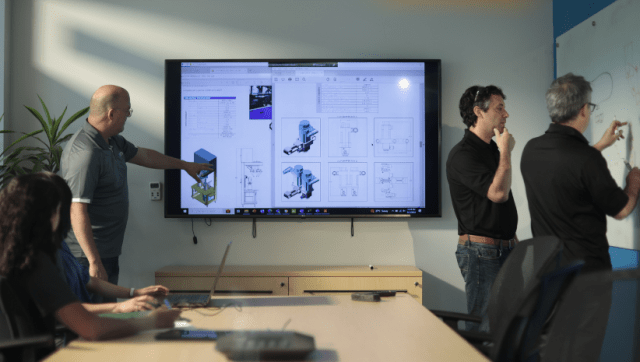
Short lifecycle electronics manufacturing compresses activities that once occurred sequentially. Product planning, process validation, equipment build, and operator training often overlap. When validation is deferred, risks surface during integration or early production.
Common production management challenges include:
- Production line delivery delays caused by unresolved process risks
- Manual interventions that limit scalability
- Late tooling or fixture updates that extend launch timelines
- Quality issues during early production builds
Manufacturing risks often emerge during system integration or startup, where corrective actions carry higher cost and schedule impact. To support short lifecycle products, electronics manufacturers must shift validation and decision making earlier in the product lifecycle management process.
Proof-Of-Principle Studies as a Production Management Tool
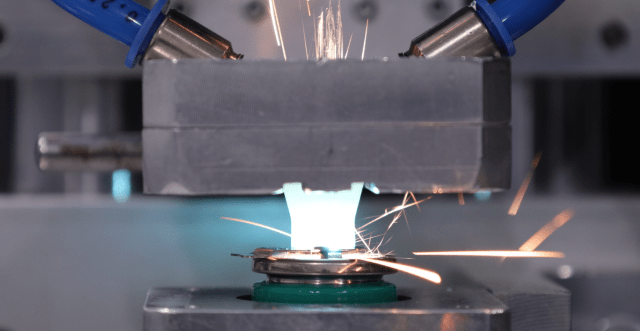
Proof-of-principle studies give electronics manufacturers early visibility into manufacturing risk. These studies assess whether a proposed process supports cycle time, quality, and automation objectives before committing to production equipment.
In electronics manufacturing, proof-of-principle studies often focus on:
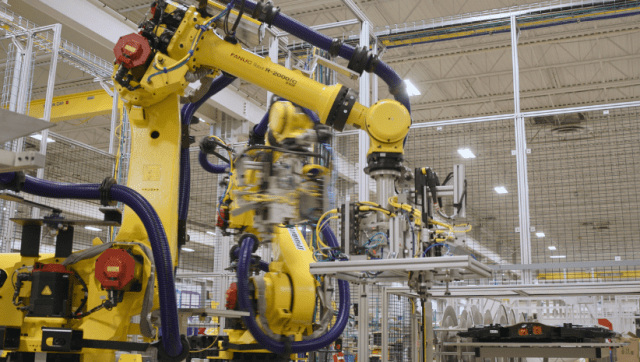
- PCB manufacturing process feasibility
- Assembly tolerances and part handling strategies
- Inspection and test coverage for electronic assemblies
- Cycle time assumptions tied to short lifecycle demand
By validating these elements early, you reduce the chances for late changes that disrupt production schedules. Learn more about proof-of-principle testing accelerates product launch by identifying technical risks before system build begins.
For short production lifecycles, proof-of-principle studies help stabilize the product manufacturing process before ramp-up.
Design For Manufacturability and Assembly in Electronics Manufacturing
Design for manufacturability and assembly (DFMA) plays a central role in production management for electronics. When electronic product development aligns with manufacturing constraints, production absorbs change with less disruption.
Key DFMA considerations include:
- PCB layout decisions that support automated PCB assembly
- Component selection aligned with available feeding and inspection methods
- Tolerance strategies that reduce sensitivity to variation
- Modular designs that simplify product change and variant management
DFMA reduces rework, improves yield, and supports smoother transitions between electronic product variants.
Digitalization for Electronic Product Assembly
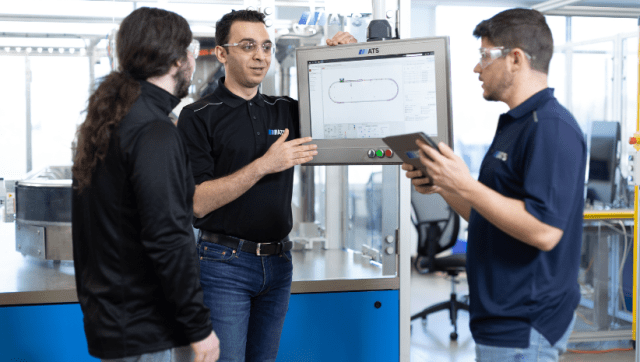
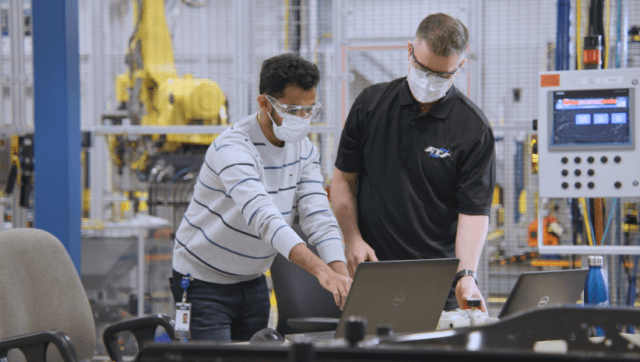
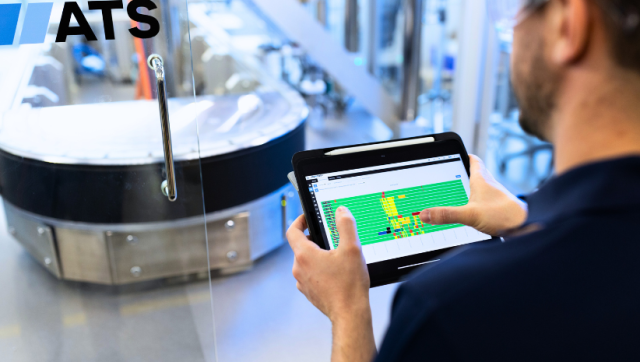
Digitalization is a critical component in production management for short lifecycle electronics manufacturing. Integrating digital tools into product planning, engineering, and manufacturing workflows improves visibility into risk, strengthens coordination across teams, and supports faster decision making as products evolve.
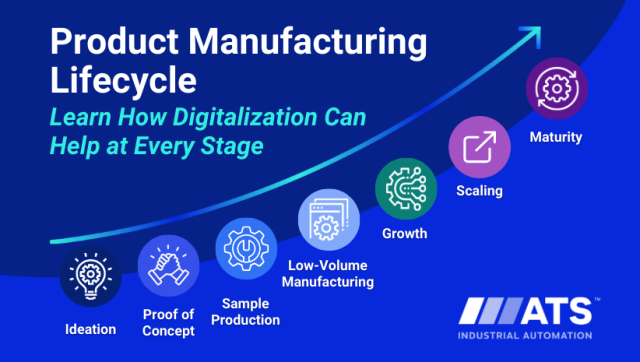
Across the electronic manufacturing lifecycle, digitalization can support earlier validation, smoother scale-up, and more controlled production performance.
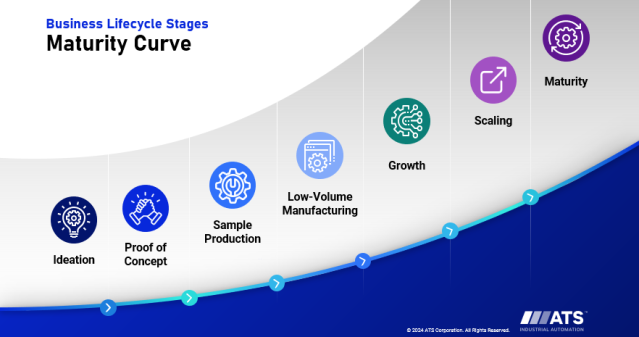
Digitalization in Early Electronic Product Development and Market Entry
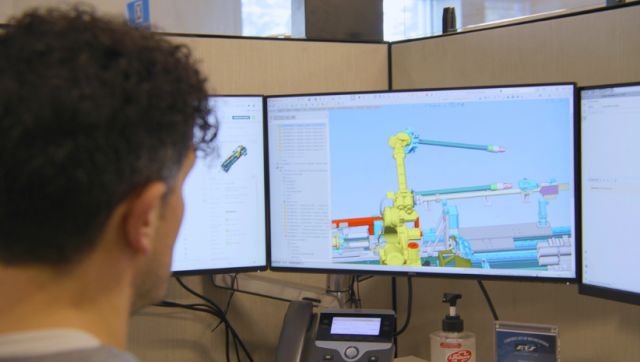
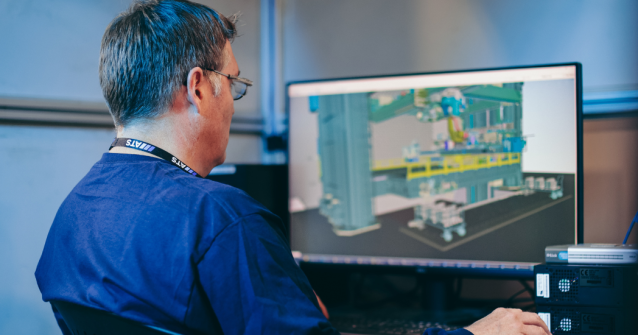
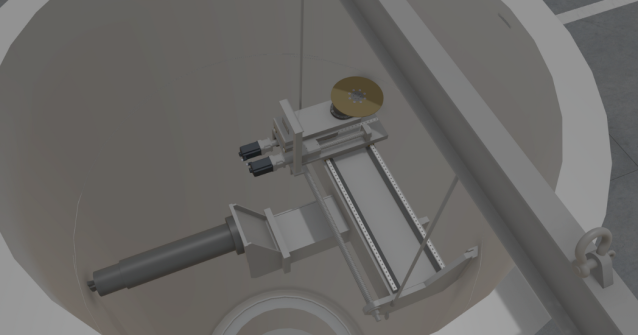
During early electronic product development, digital tools such as assembly simulation support faster iterating while controlling cost and schedule. These tools allow teams to evaluate electronic product design decisions before committing to physical builds.
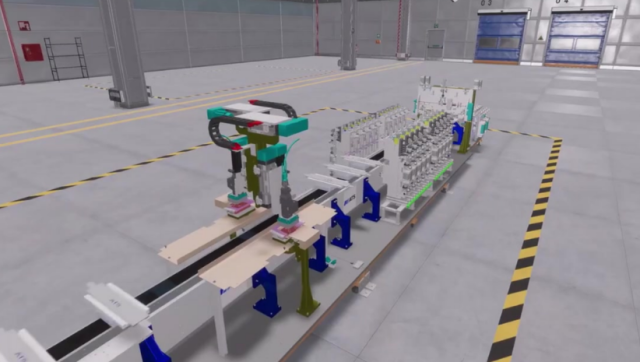
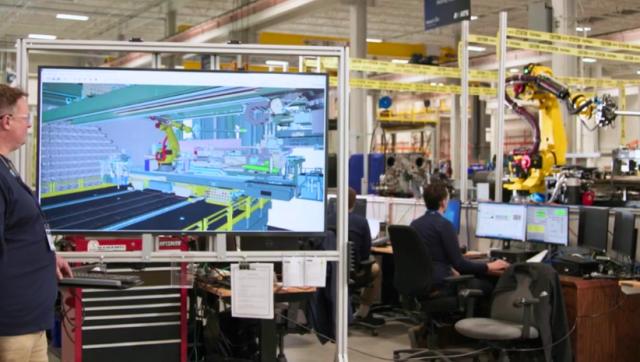
In proof-of-concept and sample production stages, virtual testing and virtual commissioning reduce reliance on physical prototypes. By simulating electronic production lines early, teams identify integration risks before equipment installation. This approach reduces late design changes and stabilizes product planning decisions.
Digitalization in Electronic Manufacturing Growth and Scaling Stages
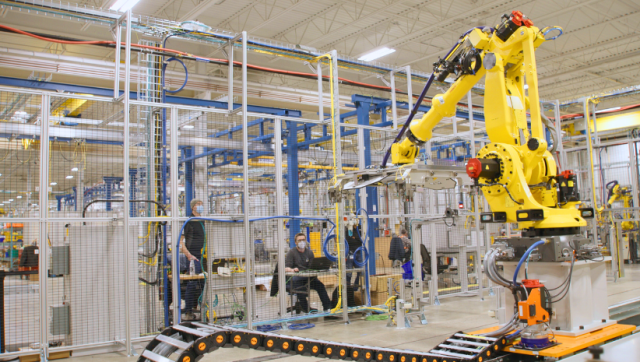
As products move into growth phases, digital twins and system twins support production expansion. Digital twins represent virtual models of physical assets, while system twins simulate complete production lines.
These tools help production management teams:
- Identify bottlenecks before physical deployment
- Evaluate throughput scenarios tied to demand changes
- Reduce downtime during scale-up
Digital scenario testing supports predictable production performance as volume increases.
Digitalization in the Maturity Stage of Electronic Short Lifecycle Manufacturing
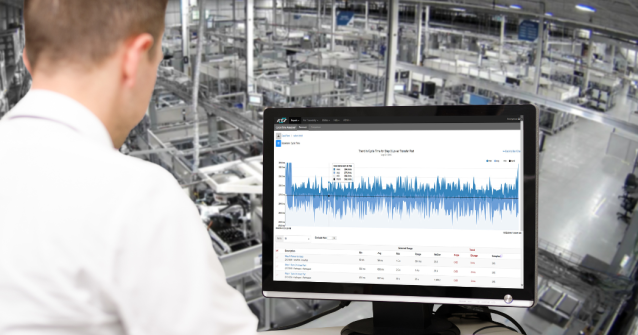
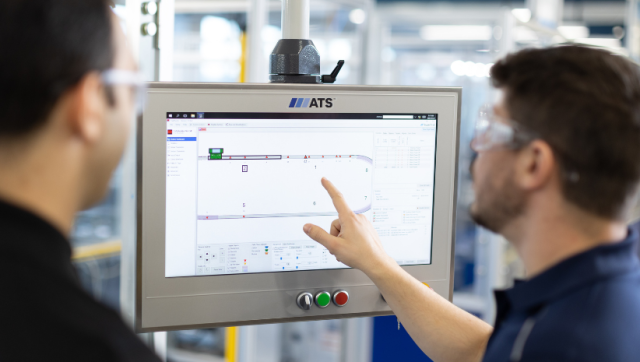
During maturity, digital twins and system twins support sustained operational performance and product lifecycle extension. Continuous monitoring and data analysis help teams detect issues early, reducing unplanned downtime and schedule disruption.
Digital tools also support faster development of product variants. By evaluating changes digitally, production management teams introduce updates while maintaining consistency across the production line and gain alignment with cross functional teams. This approach supports ongoing new product development without destabilizing existing operations.
FAQs
What Is production management in manufacturing?
Production management focuses on planning, coordinating, and controlling manufacturing activities to deliver products on schedule, at required quality, and within cost targets. In electronics manufacturing, production management integrates product planning, process validation, and continuous improvement across the product lifecycle.
How do major consumer brands manage product changes and variability?
Major consumer brands often rely on early validation, modular product design, and integrated product lifecycle management systems. These approaches support frequent design updates while maintaining stable production output.
How does product lifecycle management support short lifecycle electronics manufacturing?
Product lifecycle management connects electronic product design, manufacturing data, and change workflows. This alignment helps production management teams track revisions, manage variants, and coordinate decisions across engineering and manufacturing.
What role does DFMA play in electronics manufacturing?
Design for manufacture and assembly aligns electronic product design with manufacturing constraints. DFMA reduces rework, supports automated PCB manufacturing assembly, and improves production stability when designs change frequently.
Building Production Resilience for Short Lifecycle Electronic Assembly
Short lifecycle electronics manufacturing requires production management strategies that absorb constant product change without disrupting electronic assembly operations. High variability across electronic product design, PCB assembly, and testing places pressure on product planning and execution teams. Production management must move risk identification earlier, align product management processes with manufacturing realities, and rely on validated data rather than late adjustments.
Proof-of-principle studies and design for manufacture and assembly reduce uncertainty before electronic assembly reaches scale. Digitalization strengthens this foundation by connecting product lifecycle management, production data, and decision making across every manufacturing stage. With digital tools supporting development, growth, and maturity, production management teams gain the visibility needed to manage change with control.
When production management, electronic product development, and digital workflows align, electronic assembly operations maintain consistency as products evolve. This alignment supports faster launches, stable throughput, and sustained performance across short production lifecycles.
Explore strategies for resilient electronic assembly by contacting us today.
Every project is unique. Allow us to listen to your challenges and share how automation can launch your project on time.

Joe Brown
Business Development Specialist
ATS Industrial Automation
Joe helps companies of all kinds to automate and scale production using bespoke automated assembly, test, and conveyance systems.