

Free eBook
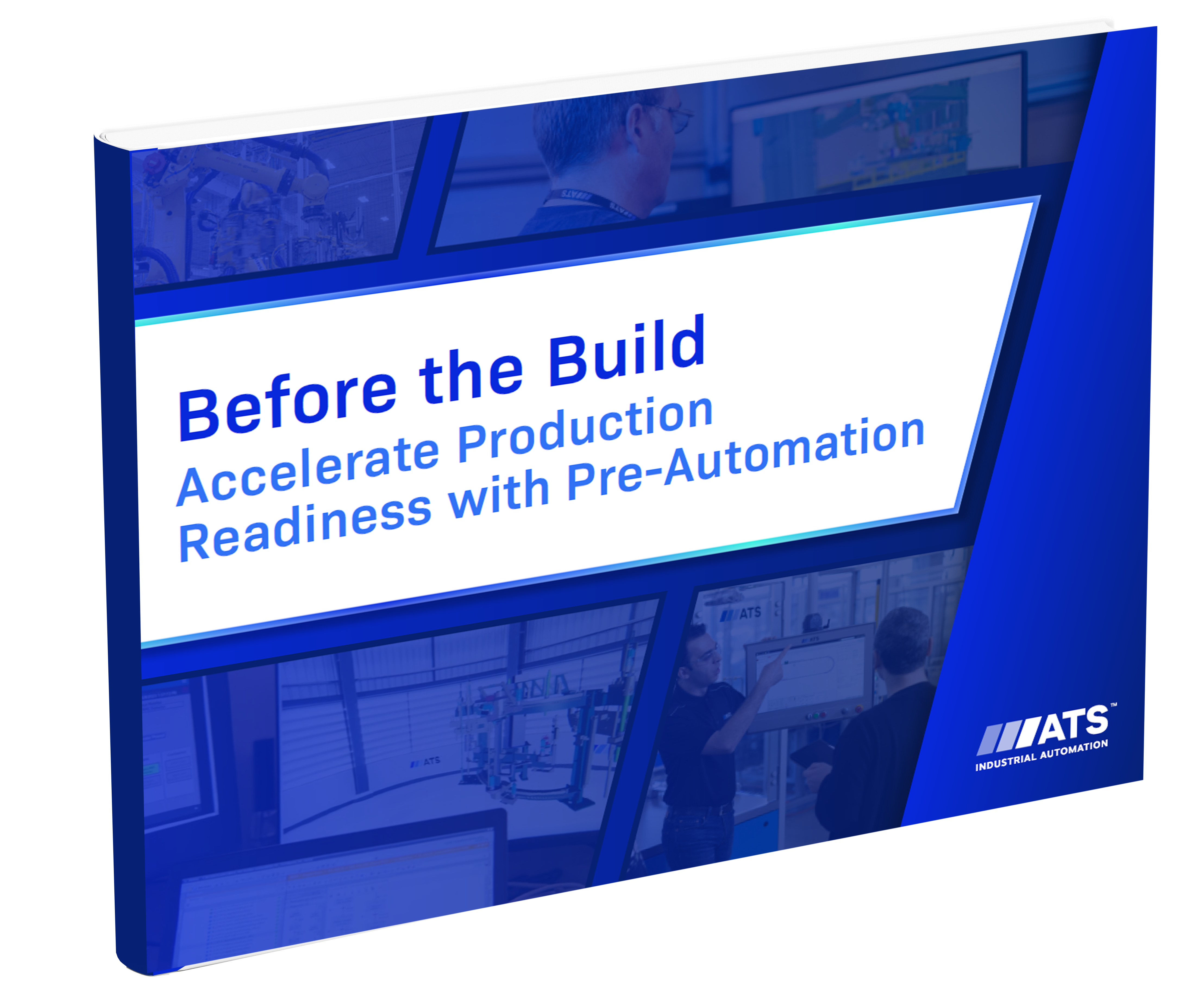
Before the Build: Accelerate Production Readiness with Pre-Automation
Reduce manufacturing risk before investing in production equipment.
Sept 4, 2026
How to Prepare for Automation Before the Build Begins
Moving from product development to automation raises critical questions:
- What needs to be automated first?
- Which processes require more development?
- Is the product designed for scalable assembly?
- Will the proposed system meet throughput requirements?
- Where are the highest technical and quality risks?
- What data and traceability requirements must the equipment support?
Moving into equipment design without answering these questions increases the risk of scope changes, rework, commissioning delays, and production shortfalls.
Getting started with your automation partner early in the design phase in critical.
Pre-Automation creates a structured phase between product development and automation. Cross-functional teams evaluate requirements, manufacturability, process feasibility, line performance, technical risk, and quality needs before major capital commitments.
Learn how manufacturers use Pre-Automation to build a stronger foundation for automation success. This eBook combines a practical framework with real-world case studies that show how early planning, validation, and risk assessment help manufacturers move from an initial product or prototype to stable, scalable production.
Download the Complete
Pre-Automation for Manufacturers Guide.
Learn how to identify manufacturing risks, validate critical processes, and make informed automation decisions before equipment design begins.
Who This eBook Is For
- Manufacturers moving from prototype to production
- Teams planning a new line, facility expansion, or equipment upgrade
- Manufacturers looking to scale production
What You’ll Learn About Pre-Automation
Define Requirements and Build the Business Case
Learn how User Requirements Specification (URS), production flow mapping, throughput analysis, and investment modeling align technical decisions with production and business goals.
Design Products with Manufacturing in Mind
Explore how Design for Manufacturability (DFM) and Design for Assembly (DFA) reviews reduce product complexity, improve part handling, and create more stable assembly processes.
Validate Critical Processes
See how Proof of Principle (POP) and feasibility studies evaluate processes such as welding, dispensing, leak testing, soldering, and vision inspection under representative conditions.
Model Production Performance
Learn how process and concept simulation assess cycle times, buffers, downtime, layouts, variant mixes, and future capacity before teams finalize a line concept.
Identify and Manage Technical Risk
Understand how technical risk assessments and FMECA-based reviews document potential failure modes, prioritize risks, and connect each risk with a mitigation plan.
Bridge the Gap with Prototype Equipment
Explore how prototype stations and pilot lines support first-article builds, process refinement, operator feedback, data collection, and production planning.
Plan Quality and Validation Early
Learn how validation requirements, testing, traceability, data collection, and acceptance criteria can enhance equipment design.
Learn from Real-World Success Stories
Discover how Pre-Automation helped manufacturers across industries validate processes, optimize production concepts, and reduce project risk before investing in automation.