- Industries
- Solutions
- Service
- Resources



As product designs evolve, production targets increase, and quality requirements become stricter; battery manufacturing grows more complex. From large scale automotive, energy storage and aerospace batteries to smaller applications like drone, and humanoid robotics batteries each have unique operating requirements but share the challenge of converting individual cells into reliable systems through controlled assembly, testing, and traceability.
ATS Industrial Automation partners with manufacturers to support every stage of battery manufacturing from product development to repeatable production, providing support in:
- Cell validation & sorting
- Assembly
- Integration
- Thermal management
- Welding
- Electronics
- Testing
- Traceability
With experience from over 110 battery assembly and test lines, ATS identifies manufacturing concerns early and develops systems aligned with design, quality, production, and growth objectives to achieve efficient manufacturing systems.
Challenges in Battery Manufacturing
Battery manufacturers must balance product performance, manufacturing readiness, quality, and future production volumes as designs evolve.

Manufacturing Concerns Often Surface Late
Product development teams may prioritize battery performance before assessing assembly and scalability. Early manufacturing input can reveal process risks before they impact equipment decisions or launch schedules.

Battery Designs Continue to Evolve
New cell formats, architectures, thermal solutions, and assembly methods introduce varied handling, joining, and testing needs. Manufacturing systems must remain flexible to accommodate design changes while maintaining process control.

Scrap and Rework Become More Costly at Later Stages
Each production step increases battery value. Defects found after welding, assembly, electronics integration, or final testing result in more costly scrap or rework than issues detected earlier.

Testing & Traceability Requirements Are Expanding
Battery manufacturers require clear production records for cells, strings, modules, packs, welds, inspections, and test results. Connected testing and traceability improve visibility into product quality and manufacturing performance.

Higher Volumes Introduce New Quality Risks
Transitioning from prototype or pilot production to higher volumes increases demands on material handling, automation, testing, repeatability, and quality control. Processes effective at lower production rates may require further validation before scaling up.
Our Approach to Battery Components & Manufacturing Stages
A battery production program typically moves from validated cells to strings or modules, then to an integrated pack. Electrical connections, thermal systems, electronics, structural components, testing, and traceability support the product at each stage.
ATS collaborates with battery manufacturers at each of these stages to identify process concerns before they impact product quality, equipment design, or program schedules.
Cell Sorting & Validation
Establish a Consistent Foundation for Battery Production
Validated cells must be sorted, matched, positioned, and joined before integration into the battery system. Variations in cell condition, placement, or assembly quality can affect subsequent production steps.
ATS supports cell sorting and matching, string and module assembly, busbar integration, welding, testing, and validation.
Busbars & Electrical Interconnects
Integrate and Verify Battery Electronics
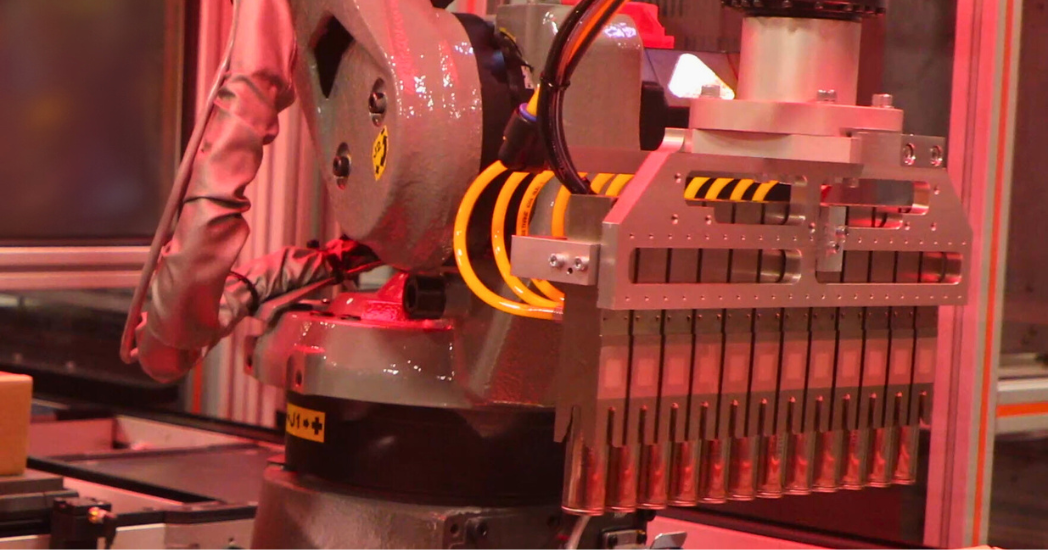
Consistent electrical connections are essential for battery performance. Cell placement, dimensional tolerances, busbar fit, surface condition, and weld quality influence resistance, reliability, and overall performance.
ATS supports busbar assembly, laser welding, electrical validation, process monitoring, and traceability to help manufacturers maintain connection quality throughout production.

Thermal Management Systems
Control Thermal Processes During Assembly
Thermal management affects battery performance, reliability, and safety. Manufacturing may involve thermal interface material dispensing, cooling system installation, insulation, leak testing, and thermal validation.
ATS supports these processes with dispensing technologies, tooling development, cooling system integration, process validation, leak testing, and final verification.
Learn how a controlled thermal interface material application supports consistent battery cooling system assembly.
Battery Electronics & BMS
Integrate and Verify Battery Electronics
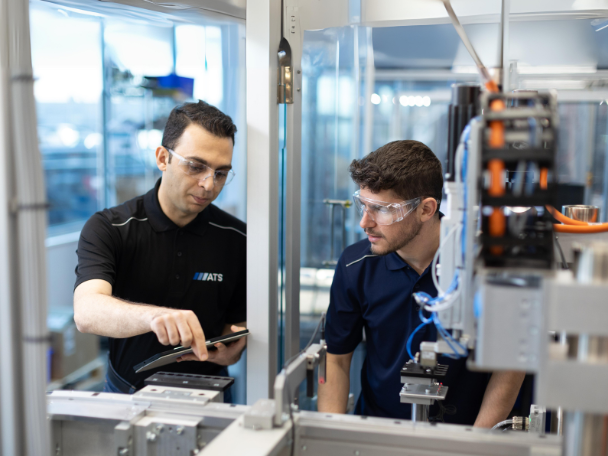
A battery management system (BMS) monitors operating conditions, communication, charging, protection functions, and overall battery performance.
ATS supports printed circuit board handling, electronics assembly, connector verification, wiring validation, communication testing, and traceability. Integrated testing ensures electrical connections and communication functions to meet manufacturer requirements.
Explore testing approaches for battery electronics, communication, and electrical performance.

Battery Packs
Bring the Complete Battery System Together
Battery packs integrate cell strings or modules with electrical connections, cooling systems, electronics, structural components, sensors, and sealing systems.
ATS supports battery pack assembly through welding, thermal system integration, electronics installation, leak testing, traceability, and final validation.

Battery Manufacturing Across Multiple Industries
Battery applications differ in size, architecture, operating conditions, and production volume. Manufacturers across these markets require reliable processes for assembly, testing, validation, traceability, and scaling production.
Automotive Batteries
Prepare Complex Battery Designs for Production Volumes
Automotive battery manufacturers are evaluating architectures such as cell-to-pack while managing higher production targets and strict validation requirements. ATS supports cell handling, string assembly, pack integration, welding, testing, and traceability for large-scale production.

Battery Energy Storage Systems (BESS)
Support Large-Scale Energy Storage Assembly
Battery energy storage systems require large assemblies, high capacities, thermal management, material handling, and long-term reliability. ATS supports assembly, testing, validation, material flow, and production planning for energy storage applications.

Drone Batteries
Balance Energy Density with Repeatable Assembly
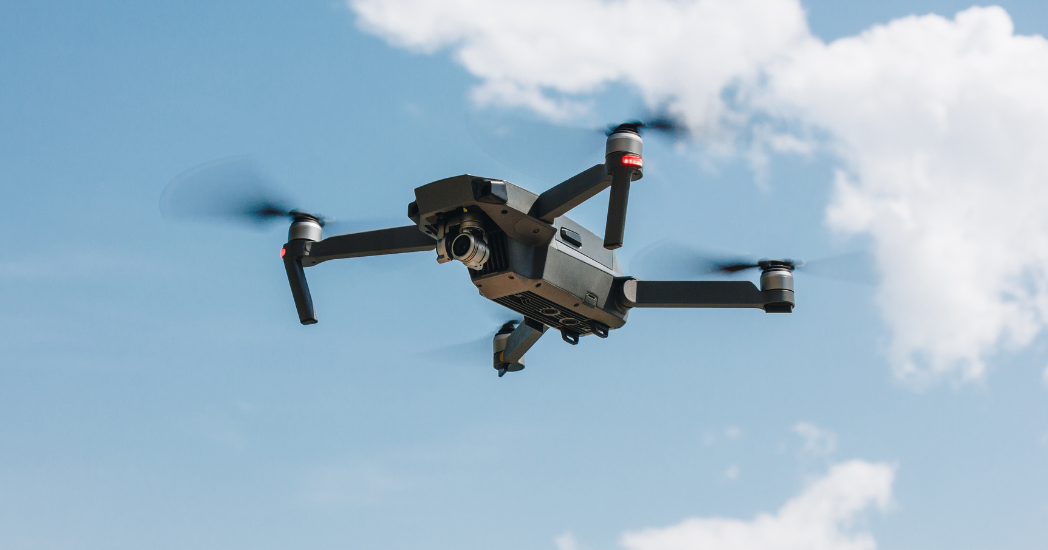
Drone battery manufacturers must balance energy density, weight, durability, charging performance, and manufacturability within limited space. ATS supports validation, electronics integration, assembly, testing, and automation planning for consistent production.
Humanoid Robotics
Plan for Compact, High-Density Battery Production
Batteries for humanoid robotics require compact packaging, low weight, high energy density, and scalable designs. ATS helps manufacturers assess assembly methods, manufacturability, testing requirements, and automation opportunities for future scaling.

Aerospace Batteries
Address Demanding Reliability and Validation Requirements
Aerospace battery programs require application-specific testing, validation, redundancy, traceability, and safety. We utilize our experience in assembly, welding, testing, and manufacturing planning to support these demanding environments.

Supporting Multiple Battery Cell Formats
Each battery cell format presents unique considerations for handling, dimensional variation, welding, thermal management, testing, and assembly.
Prismatic Cells
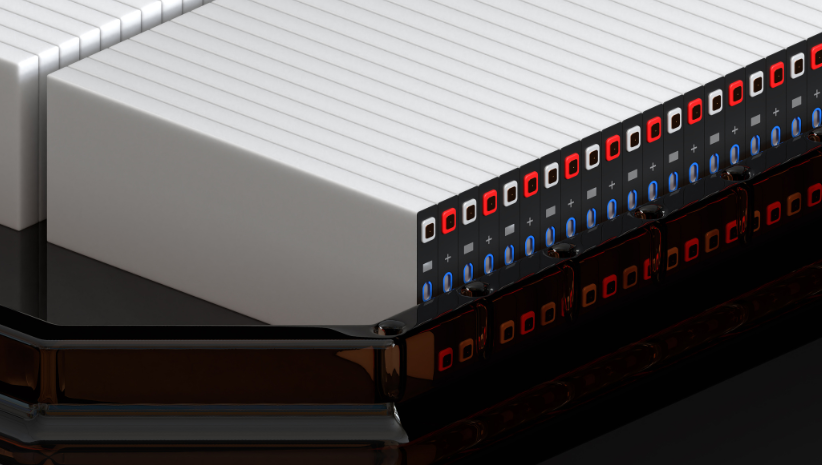
Prismatic cells use a rigid, rectangular enclosure for efficient packaging in applications like electric vehicles and energy storage systems. Assembly requires precise alignment, electrical connection, compression, and thermal management.
Incoming validation, electrical array formation, in-line testing, and end-of-line testing enable manufacturing teams to monitor quality throughout production.

Cylindrical Cells
Cylindrical cells require controlled high-volume handling, precise placement, consistent welding, and effective thermal management. Dimensional variation can affect positioning and connection quality.
Automated assembly lines, buffer systems, and testing at key manufacturing stages help manufacturers maintain material flow and identify quality concerns early.
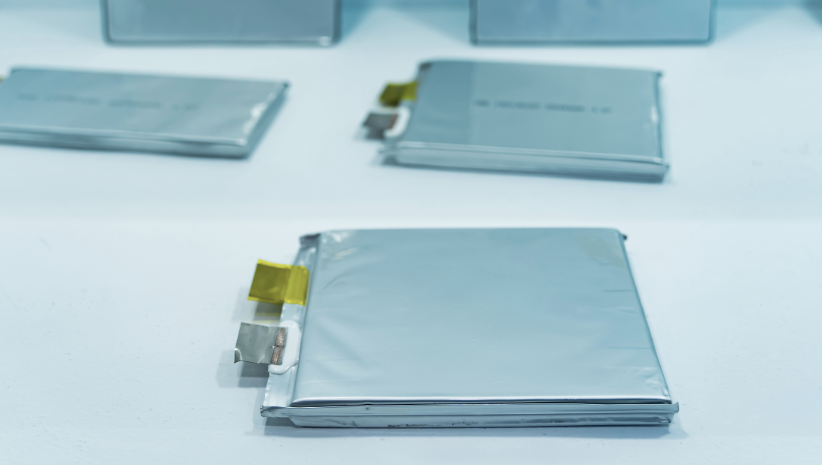
Pouch Cells
Pouch cells use a flexible foil enclosure and require careful handling throughout production. Vacuum handling reduces stress on the foil seam and cell tabs and limits distortion.
Incoming cell validation, controlled positioning, precision welding, and testing ensure product quality throughout assembly.
Unique Chemistries
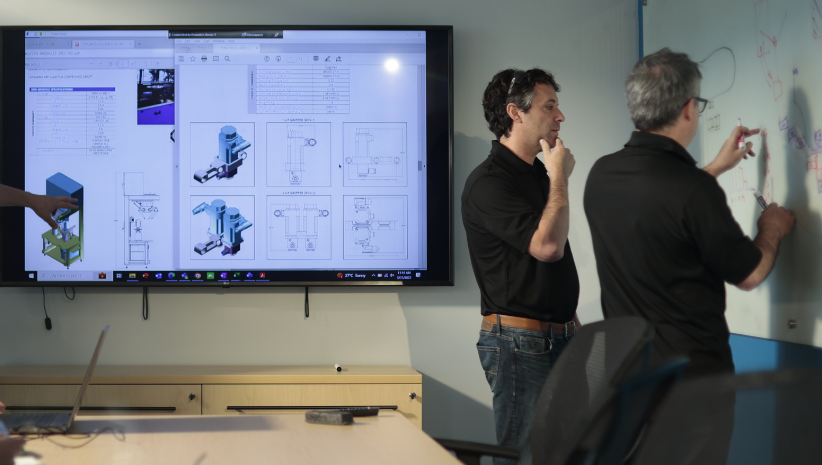
Many battery manufacturers are evaluating unique lithium-ion, sodium-ion, solid-state, aerospace-specific, and other emerging chemistries. Each introduces unique processes, handling, testing, and environmental requirements.
ATS partners with manufacturers to assess manufacturability, assembly methods, testing strategies, and production readiness as battery products evolve.
Why Battery Manufacturers Choose ATS
ATS Industrial Automation combines battery manufacturing expertise, automation, testing, and digital engineering to help manufacturers move from product development to production-ready manufacturing with greater confidence.

Accelerate Production Readiness
Manufacturability reviews, proof of principle studies, process validation, and production planning help teams identify manufacturing concerns earlier, reducing delays during equipment development and launch preparation.
Build Quality into Every Manufacturing Stage
Validation, inspection, testing, and traceability help identify issues throughout production, reducing reliance on final inspection and helping manufacturers maintain quality as batteries move from cells to finished packs.
Scale Production with Confidence
Automation, integrated testing, material-handling strategies, and process controls support the transition from prototype and pilot programs to higher production volumes while maintaining consistency.

Improve Manufacturing Visibility
Connected production records link cells, welds, assembly processes, inspections, and test results, helping teams better understand product quality and investigate manufacturing issues.
Prepare for Evolving Battery Designs
Manufacturers continue to evaluate new cell formats, battery chemistries, thermal-management approaches, and system architectures. Flexible manufacturing strategies help teams assess changes without losing sight of production objectives.
Battery Manufacturing Success Stories
Battery manufacturing programs vary, but many share concerns about process validation, thermal management, production timing, and equipment integration. The following projects demonstrate how focused engineering and automation addressed specific needs.
Meeting an Aggressive Battery Production Timeline
Coordinate Manufacturing Planning with Program Delivery
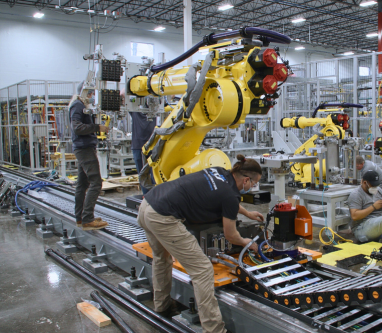
A battery manufacturer faced a compressed development schedule as product and manufacturing requirements evolved. Early manufacturing planning, automation engineering, and coordinated execution supported the production timeline.

Improving Thermal Management for EV Batteries
Increase Consistency in Cooling-System Assembly
An automotive manufacturer improved EV battery performance and production with a precise TIM application system, enhancing thermal management and reducing maintenance.

Using Virtual Commissioning in Battery Manufacturing
Evaluate Controls and System Interactions Before Installation
A battery manufacturer needed to integrate new equipment into an existing production environment. Virtual commissioning and digital engineering enabled controls validation and system testing before deployment, helping the team prepare for installation.
Build a Better Battery Manufacturing Strategy
Whether your program involves a battery string, module, or complete pack, early manufacturing input helps to clarify assembly methods, testing requirements, traceability, automation opportunities, and production risks.
Discuss your battery design, production targets, and manufacturing questions with ATS Industrial Automation. Together, we can identify practical next steps to improve production readiness, control quality, and prepare for future volumes.

