- Industries
- Solutions
- Service
- Resources



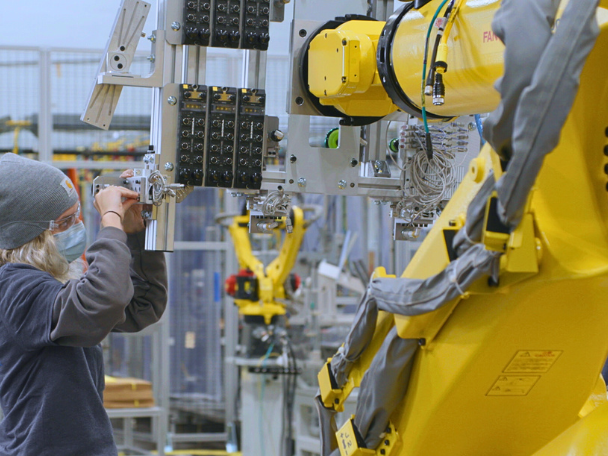
Battery module and cell string assembly turn qualified cells into structured electrical assemblies ready for integration.
Cell format, module design, and production targets influence every manufacturing decision. Cylindrical, pouch, and prismatic cells each introduce different requirements for presentation, alignment, compression, joining, inspection, and thermal management.
ATS Industrial Automation partners with battery manufacturers to develop assembly and testing solutions around the battery application, process requirements, quality objectives, and planned production volumes. Experience from more than 110 battery manufacturing and testing lines helps us identify potential risks early and develop a practical path forward.
Address Battery Module & String Assembly Challenges Before Production
Battery designs often continue to evolve while manufacturing teams define the production process. Early alignment among product, manufacturing, quality, and automation teams helps reduce avoidable redesign, rework, and schedule pressure.

Changing Product Designs
Changes to cell formats, structural components, cooling strategies, joining methods, and electrical layouts affect equipment design, material flow, testing, and traceability.

Cell Variation & Traceability
Electrical and physical variation can affect cell placement, joining, balancing, and final performance.

Scrap & Rework
A defect identified after joining, thermal-material application, or final testing consumes more time and material than a defect found during incoming validation.

Complex Cell Handling
Cells often arrive in packaging designed for shipping. Unpacking, orientation, repitching, buffering, and presentation need controlled methods that protect the cell and downstream flow.

Evolving Battery Architectures
As battery manufacturers evaluate cell-to-pack configurations, alternative battery formats, new assembly strategies, and evolving product requirements, manufacturing systems must be flexible enough to accommodate battery changes without extensive equipment redesign.
Connected Battery Assembly from Incoming Cells to Qualified Modules & Strings
ATS develops battery assembly automation around battery quality requirements, production targets, and long-term manufacturing plans.
Pre-Automation
Evaluating Manufacturing Requirements Before Equipment Procurement
Manufacturability reviews, proof of principle studies, process simulation, technical risk assessment, and validation planning help battery manufacturing teams evaluate assembly methods while design decisions remain flexible.
Cell Receiving & Traceability
Prepare Cells for Production
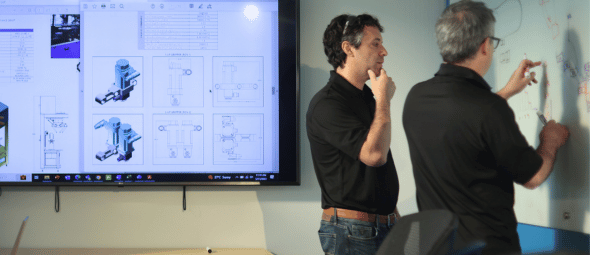
Automated systems identify, unload, orient, inspect, repitch, buffer, and present cells. During which a barcode and data matrix system connect supplier, lot, inspection, process, and test information to each cell record.

Cell Testing & Matching
Validate Cells Before Assembly
Variations in voltage, resistance, capacity, and dimensions affect downstream assembly and battery performance.
Electrical testing, dimensional inspection, machine vision, and data collection help manufacturers approve and organize cells according to product requirements before being incorporated into cell strings or modules.
Busbar Assembly
Prepare Electrical Connections for Joining
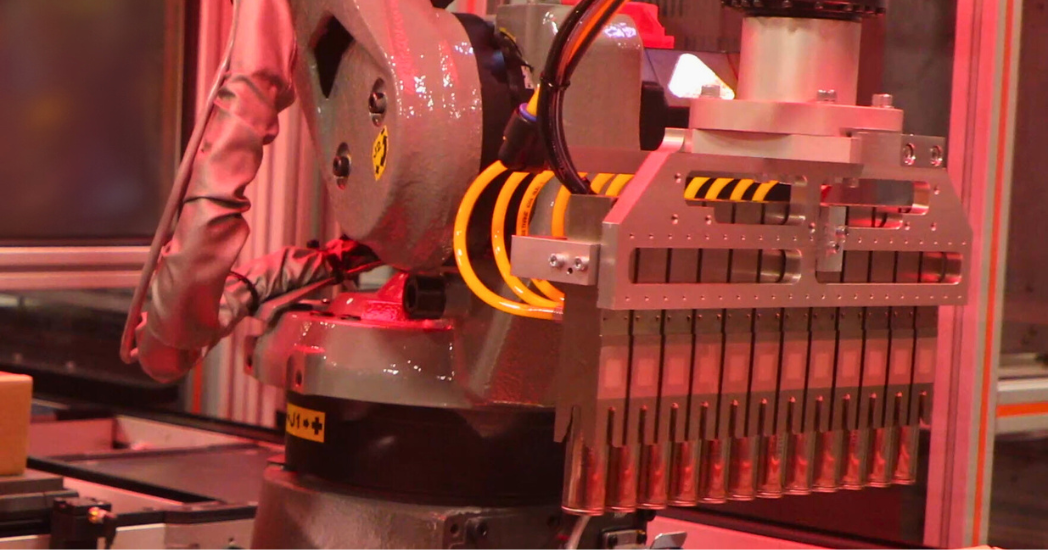
Cell positioning, dimensional variation, and assembly accuracy influence busbar alignment and connection quality.
Automated systems position busbars and verify alignment, apply the joining process such as laser welding, and capture process data for inspection and traceability.

Module Assembly
Build Consistent Battery Structures
Assembly processes combine approved cells with frames, separators, insulation, thermal materials, cooling components, compression systems, and electrical interfaces in a defined sequence dependent on the manufactures needs.

String Assembly
Support Modern Battery Architectures
Cell string assembly positions and join validated cells into structured electrical arrays. Flexible handling, tooling, and inspection support changing layouts and larger work envelopes.

Testing & Validation
Verify Quality Before Final Integration
Manufacturers must ensure modules and strings meet electrical, mechanical, and quality requirements before final integration.
Electrical validation, weld verification, communication checks, isolation testing, internal resistance measurement, and HiPot testing provide evidence that modules and strings meet manufacturer requirements.
Technology That Supports Battery Module & String Assembly
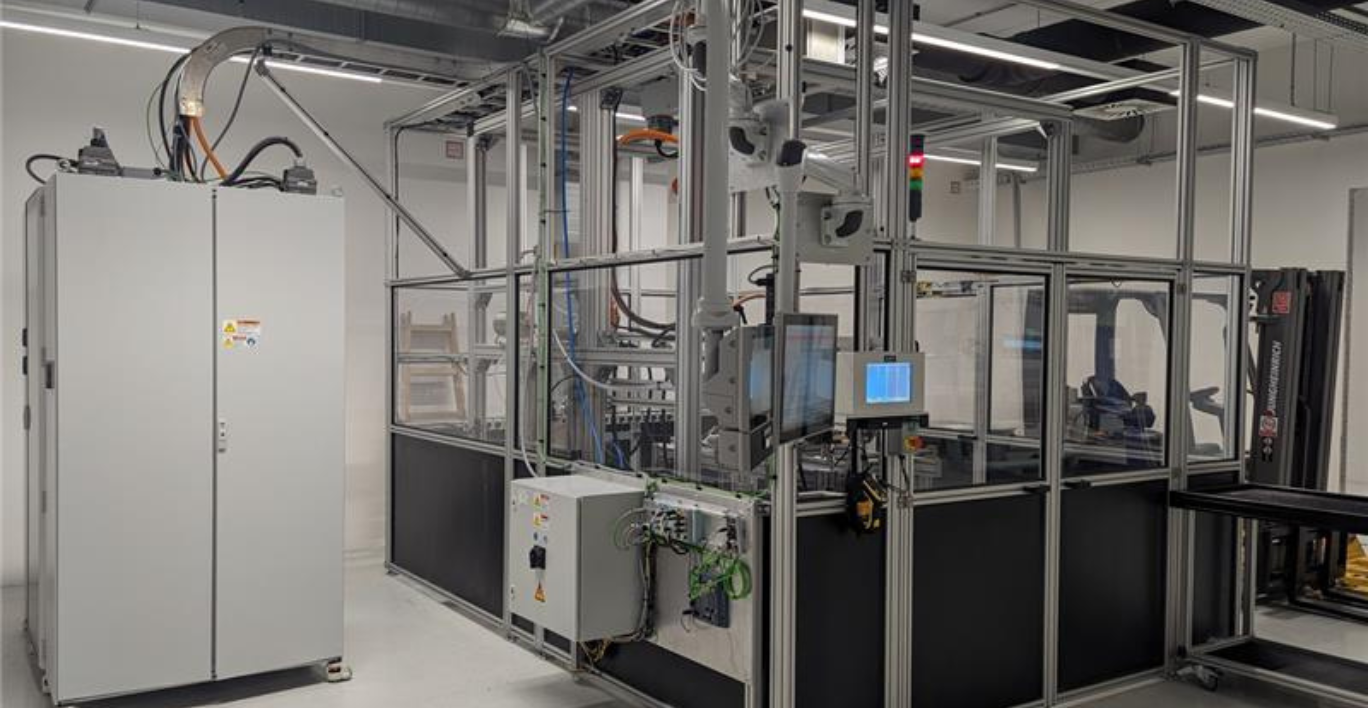
ATS integrates process technologies, testing, inspection, and production data to help manufacturers manage variation and maintain traceability.
Digital Engineering
Evaluate the System Before Physical Commissioning
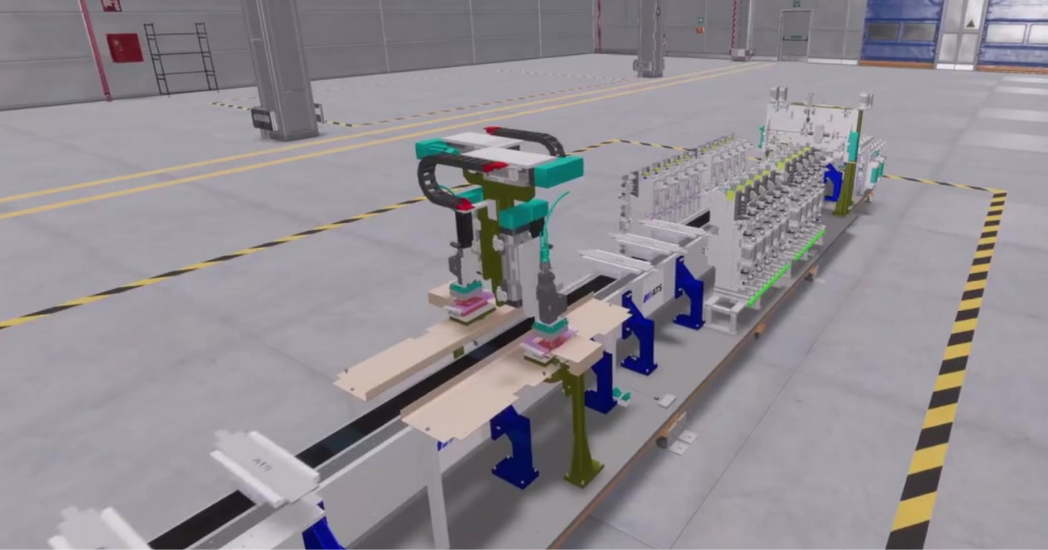
Simulation, digital twins, virtual commissioning, and material-flow analysis help teams review equipment interactions, controls, cycle time, and production logic before equipment manufacturing begins.
Robotic Assembly
Automate Precision-Critical Operations
Robotic handling supports cell handling, stacking, positioning, compression, component placement, fastening, and material movement across repeatable processes.
Robotic systems improve repeatability and support product variation and future production growth.


Vision Systems
Inspect, position and improve battery quality
Vision systems can help verify cell identity, orientation, placement, component presence, busbar alignment, dispense coverage, and assembly completeness depending on the assembly step.

Laser Welding & Joining
Support Reliable Electrical Connections
Consistent busbar and interconnect welding are critical for battery performance.
Laser welding technologies, and process controls help manufacturers maintain joining quality across battery applications.

Battery Testing
Integrate Validation Throughout Assembly
Manual, semi-automated, and automated test systems support in-process and end-of-line electrical, communication, leak, isolation, resistance, charge, discharge, and HiPot testing.

Process Monitoring
Connect Production Data with Product Quality
Manufacturers require visibility into genealogy records, process conditions, testing results, inspection data, and equipment performance.
Manufacturing intelligence systems connect these data sources throughout production.

Battery Module & String Assembly Across Multiple Industries
Battery manufacturing varies by industry, but many manufacturers face similar challenges related to cell handling, traceability, welding quality, testing, and manufacturability.

Automotive
As automotive battery manufacturers evaluate new architectures while increasing production volumes and quality standards. ATS helps with critical assembly steps including cell validation, string assembly, welding, testing, traceability, and throughput management.

Grid Energy Storage (BESS)
Battery energy storage systems (BESS) often require larger assemblies, longer operating life, thermal-management considerations, and integration into racks and containers then smaller applications.
Battery module or cell string assembly, testing, traceability, and power connections all remain central manufacturing activities.

Humanoid Robotics
Humanoid battery systems prioritize compact packaging, high energy density, charging performance, thermal control, and lightweight construction.
Scalable module assembly, testing, welding, and traceability help manufacturers meet future production requirements.

Aerospace
Aerospace battery programs often require expanded testing, increased documentation, additional safety features, and higher reliability standards than other applications.
Controlled assembly, testing, welding, traceability, and production planning support these demanding applications.
Why Battery Manufacturers Work with ATS
ATS Industrial Automation combines battery manufacturing experience, process development, automation, testing, and digital engineering to help manufacturers launch and scale battery module assembly and cell string assembly programs with greater confidence.

Accelerate Production Readiness
Manufacturability reviews, proof of principle studies, simulation, and process validation help teams evaluate assembly methods and identify manufacturing constraints before major equipment decisions are finalized.

Reduce Quality Issues
Integrated validation, inspection, testing, and traceability help identify defects earlier in production, reducing the risk of discovering problems after higher-value assembly steps have been completed.
Scale with Confidence
Automation, flexible tooling, and standardized production approaches support higher throughput while maintaining process consistency across shifts, lines, and facilities.

Adapt to Changing Battery Designs
Flexible manufacturing strategies support evolving cell formats, module designs, interconnect methods, and cell-to-pack architectures without requiring a complete manufacturing redesign

Reduced Scrap & Rework
Identify quality concerns through validation, inspection, and testing before additional value is added to the product.

Scalable Manufacturing
Increase throughput with repeatable automation, standardized processes, and flexible production systems.
“ATS Industrial Automation is critical in enabling us for battery assembly and exponential volume.”
VP of Global Manufacturing & Engineering,
Large North American Automotive OEM
Battery Manufacturing Resources & Success Stories
See how early engineering, process validation, and connected automation address common battery manufacturing challenges.
Meeting Aggressive Battery Manufacturing Timelines
Support Production Goals Under Schedule Pressure
A battery manufacturer was managing an aggressive program schedule while balancing evolving manufacturing and quality objectives. Coordinated planning and execution supported progress toward the aggressive timeline.

Optimizing Thermal Management for EV Batteries
Improve Thermal Material Application Consistency
A battery manufacturer improved battery performance and production with a precise TIM application system, enhancing thermal management and reducing maintenance.

Cell-to-Pack Battery Assembly Considerations
Understand Modern Battery Architectures
Explore manufacturing considerations needed for cell-to-pack battery assembly from energy density and manufacturing efficiency to thermal management and quality control.
Build a Better Battery Module Assembly Strategy
Whether the product uses modules, cell strings, or a direct cell-integration approach, early manufacturing input helps clarify assembly methods, testing requirements, material flow, joining processes, quality strategies, and production risks.
Discuss your product design, production goals, and manufacturing challenges with ATS Industrial Automation to define practical next steps for production readiness and future growth.

