

Low OEE in sensor manufacturing usually traces back to three loss categories: availability loss, performance loss, and quality loss. OEE gives leaders a practical view of overall manufacturing efficiency because OEE captures availability, performance, and quality in one metric.
Sensor assembly adds complexity that makes OEE harder to stabilize. Sensor production often includes sensor calibration, multi-part integration, printed circuit board handling, optical alignment, and requirements for traceability and connected data systems. These conditions increase micro-stops, loss of speed, and defect risk across the line.
When a team treats low OEE as a series of isolated incidents, the same losses repeat. Low OEE often signals deeper reliability issues within the production system. A structured reliability engineering approach helps teams identify and remove the barriers behind downtime events, speed loss, and quality variation.
What Low OEE In Sensor Manufacturing Usually Means
Low OEE often signals a mismatch between throughput expectations and system reality. Low OEE also points to gaps beyond equipment condition. A reliability engineering assessment evaluates equipment health, baselines system performance, reviews operational documentation quality, and evaluates training consistency and process adherence. These factors influence repeatability in sensor assembly, especially across shifts and product variants.
Use the OEE number as a trigger for a loss map. Start by separating losses into:
- Availability losses, downtime events and recovery delays tied to mechanical, electrical, or procedural root causes.
- Performance losses, speed loss, micro-stops, and cycle-time inefficiencies that block target output.
- Quality losses, variation and defect sources that increase scrap, rework, and downstream disruption.
Start With Reliability Engineering Assessments and System Health Checks
When low OEE persists, a system health check needs to tie production losses to root causes. Reliability engineering is a cross-functional discipline focused on keeping production systems operating at, or above, designed performance levels. Reliability engineering looks at how assets, processes, and people interact, not only maintenance tasks.
A structured reliability engineering assessment often focuses on:
- Governance and Documentation: how the system operates and how teams control changes.
- System Condition and Performance Baselining: a factual view of asset capability and stability.
- Failure Mode Identification: how equipment degrades or malfunctions.
- Preventive Maintenance Optimization: maintenance tasks aligned with engineering needs.
- Parts and Obsolescence Strategies: risk reduction tied to aging components and spares availability.
- Capability Uplift: training, standards, and change management that sustain improvements.
A reliability and maintenance assessment often evaluates equipment health, baselines system performance, and examines operational documentation quality and completeness. The same work evaluates operator capability, training consistency, and process adherence, then maps OEE and cycle time losses across the line to show where throughput declines originate.
For a recurring cadence that supports sustained OEE gains, preventive maintenance health checks often include periodic verification of line operations, system health checks, calibrations, and review of scheduled maintenance tasks. These checks often end with an opportunity report listing targeted system improvements and procedure updates.
Hit Cycle Times by Treating Speed Loss as a Data Problem
Cycle time targets fail when teams only track averages. Sensor manufacturing often includes high-sensitivity steps such as calibration and optical alignment, plus traceability expectations. This environment increases the need for consistent cycle time performance and fast loss identification.
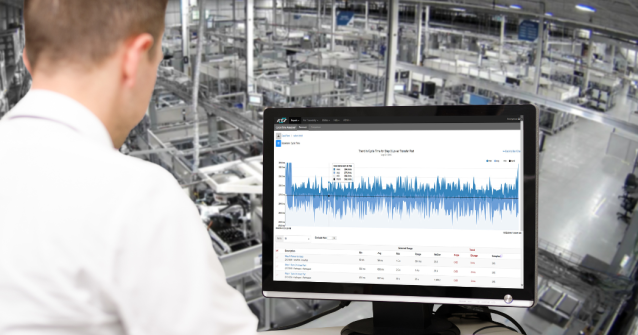
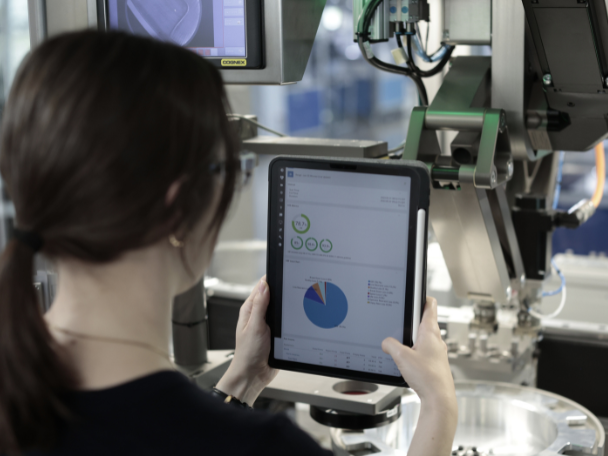
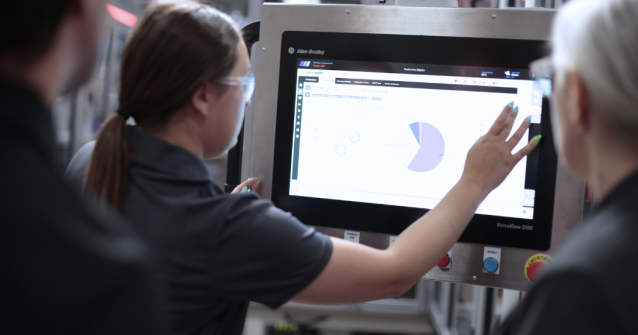
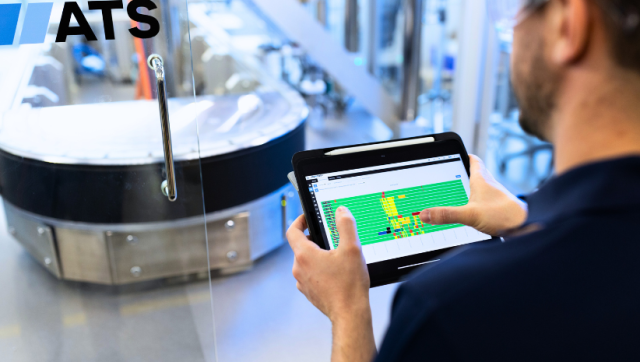
OEE tracking tools need to drive action, not only reporting. Many traditional OEE monitoring systems stop at raw numbers and provide static reports without enough context for action. This gap slows response times, delays preventive maintenance decisions, and extends troubleshooting loops that keep lines down longer.
A production monitoring approach designed to close this gap often includes:
- Real-Time Visibility: monitors production performance as it happens.
- Drill-Down Analysis: moves from top-line OEE metrics to root-cause details quickly.
- Preconfigured Dashboards and Reports: support rapid deployment and immediate usability.
- Integration Support: works across equipment and supports integration with MES and ERP platforms.
Practical ways to use real-time OEE monitoring to improve cycle time in sensor assembly:
- Track Minor Stops with State Timelines: identify recurring micro-stops and the stations that trigger them.
- Compare Similar Stations: isolate the bottleneck station by reviewing cycle time and event patterns across identical cells.
- Shorten Troubleshooting Loops: use event-triggered video capture to see what happened around a fault, especially for infrequent process issues.
- Turn Speed Loss into Work Orders: connect fault trends and anomaly detection to targeted maintenance actions that protect availability and performance.
Identify The Next Process to Automate by Following the Loss Map
Automation decisions need to start with loss patterns, not preference. In sensor assembly, the best automation targets often show up where speed loss and quality loss repeat under similar conditions.
Use the loss map from OEE tracking and reliability assessment work to prioritize automation opportunities:
- Steps With Frequent Manual Intervention: repeated interventions often indicate unstable process conditions or unclear recovery procedures, both of which add micro-stops and loss of speed.
- Steps With High Variation Risk: gaps in training consistency, documentation, and process adherence drive variation that lowers both performance and quality.
- Steps Tied to Calibration and Optical Alignment: these steps often demand tighter control to protect yield and throughput.
- Steps Tied to Traceability and Connected Data: MES integration and traceability act as baseline expectations in connected manufacturing environments, and missing visibility slows containment and root-cause work.
This approach supports process improvement decisions that align with manufacturing excellence goals, without over-investing in low-impact upgrades.
Build A Digital Foundation for OEE Tracking and Asset Performance Management
Sustained improvement requires a feedback loop used every shift. Asset performance management platforms like Illuminate™ Manufacturing Intelligence connect OEE monitoring with actionable insights:
- Preventive Maintenance Module: analyzes cycle time data, assigns health scores, and detects anomalies to prevent unexpected failures and reduce maintenance costs.
- Debug Camera Module: captures event-triggered video to support troubleshooting of automation equipment and infrequent process issues.
- Reporting and Collaboration: supports exporting and sharing production reports, plus scheduled distribution and dashboards that keep teams aligned on performance metrics.
Pair the digital layer with reliability engineering assessment outputs that focus on baselining, criticality, failure modes, maintenance maturity, and cycle time loss mapping. This combination provides a practical path to reduce downtime, hit cycle times, and protect quality in sensor manufacturing.
OEE Improvement Strategies for Sensor Assembly Teams
1. Prioritize By Loss Category Before Picking a Fix
A loss-mapping approach keeps improvement work focused on the assets and stations carrying the most operational risk.
2. Partner Maintenance and Operations Around Shared Data
Performance decline often links to how assets, processes, and people interact. Align maintenance actions with production loss data so the team addresses real constraints, not noise.
3. Address Speed Loss with Cycle Time Analysis
Use drill-down analysis that moves from top-line OEE metrics to root-cause details. Use real-time visibility and dashboards to isolate micro-stops, bottlenecks, and recovery delays.
4. Attack Quality Loss at the Source
Use OEE monitoring and production analytics to connect reject patterns to stations and process conditions. Pair this work with sensor production realities such as calibration and optical alignment, where small variation affects yield.
5. Sustain Gains with System Health Checks
Preventive maintenance health checks often include system health checks, calibrations, and review of scheduled maintenance tasks, followed by an opportunity report with targeted system improvements and procedure updates. Build these checks into an operating cadence to prevent drift.
6. Select Automation Targets Based on Repeatable Loss Patterns
Sensor production combines complex assembly with digital expectations, including MES integration and traceability. Use repeatable loss patterns and high-impact stations to prioritize automation work that improves throughput and quality stability.
FAQs
How Do I Increase OEE In a Sensor Manufacturing Plant Using Digital Tools?
Use real-time visibility, drill-down analysis from OEE metrics to root-cause details, and dashboards and reports that match how teams run the line. Pair this visibility with reliability assessment outputs that map OEE and cycle time losses across the line.
How Do I Reduce Unplanned Downtime in Sensor Assembly Lines?
Use an assessment approach that evaluates equipment health, baselines performance, reviews documentation quality, includes criticality analysis, and reviews failure modes and maintenance maturity. Use these outputs to prioritize preventive maintenance tasks and reduce recurring failures.
What Software Features Help Improve Low OEE In Sensor Production Lines?
Look for systems that move beyond static reports with real-time visibility, root-cause analysis, preventive maintenance health scoring, anomaly detection, and tools that support immediate corrective action.
What Preventive Maintenance Capabilities Support High-Tech Manufacturing Facilities?
A preventive maintenance module that analyzes cycle time data, assigns health scores, and detects anomalies supports prevention of unexpected failures and reduction of maintenance costs.
How Do I Track Minor Stops on Automated Sensor Production Equipment?
Use real-time monitoring and root-cause analysis features that move from OEE metrics to detailed loss drivers. This approach supports identification of recurring minor stops and speed loss sources.
How Do I Implement Real-Time OEE Tracking Systems in a Sensor Factory?
Select an on-site production monitoring approach with dashboards and reports plus integration support across equipment and systems, including MES and ERP connectivity. Align dashboards to availability, performance, and quality loss categories so teams act on the same definitions.
What Does a Low OEE Rate Imply?
Low OEE implies losses across availability, performance, quality, or across multiple categories. Persistent performance decline often links to deeper system issues, including cycle-time constraints, documentation gaps, and training consistency, which require structured assessment and improvement work.
Next Steps to Improve Low OEE In Sensor Manufacturing
Start with a reliability engineering assessment to baseline performance, identify critical assets, review failure modes and maintenance maturity, evaluate documentation and training consistency, and map OEE and cycle time losses across the line.
Then add real-time OEE tracking so the team sees line behavior in real time, drills into root causes, and ties maintenance work to health scoring and anomaly detection. Use event-triggered video capture to shorten troubleshooting loops on hard-to-reproduce faults.
Every project is unique. Allow us to listen to your challenges and share how automation can launch your project on time.

Mike Stovin
Director, Service and Enterprise Programs
ATS Industrial Automation
For more than 15 years, Mike has helped manufacturers minimize downtime and extend equipment life through advanced automation services. By combining preventive maintenance strategies with tailored service plans, Mike enables production teams to improve operational efficiency and protect critical assets.