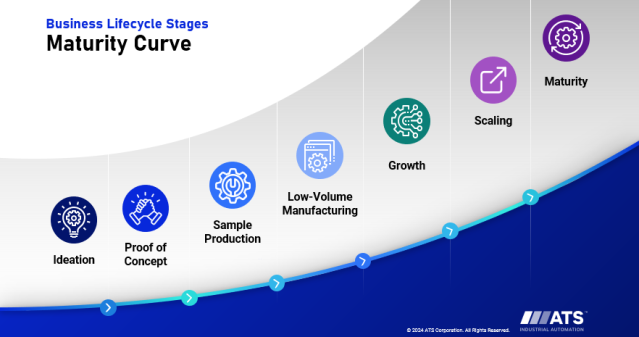


Consumer hygiene products move through short product cycles and frequent demand shifts. Manufacturing teams often need rapid scale-up while maintaining strict quality standards and controlling cost.
Toothbrush manufacturing illustrates this challenge. Manual toothbrush production includes detailed assembly and packaging steps such as bristle insertion, trimming, and tufting, where hygiene and quality standards matter at every step.
Scaling manufacturing for CPG products such as toothbrushes requires two outcomes at the same time:
- Standard approaches that simplify replication across sites.
- Flexible approaches that absorb change, support new variants, and align with shifting global strategies.
Common Challenges in Scaling Manufacturing Operations for Personal Care and Hygiene Products
Scaling breaks down for predictable reasons, and several show up repeatedly in personal care and hygiene programs such as:
- Fluctuating demand and product change. Short life cycles and rapid innovation force frequent adjustments to output and product variants.
- Complex assembly steps. Multi-part assemblies often demand precise handling and stable processes to protect quality.
- Supply chain disruptions and shifting manufacturing footprints. Geopolitical shifts and reshoring trends increase the need for local, agile manufacturing. Strategy changes mid-program often follow, which disrupts global scaling plans.
- Global programs add coordination overhead. Multi-site programs need global common build standards, plus coordinated installations and logistics to maintain a uniform build standard.
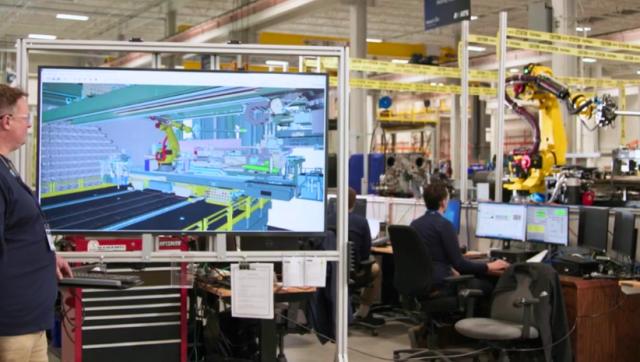
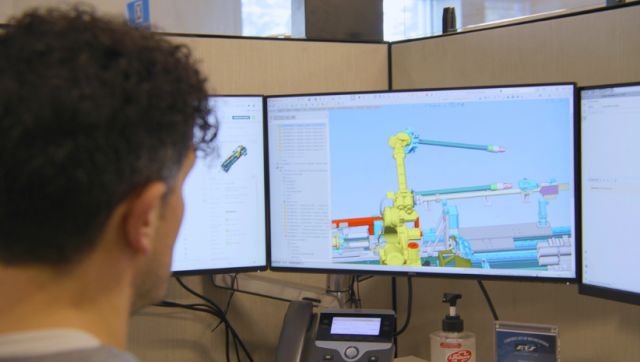
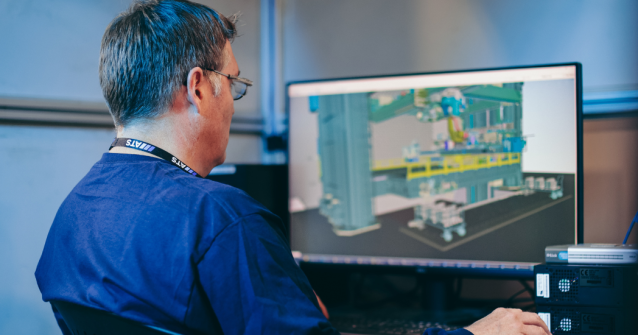
Digital twin technology speeds deployment of design changes across locations, and a consistent installation team across sites helps maintain consistent operations and continuous improvement.
The Hidden Cause of Scale-Up Delays: Replicating Problems Across Lines
Teams often focus on equipment lead times, yet replication creates a larger risk. Rapid deployment across multiple lines limits time for adjustments and fine-tuning, which increases the chance of repeating mistakes across lines. A phased rollout supports improvement between deployments.
Delays also come from unclear responsibilities and uncontrolled changes. Which is why it is important to:
- Establish a change management process for change requests so teams understand impact to designs, manufacturing processes, and schedule.
- Define ownership early, especially when product designs evolve.
- Start with well-defined requirements so automation and engineering teams avoid assumptions and rework. Product validation and end-of-line testing decisions help refine requirements earlier.
A Practical Scaling Framework for Toothbrush and Consumer Personal Care Products
Use this framework to support manufacturing operations management and reduce delivery risk during scaling.
- Lock down requirements and quality expectations early. Clear requirements for dimensions, materials, volumes, and quality standards reduce the risk of under-equipped or incompatible lines. Product validation, including end-of-line testing decisions, helps define measurable requirements. Pre-automation can help with this!
- Build change control into the program plan. Change remains unavoidable, especially across multi-site deployments or during product design updates. A defined change process clarifies responsibilities and reduces schedule disruption from downstream redesign.
- Standardize what repeats, keep flexibility where change hits. Many delays trace back to custom designs rebuilt for each line. Modular assembly approaches reduce design time and support reuse across expansions.
- Treat global rollout as a systems problem, not a shipping problem. Global programs benefit from:
- Global common build standards across facilities
- Staggered installations and shipping logistics
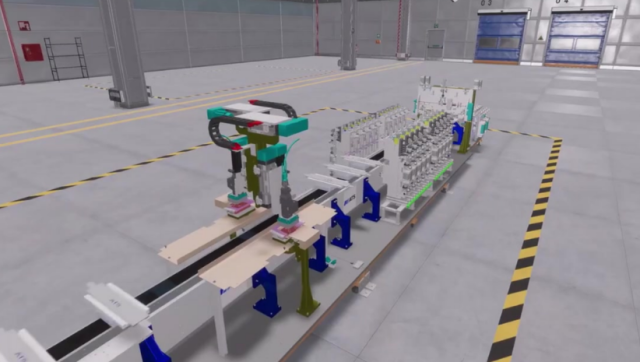
- Digital tools, including digital twin technology, to test and refine workflows before physical implementation
- Consistent installation teams across sites
Pre-Automation: Reduce Scale-Up Risk Before Equipment Build Decisions
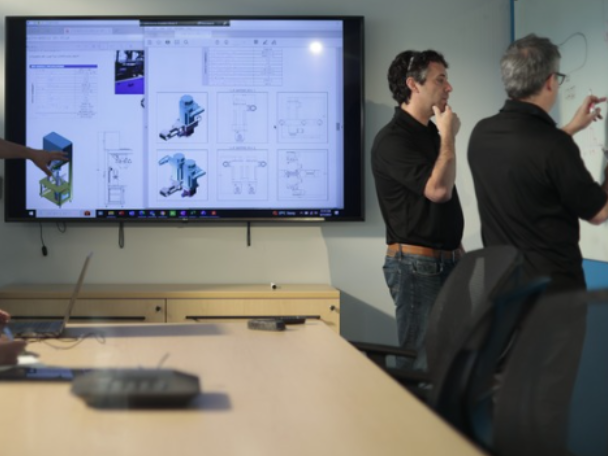
Pre-automation reduces scale-up risk by addressing uncertainty earlier in the lifecycle. The work focuses on early-stage planning tied to product and process development, risk mitigation, and early automation planning.
Key ways pre-automation supports scaling for toothbrush and consumer personal care products:
- Identify roadblocks earlier to reduce costly changes and delays later.
- Use requirements definition to reduce ambiguity and scope creep, while keeping requirements verifiable for testing.
- Apply Design for Manufacturability and Assembly (DFMA) practices to simplify products, reduce variability, and support stable processes.
- Use simulation to model assembly sequences and tolerance stacks, which highlights risks before tooling build.
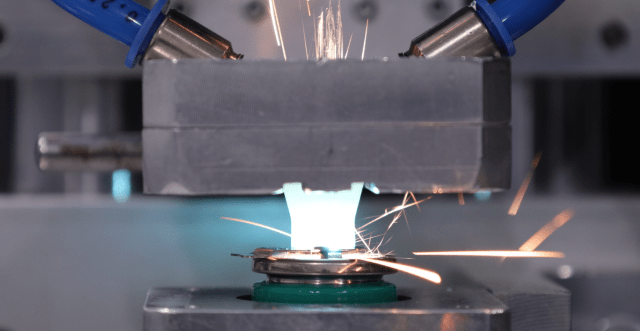
- Use proof of principle testing to validate high-risk processes early, optimize parameters, and identify in-process checks.
Reduce Scale-Up Risk Before You Invest in Equipment
Pre-automation helps manufacturers identify technical risks, validate critical processes, and make informed investment decisions before equipment build begins. Learn how early planning, proof of principle testing, and simulation support more predictable production launches.
Standard and Flexible Solutions for Scaling Manufacturing
Scaling personal care product manufacturing works best when platforms balance standardization with rapid change.
Standardize with Modular Platforms to Reduce Rebuild Work
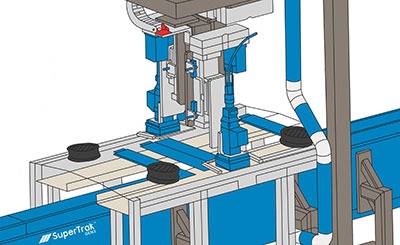
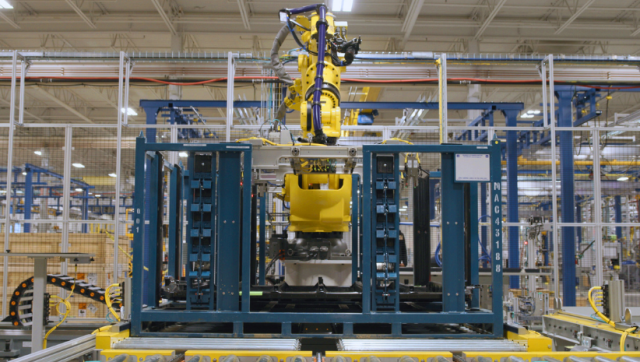
Modular assembly designs reduce delays by supporting reuse of validated solutions and reducing design-from-scratch effort for each new project. In addition to using modular assembly equipment and digital technology, including SuperTrak CONVEYANCE and SYMPHONI technology, as a way to make scale-up easier by supporting reuse and adaptation to process changes and new product designs.
Build Flexibility into the Base with the Adaptable Automation Platform
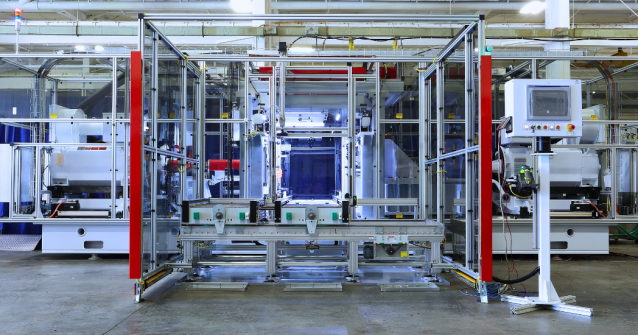
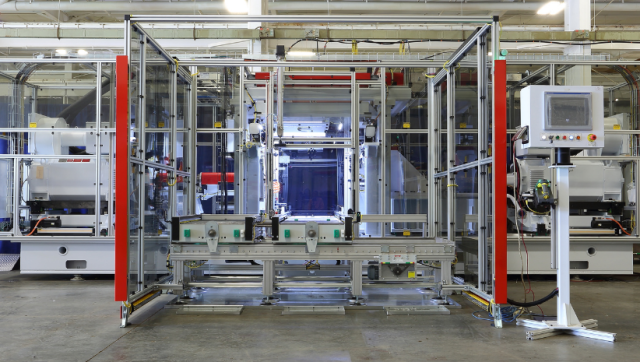
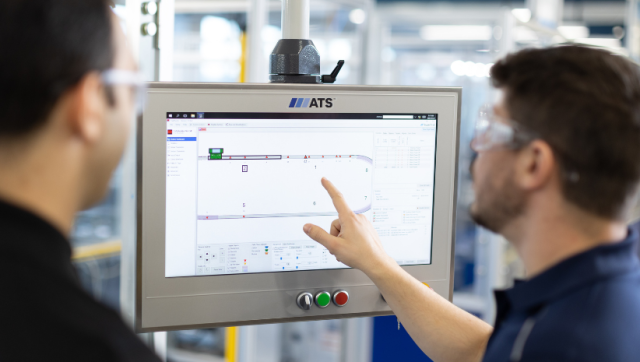
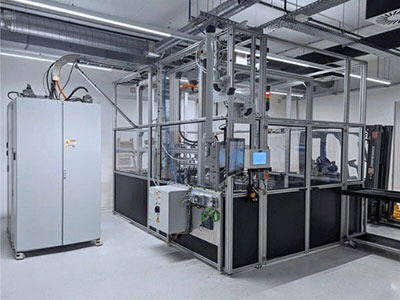
The Adaptable Automation Platform focuses on scalable, flexible manufacturing through plug-and-play integration and real-time performance insights. The platform supports:
- Siemens and Rockwell controls
- Linear transport systems, including SuperTrak CONVEYANCE™
- Integration with Illuminate for real-time performance insights and Symphoni for ultra-fast part assembly
- IP67-rated field devices and ergonomic access for simplified maintenance
This type of platform supports scaling challenges tied to global scaling and shifting strategies:
- Start earlier in development, even when product designs remain in flux, through parallel development and pre-automation activities.
- Redeploy automation assets across programs and facilities through standardized modules and plug-and-play integration
- Adapt layouts as factory needs evolve through flexible chassis configurations and local power and network connections
For low to medium volume scenarios, the platform supports pallet-based linear transport and references cycle times in the four to 12 second range, supporting fast startup and efficient changeovers.
SuperTrak CONVEYANCE: Building Block for High-Throughput Changeovers
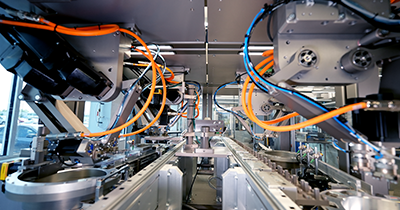
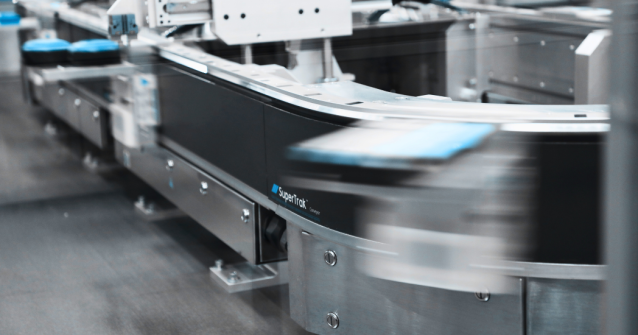
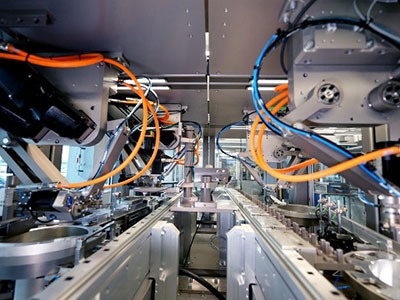
SuperTrak CONVEYANCE™ supports high-speed material handling through independent shuttle control and a modular design that supports customization and scalability.
Key scaling impacts for manufacturing operations management:
- Faster movement between value stations reduces time spent on transport steps.
- Fewer moving parts helps to reduce downtime.
- Application fit includes consumer products and electronics manufacturing where lines support assembly, testing, and packaging.
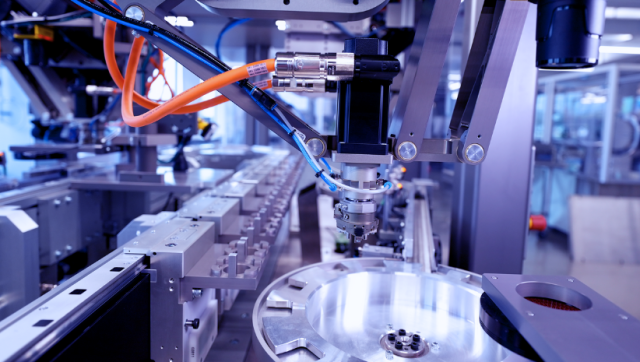
For precision assembly, SuperTrak CONVEYANCE™ reduces tolerance stack-up by reducing reliance on traditional indexing conveyors that introduce variability.
Symphoni for Synchronized, Repeatable Assembly Steps
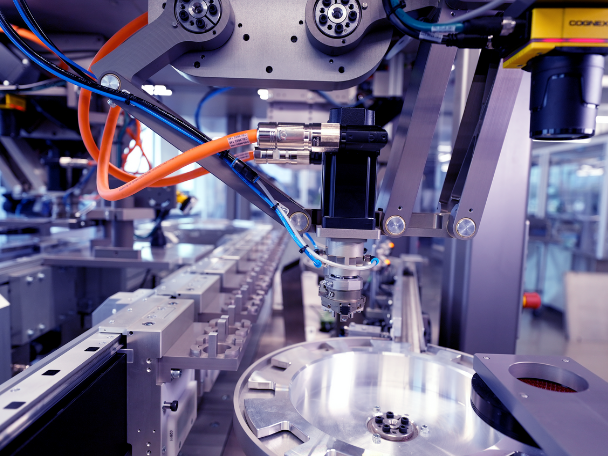
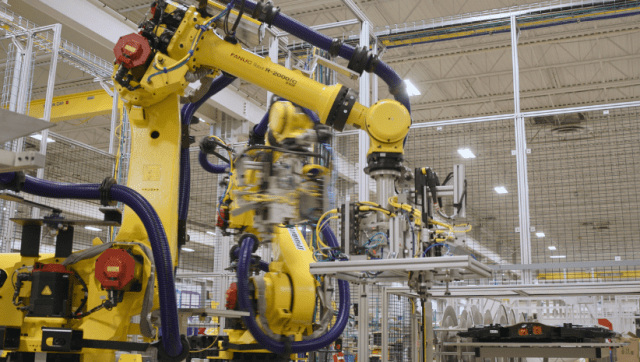
Symphoni is a modular, cam-driven assembly platform designed for speed and repeatability, with synchronized movements across stations.
This approach fits personal care product manufacturing where multi-part assemblies need stable, repeatable motion profiles to support quality management and operational efficiency across high-throughput lines.
Vision Automation for Quality Control Systems at Scale
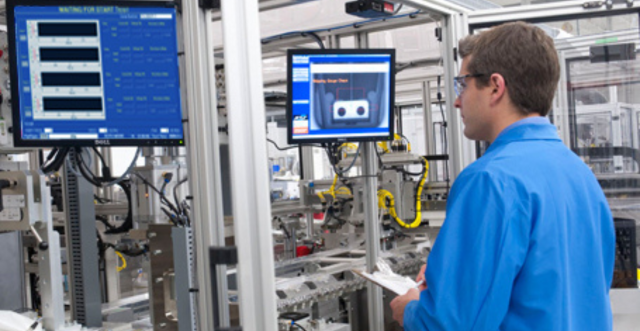
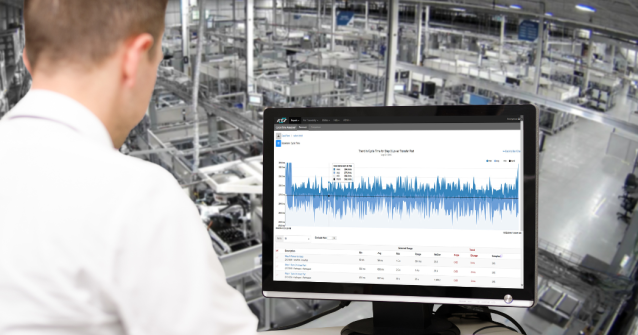
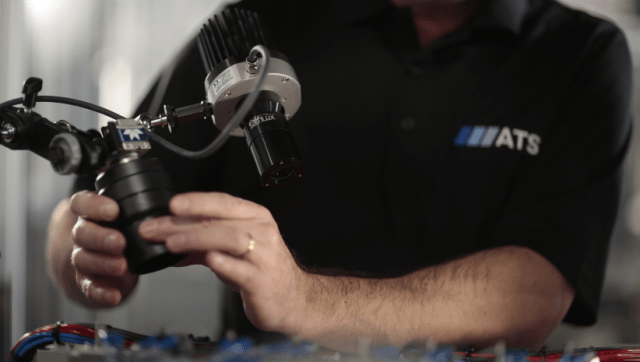
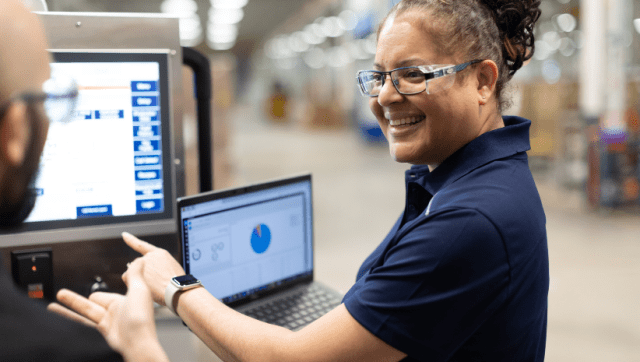
As volume increases, quality control systems need throughput alignment. Vision automation supports real-time feedback for defect identification and correction, plus traceability and statistical analysis through data management.
Key considerations for scaling with vision automation:
- Synchronization and integration require high-speed I/O, specialized programming techniques, and controlled part presentation.
- High-speed vision generates large amounts of data that teams need to store and manage for traceability and statistical analysis.
- Flyby inspections support high-speed lines in consumer product goods.
For toothbrush manufacturing and other hygiene products, vision supports process management by monitoring assembly quality inline, supporting root-cause analysis, and reducing the risk of defects moving downstream.
FAQs
What does it mean to scale consumer product manufacturing safely?
Safe scaling increases output while keeping quality management stable, maintaining hygiene requirements, and using quality control systems that keep pace with throughput.
What are the biggest risks when scaling manufacturing operations for toothbrushes?
Common risks include unclear requirements, uncontrolled change requests, and replication of issues across multiple lines during rapid rollouts.
How do you maintain quality standards while increasing production volume?
Teams need inline monitoring and end-of-line validation tied to clear requirements. Vision automation supports real-time feedback, traceability, and statistical analysis for quality control systems.
How do modular platforms support scaling manufacturing and operational efficiency?
Modular designs reduce redesign effort on each line, support reuse of validated modules, and support efficient changeovers and throughput improvements.
When does it make sense to use the Adaptable Automation Platform?
The platform fits teams that need scalable, flexible manufacturing, need redeployment of assets across programs, and need compatibility across controls platforms and integrated technologies such as SuperTrak CONVEYANCE™ and Symphoni technology.
How do global scaling and changing strategies affect process management?
Multi-site programs need global common build standards, coordinated installations, and digital tools such as digital twins to replicate operations and deploy design changes across locations.
What early steps reduce delays before equipment build decisions?
Pre-automation supports early risk mitigation through requirements definition, DFM and DFA, simulation, and proof of principle testing, so teams reduce late-stage changes and rework.
Putting It Together for Global Scaling and Changing Strategies
Scaling across regions often forces choices between localization and global standardization. A strong approach maintains global build standards while supporting local execution realities:
- Implement global common build standards across facilities
- Use staggered installations and coordinated logistics to maintain uniform builds
- Use digital tools, including digital twins, to test workflows and deploy design changes across locations
- Keep installation methods consistent across sites to support uniform best practices
- Select platforms that reduce engineering overhead and simplify deployment across global sites through controls platform flexibility
For consumer products, this combination supports operational efficiency while enabling quick response when product designs, packaging, or regional requirements shift.
Every project is unique. Allow us to listen to your challenges and share how automation can launch your project on time.

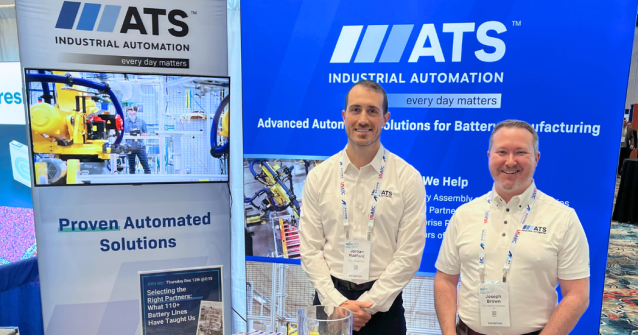
Joe Brown
Business Development Specialist
ATS Industrial Automation
Joe helps companies of all kinds to automate and scale production using bespoke automated assembly, test, and conveyance systems.