

Utilities, renewable energy providers, industrial facilities, and commercial operators continue to invest in battery energy storage systems (BESS) to support grid stability, renewable integration, and energy resilience. As demand grows, battery manufacturers face a growing challenge: moving from pilot production to repeatable commercial manufacturing while maintaining quality, safety, reliability, and profitability.
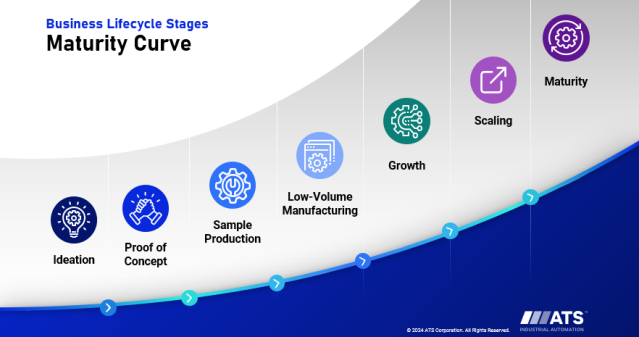
Many manufacturers begin with laboratory units, engineering prototypes, or pilot systems, where experienced teams often have more flexibility to manage process variation. As funding is approved and production volumes increase, the same manufacturing approach may no longer provide the throughput, material handling, testing, traceability, and system integration required for commercial production.
The transition involves more than increasing output. Product design, manufacturing processes, testing strategies, and equipment requirements are often evolving at the same time. Understanding how those areas affect one another helps manufacturers prepare for scale while key production decisions are still flexible.
Scaling Production Changes Manufacturing Requirements
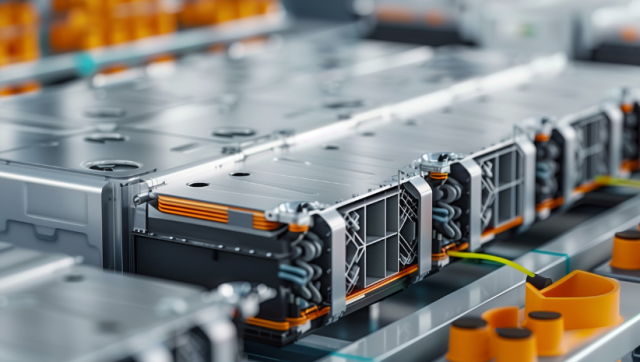
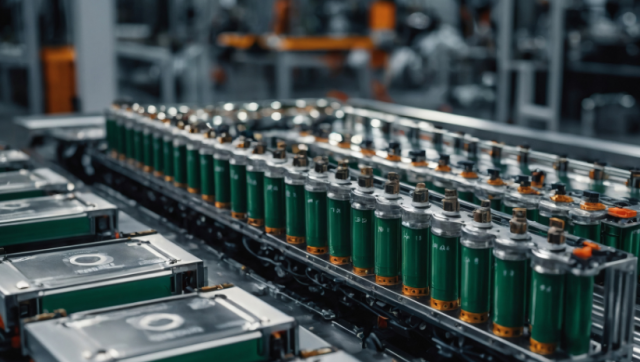
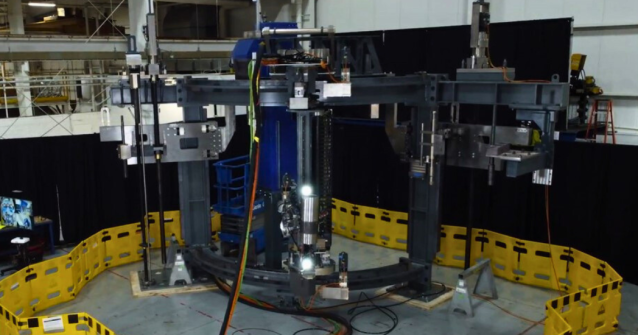
A battery energy storage system looks different from an automotive battery pack. BESS manufacturers integrate battery modules, racks, cooling systems, electrical infrastructure, monitoring devices, controls, communications systems, and containerized deployment platforms. Production also involves large assemblies, heavy components, long lifecycle expectations, and complex system integration requirements.
Many battery manufacturers begin with:
- Laboratory builds
- Engineering prototypes
- Pilot production
- Low-volume manufacturing
At these stages, experienced personnel often manage process variation through manual work and engineering oversight.
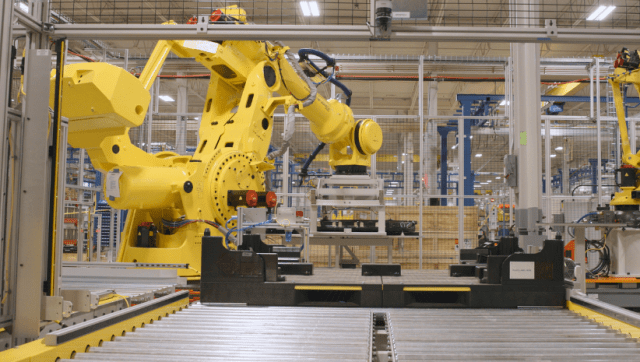
As production volumes increase, manufacturers need repeatable processes for assembly, material handling, testing, quality control, and throughput. Planning for manufacturing requirements early helps teams understand where manual processes remain practical and where manufacturing equipment or automation needs to evolve. That planning becomes more complex when the product itself is still changing.”
Product Changes Affect Production Planning
Battery technologies and product designs often continue to evolve while manufacturers plan production equipment. Changes to cell selection, pack architecture, rack design, cooling methods, and container layouts might affect:
- Material handling requirements
- Assembly workflows
- Thermal management systems
- Testing strategies
- Automation architecture
- Production scalability
For manufacturers developing the product and production system in parallel, this creates an additional consideration. Manufacturing systems often need enough flexibility to accommodate approved design revisions without extensive equipment rework.
Evaluating manufacturability early also gives product and manufacturing teams an opportunity to identify potential production issues before the product moves into higher-volume manufacturing. As those volumes increase, addressing quality concerns earlier in the assembly process also becomes more important.
Module Quality Has Downstream Consequences
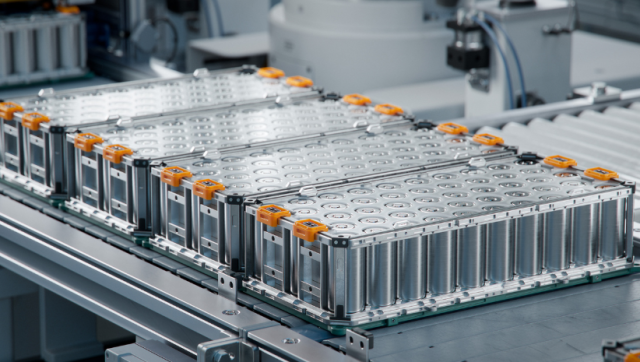
Battery modules form the foundation of many larger BESS assemblies. A quality concern identified after a module enters a rack, container, or complete energy storage system is often more difficult and expensive to address than one found earlier in production.
Module-level quality processes often include:
- Cell verification
- Sorting and matching
- Inspection
- Joining verification
- Testing
Identifying concerns at the module level helps manufacturers address quality issues before components move into higher-value assembly and integration activities. Those quality considerations extend beyond electrical and mechanical assembly. Thermal management also depends on consistent integration as modules, racks, and supporting systems come together.
Thermal Management Depends on Consistent Integration
Grid battery systems are expected to operate under demanding conditions over long service periods. Thermal management affects battery performance, safety, service life, and reliability.
Manufacturing processes need to account for:
- Cooling systems
- Thermal interface materials
- Airflow management
- HVAC infrastructure
- Leak prevention measures
- Monitoring systems
These elements depend on consistent assembly and integration. Processes such as thermal interface material dispensing and cooling plate integration also become part of the manufacturing strategy for battery modules and packs.
Because thermal performance depends on several interconnected components and assembly steps, manufacturers also need to consider where inspection, testing, and validation fit throughout production. Waiting until final system assembly might make issues more difficult to identify and address.
Testing Strategy Becomes More Important as Systems Grow
Testing does not begin and end at the completed energy storage system.
As production scales, manufacturers often need to define:
- Which components require validation?
- When testing should occur?
- What constitutes acceptable performance?
- How should results be documented?
Depending on the product and manufacturing process, validation might occur at several levels:
- Cells
- Modules
- At a complex manufacturing step
- Battery racks
- Integrated electrical systems
- Complete energy storage systems
A clearly defined testing strategy establishes quality gates throughout production. Testing earlier in the process also gives manufacturers an opportunity to identify inconsistencies in components and subassemblies before final assembly. Decisions about where, when, and how to test are easier to address while the manufacturing process and equipment requirements are still being defined.
Why Manufacturing Readiness Matters Before Equipment Design
Some manufacturing challenges become more difficult to address once equipment concepts and factory layouts have taken shape. Evaluating the product and manufacturing process earlier gives engineering teams more flexibility to identify technical risks and refine production requirements.
Manufacturing readiness activities often include:
- Product manufacturability reviews
- Proof-of-principle studies
- Technical risk assessments
- Process assumption reviews
- Validation planning
- Simulation
- Material flow planning
- Capacity planning
Design for manufacturability, for example, considers whether components, assembly processes, tolerances, specifications, and production costs support the intended manufacturing approach. Proof-of-principle studies provide another way to gather information about process performance before manufacturers commit to later production stages.
By evaluating these areas earlier, manufacturers have more opportunity to address product and process risks before equipment implementation and production launch.
From Pilot Production to Commercial BESS Manufacturing
Moving from pilot builds to commercial BESS production requires coordinated decisions across product design, manufacturing processes, module quality, thermal management, testing, traceability, material handling, and automation.
The right production strategy depends on the battery architecture, manufacturing requirements, production volumes, and plans for future growth. Starting manufacturing readiness work while key product and process decisions are still flexible gives engineering teams more information to guide equipment development.
ATS works with battery manufacturers across assembly, testing, manufacturing readiness, and production development, drawing on experience from more than 110 delivered battery assembly and testing lines.
Explore our BESS assembly and testing capabilities to learn how ATS helps battery manufacturers move from development and pilot production toward commercial manufacturing.
Every battery automation project is unique. Allow us to listen to your challenges and share how automation can launch your project on time.

Joe Brown
Business Development Specialist
ATS Industrial Automation
Joe helps companies of all kinds to automate and scale production using bespoke automated assembly, test, and conveyance systems.