

Manufacturers often base maintenance schedules on OEM recommendations and local judgments. When those intervals do not account for asset criticality and specific failure modes, teams may overspend on lower-risk assets while missing maintenance needs on assets with greater production impact. Accurate asset records, task lists, and reliability data to provide a stronger basis for setting maintenance priorities.
The example in this article demonstrates how asset management improvements delivered maintenance savings, increased capacity, and scaled globally without increasing maintenance headcount.
Why Asset Management Breaks Down with Subjective Prioritization
Subjective prioritization often relies on general reliability assumptions and OEM task intervals without fully accounting for asset criticality. This makes several maintenance planning questions harder to answer:
- Which assets drive the most risk to production and compliance?
- Which tasks reduce failure risk for those assets?
- Which tasks waste labor hours without reducing risk?
- Which assets need more attention, and which assets need less?
Answering these questions requires a consistent method for connecting asset criticality, failure modes, and maintenance frequency.
What A Mature Asset Management System Includes
A mature asset management system relies on data and clear decision rules. The following elements enable this transition.
Asset Record Quality
- Confirm equipment records match what exists on the floor.
- Standardize naming, hierarchy, and attributes to ensure consistent asset tracking.
Task List Quality
- Confirm each task list ties to the correct asset.
- Ensure task frequency aligns with asset criticality and failure mode risk.
Decision Rules for Prioritization
- Use a consistent method to rank assets.
- Set task frequency based on reliability data rather than broad OEM intervals.
Execution Discipline
- Apply recommendations through standard workflows.
- Monitor changes over time to sustain improvements.
Together, these elements provide a consistent basis for deciding which assets need maintenance, what work they require, and how often teams perform it.
What You Can Apply to Your Asset Management Program
Start With Records and Task Lists
Review equipment records and task lists first to confirm maintenance decisions are based on accurate asset information.
Replace Subjective Prioritization with Criticality
Use asset criticality to determine where maintenance resources have the greatest operational impact.
Confirm Where Maintenance Spend Misses Risk
A site may spend heavily on maintenance and still miss critical issues when tasks focus on the wrong assets or use unsuitable frequencies. A gap analysis helps identify those mismatches and prioritize corrective actions.
Implement Recommendations Through Standard Work
An assessment is effective only when acted upon. Teams need clear ownership for updating task frequency, planning rules, and maintenance routines.
Plan For Scale Across Sites
Organizations with multiple facilities should treat asset management as a system rather than a local preference. A repeatable diagnostic framework ensures consistent results across sites.
Common Signals That Asset Management Needs a Reset
You can look for the following signals inside your maintenance program:
- Maintenance workload increases without a corresponding reduction in downtime risk.
- OEM task intervals are used without adjustments for asset criticality or failure modes.
- Equipment records, task lists, or scheduled tasks contain gaps, duplication, or recurring work with few findings.
These signals often indicate a need for asset-specific prioritization and task frequency rules.
FAQs
What Is Asset Management in a Maintenance Context?
Asset management is the set of practices a site uses to manage assets across their lifecycle. In maintenance, asset management includes equipment records, task lists, prioritization rules, and the decision logic behind task frequency.
Why Do OEM Recommendations Lead to Overspend?
OEM recommendations address broad operating conditions. Asset-specific criticality and reliability data help teams determine whether those intervals fit the actual risk and operating conditions of each asset.
How Does Criticality Change Maintenance Frequency?
Criticality helps teams prioritize maintenance according to the operational, production, or compliance impact of an asset failure. Maintenance frequency can then reflect both criticality and the relevant failure mode.
How Can a Site Expand Capacity Without Adding Maintenance Headcount?
A site expands capacity without adding maintenance headcount by removing low-value tasks, adjusting task frequency based on criticality, and directing labor toward issues that constrain production.
Next Steps for Asset Management Improvement
If maintenance priorities and asset risk are not clearly aligned, an Asset Management Gap Analysis can help identify gaps in equipment records, task lists, and maintenance strategies. ATS Industrial Automation reliability engineering services help manufacturers establish priorities and develop a roadmap for improvement.
Every project is unique. Allow us to listen to your challenges and share how automation can launch your project on time.

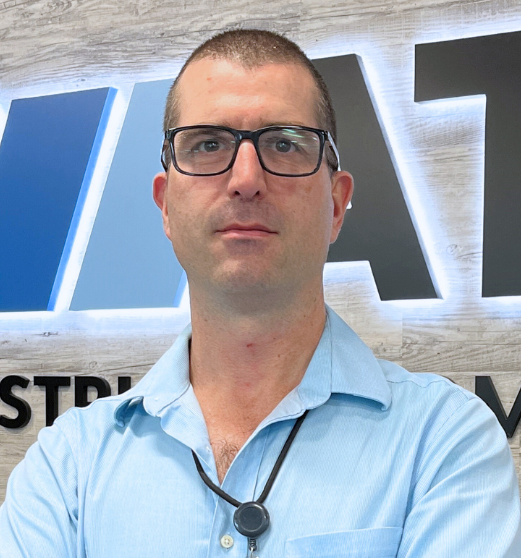
David Dise
Reliability Engineer
ATS Industrial Automation
David partners with manufacturers to enhance asset reliability, optimize maintenance strategies, and strengthen asset management programs. His approach focuses on delivering sustainable improvements that maximize asset lifecycle value, reduce total cost of ownership, and support long-term operational excellence.