

Speed to market remains one of the most persistent challenges in consumer electronics manufacturing. Product lifecycles continue to compress while expectations for quality, reliability, and cost control increase. Many delays begin early in new product development, well before the first unit reaches the factory floor.
The root issue is straightforward. Product designs often advance faster than manufacturing planning. When electronics assembly and manufacturing automation teams engage late, redesigns, equipment changes, and missed launch dates follow. Manufacturers that develop the manufacturing process while designs remain in progress move faster and reduce launch risk.
Why Speed to Market Breaks Down in Electronics Manufacturing
Consumer electronics manufacturing combines PCB assembly, mechanical integration, testing, and final system assembly. Each step introduces dependencies that influence schedule, throughput, and automation feasibility.
Common causes of delays include:
- Product designs finalized without manufacturing input.
- PCB assembly layouts that restrict automation access.
- Unclear ownership of manufacturing processes during development.
- Late design changes that affect tooling, testing, or equipment.
The transition from manually assembled prototypes to automated production introduces further complexity. Operators compensate for variation through judgment and touch. Automated systems require controlled part geometry, stable tolerances, and defined datum strategies. When these elements remain undefined, automation timelines extend and speed to market slows.
Building the Manufacturing Process While Designs Evolve
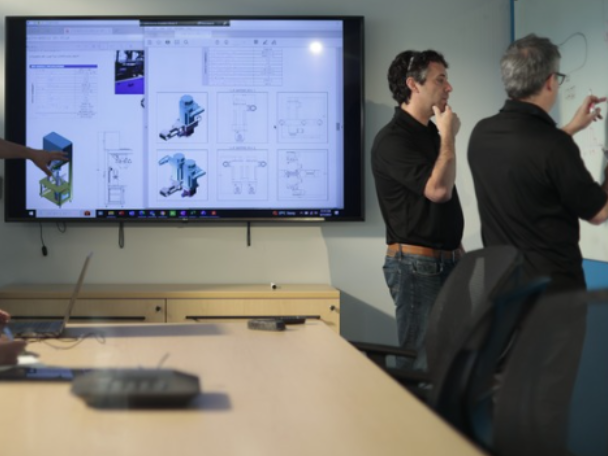
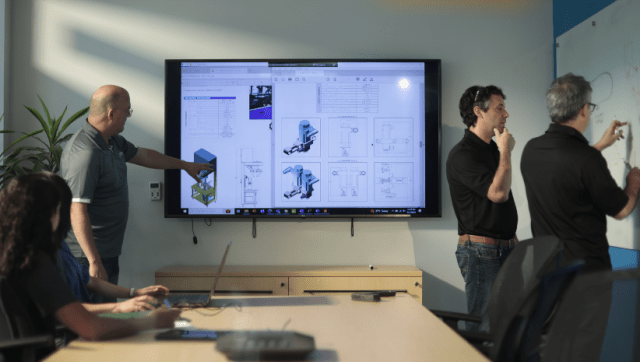
Speed to market improves when product development and manufacturing process development run in parallel. Early involvement from automation partners surfaces risk while designs are still flexible.
We talk more about the appropriate time to engage an automation partner here….HINT: It’s early in the design phase!
Early manufacturing process development supports:
- Faster transition from prototype to automated electronics assembly.
- Reduced redesign cycles during PCB manufacturing process validation.
- More stable equipment requirements.
- Clear alignment between design intent and production constraints.
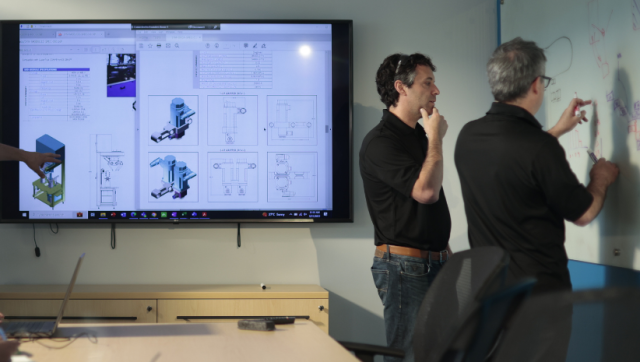
Early collaboration between design and manufacturing teams exposes issues such as inaccessible weld joints, misaligned datum strategies, or part geometries outside automation reach. Resolving these constraints early prevents downstream delays.
Proof-of-Principle Studies Creates Early Feedback and Prevents Delays
Proof-of-principle studies validate manufacturability before equipment design begins. This work uses feasibility assessments, simulations, and proof of principle activities to confirm that critical process steps function as intended.
Effective POP activities include:
- Validating PCB assembly handling and orientation.
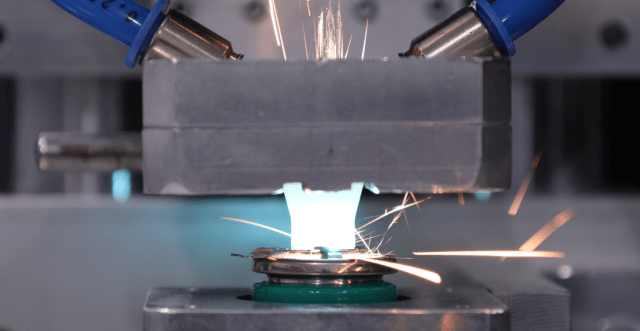
- Confirming welding, soldering, or dispensing feasibility.
- Establishing realistic cycle times and throughput targets.
- Identifying high-risk processes before equipment build.
Early identification of manufacturing risk reduces the likelihood of launch failure and schedule overrun.
Design for Manufacturability Reduces Speed to Market Risk
Design for manufacturability (DFM) aligns product design decisions with manufacturing realities. Teams evaluate assembly feasibility, material selection, tolerances, and testing requirements early in new product development.
DFM improves speed to market by:
- Reducing late-stage design changes.
- Simplifying manufacturing automation requirements.
- Reducing commissioning and ramp-up time.
This discipline is critical in electronics manufacturing, where even small PCB layout changes affect testing access, automation clearance, and throughput.
Closing the Gap Between Design and Automation Teams
A recurring challenge in electronics manufacturing is the disconnect between product design and automation teams. Design teams prioritize cost, performance, and packaging. Automation teams focus on repeatability, quality, and throughput.
Late handoffs often introduce issues such as:
- Inaccessible assembly features.
- Joints unsuitable for automated welding.
- Parts that don’t align under automated conditions.
Manufacturers that involve automation experts during early design phases identify these risks sooner. Minor changes, such as adding alignment features or relocating weld zones, improve throughput and reduce downtime.
Digital Tools Support Faster Validation and Launch
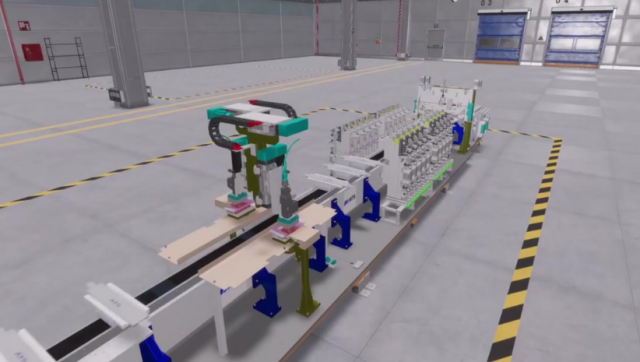
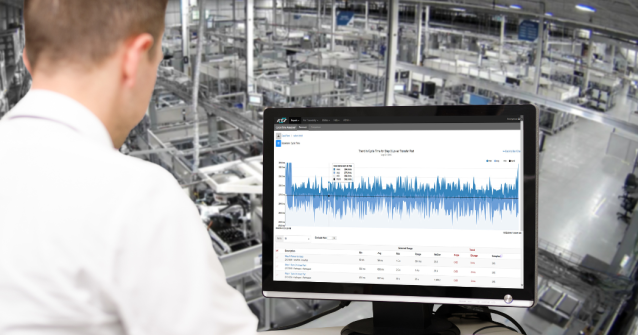
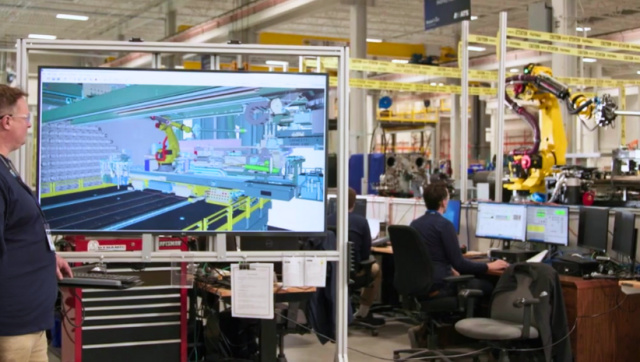
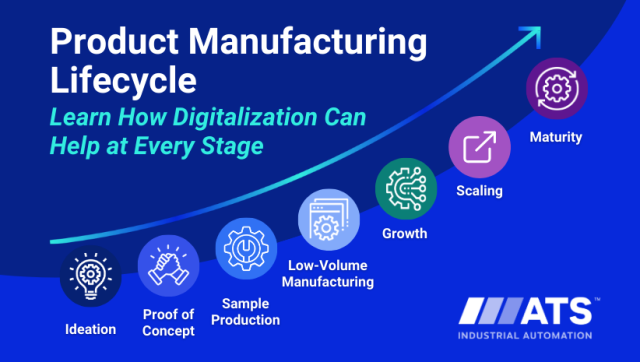
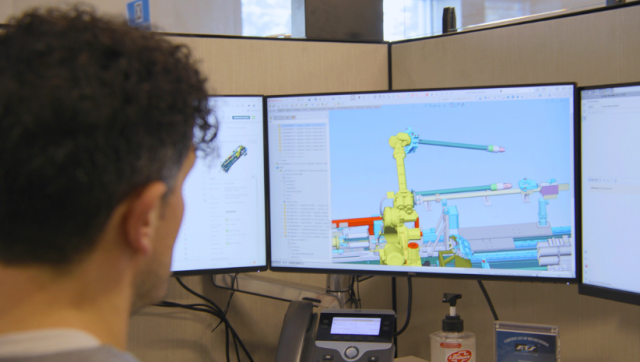
Digitalization plays a direct role in improving speed to market. Digital twins and system twins allow manufacturing concepts to be validated before physical equipment exists.
Digital tools support speed to market by:
- Enabling virtual commissioning and early validation.
- Identifying bottlenecks through system-level simulation.
- Reducing integration and commissioning time.
- Supporting faster production ramp-up.
One manufacturer reduced integration time for a new process station from four weeks to eight days by using system twins and virtual commissioning. This approach allowed validation without stopping production.
What Faster Speed to Market Looks Like in Practice
Manufacturers that adopt pre-automation and design for manufacturability achieve:
- More predictable product launches.
- Faster electronics manufacturing scale-up.
- Lower defect rates at start of production.
- Improved return on manufacturing automation investments.
Speed to market improves when manufacturing becomes part of product development, not a downstream activity.
FAQs
How does pre-automation improve speed to market?
Pre-automation identifies manufacturing risks early, reducing redesigns and delays during equipment build and commissioning.
Why start building the manufacturing process before the product design is finalized?
Parallel development allows manufacturing constraints to inform design decisions, preventing late-stage changes.
How does design for manufacturability affect PCB assembly?
Design for manufacturability improves automation access, reduces manual handling, and stabilizes the PCB manufacturing process earlier.
What causes delays between design and manufacturing teams?
Late handoffs, unclear ownership, and limited collaboration lead to mismatched requirements and extended validation cycles.
How do digital twins support faster product launches?
Digital twins enable early testing, virtual commissioning, and bottleneck identification, reducing integration time and launch risk.
Speed to Market Requires Early Manufacturing Alignment
Improving speed to market in consumer electronics manufacturing requires early alignment between product design, manufacturing process development, and automation planning. When manufacturing operates as a parallel activity within new product development, uncertainty decreases and launch schedules stabilize.
Pre-automation, design for manufacturability, and digital validation tools provide early visibility into production risk while designs remain flexible. This approach limits late-stage changes, supports scalable electronics assembly, and shortens the path from design to full-rate production.
Manufacturers that engage automation partners early position electronics manufacturing programs for faster launches, steadier ramp-ups, and stronger long-term performance.
Every project is unique. Allow us to listen to your challenges and share how automation can launch your project on time.

Joe Brown
Business Development Specialist
ATS Industrial Automation
Joe helps companies of all kinds to automate and scale production using bespoke automated assembly, test, and conveyance systems.