

Industrial sensor manufacturers face increasing pressure to deliver consistent performance across expanding product portfolios. Pressure sensors and other industrial automation sensors often move through high mix, low volume production environments where small process shifts create disproportionate quality and yield risk. As product variants increase, maintaining stable assembly processes, equipment calibration, and product performance becomes more difficult across shared equipment and teams.
Manufacturing process variation rarely appears suddenly. It builds over time as product designs evolve, manufacturing and test equipment require recalibration, and production systems stretch beyond their original assumptions.
Reducing variation requires earlier process insight, tighter data feedback loops, and reliability engineering practices designed to perform under real operating conditions. Pre-automation validation, digital tools, and reliability engineering form the foundation for stabilizing sensor manufacturing processes before variation leads to scrap, rework, or field failures.
What Is Variation Reduction?
Variation reduction focuses on minimizing unintended differences in a manufacturing process that affect product performance, yield, and long-term reliability. In sensor manufacturing, variation challenges commonly appear as equipment calibration drift, assembly misalignment, inconsistent test results, or unstable process control across production shifts and product variants.
When sensor manufacturers must meet tight tolerances, small changes in materials, methods, equipment, or environment can amplify risk across the production process. Variation reduction aims to address these sources systematically rather than relying on inspection or manual correction late in the production process.
Why Process Variation Increases with Multiple Sensor Variants
High mix production environments introduce frequent changeovers, varying part geometries, and different process parameters, setup requirements, and equipment calibration requirements.
Each transition increases the likelihood of error when processes depend on informal knowledge or late-stage inspection instead of preventive controls.
Common challenges include:
- Inconsistent datum strategies across sensor variants.
- Manual or semi-manual equipment calibration and verification activities.
- Limited process visibility before full automation.
- Testing methods that fail to represent real operating conditions.
These issues appear repeatedly in product manufacturing environments where multiple sensor families share assembly and test equipment.
Root Causes of Manufacturing Process Variation
Process variation typically traces back to a combination of technical and organizational factors.
- People: Variation increases when operators compensate for unstable processes or unclear work instructions.
- Machine: Equipment tuned for one product variant often drifts when reused for another product without revalidation.
- Method: Processes designed after product design lock‑in leave little room to correct tolerance stack‑ups.
- Material: Supplier variation in sensor housings, PCBs, or adhesives introduces downstream instability.
- Management: Late involvement of automation teams delays corrective action.
- Environment: Temperature, humidity, and vibration directly affect manufacturing and test equipment calibration, as well as testing accuracy.
Addressing these factors early prevents variation from becoming embedded in production.
How Pre‑Automation Reduces Process Variation
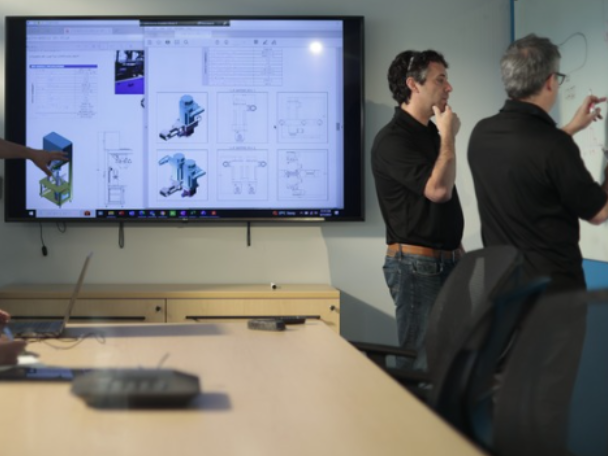
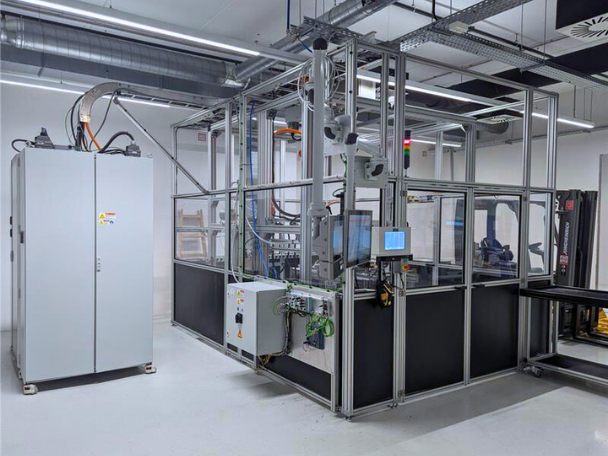
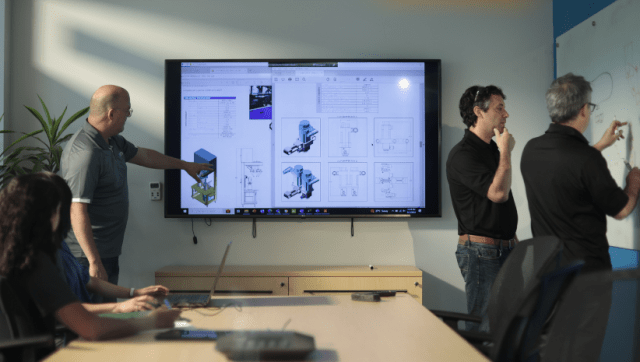
Pre-automation allows sensor engineering teams to evaluate critical process steps before committing to production tooling. These studies surface failure modes early and give teams the opportunity to adjust part features, datum strategies, and process parameters while change costs remain low.
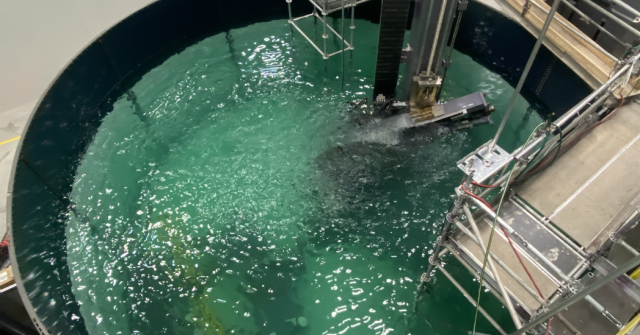
Proof of principle testing validates feasibility and identifies unstable assembly processes, equipment calibration requirements, and testing methods before building production equipment.
This approach supports data-backed decisions around automation scope, reduces tolerance stack up across product variants, and limits late-stage line modifications. Pre-automation helps to establish a stable baseline for automation development across shared sensor platforms.
Digital Tools That Improve Process Control
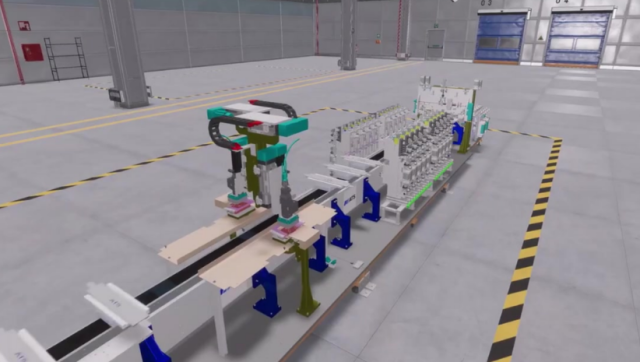
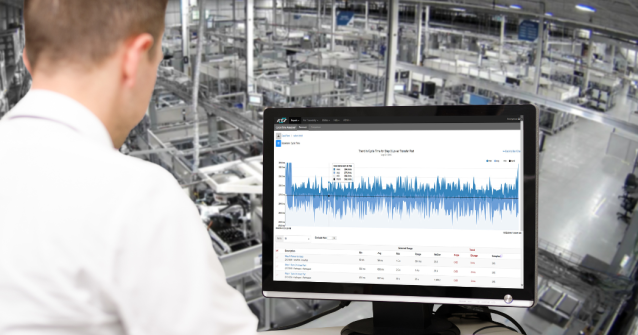
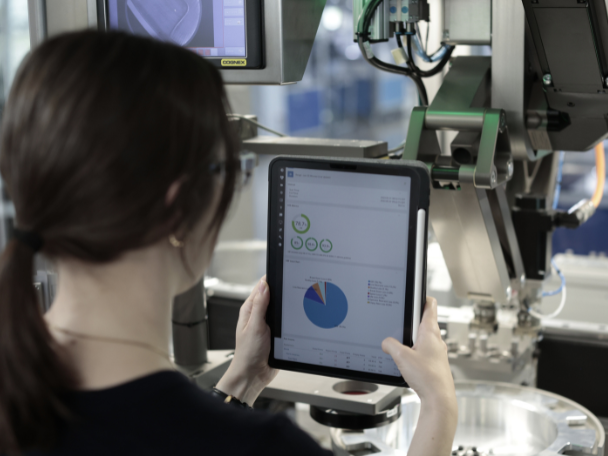
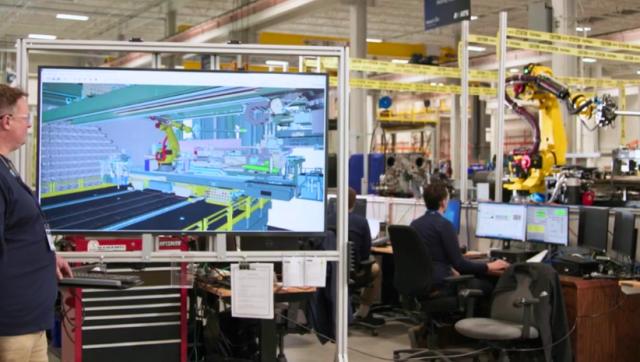
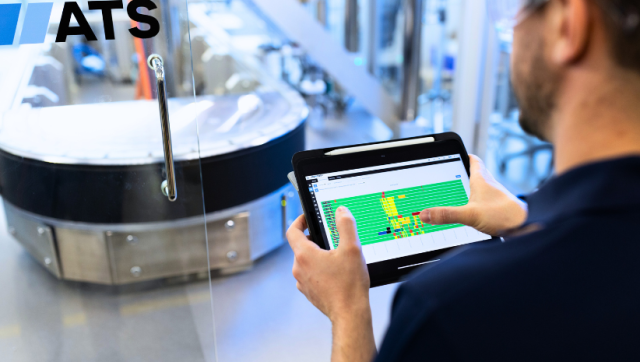
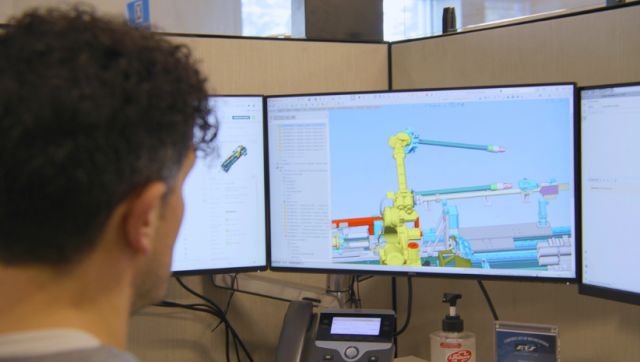
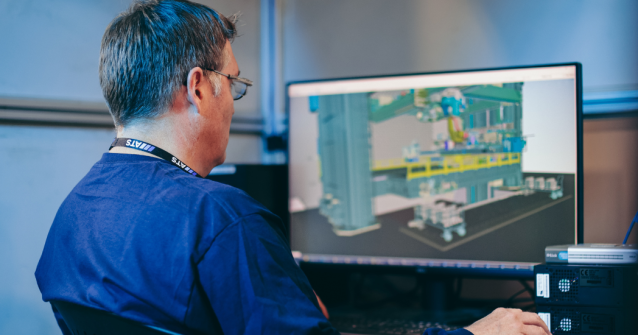
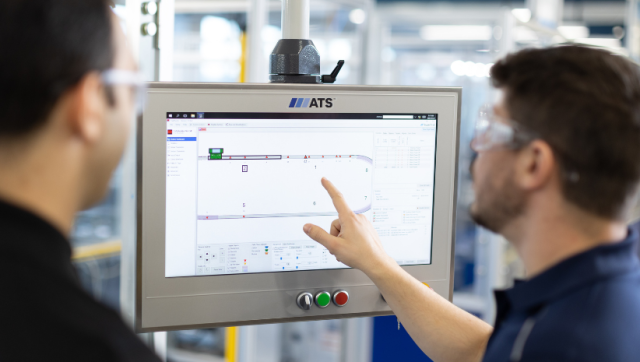
Digitalization can improve process control by converting manufacturing data into usable insights. Digital twins, system twins, and process simulation allow teams to evaluate how variation affects outcomes without disrupting production.
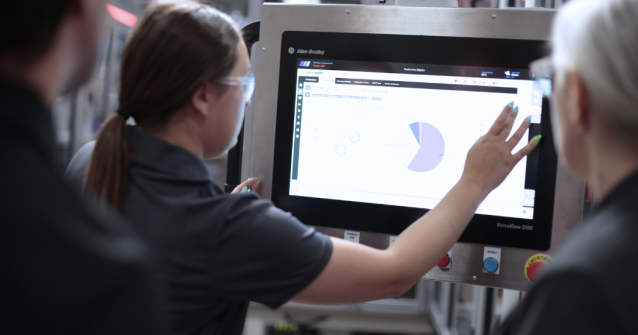
By simulating multiple sensor variants on shared equipment, digital tools reveal sensitivity to input variables, support validated changeover settings, and enable earlier detection of process drift. Manufacturing intelligence platforms further strengthen control by linking quality data with equipment performance, improving visibility into how variation affects Overall Equipment Effectiveness.
These tools shift variation management from reactive adjustment to proactive control.
Reliability Engineering for Sensor Manufacturing
Reliability engineering focuses on how manufacturing equipment and processes perform over time, not only at end of line inspection. In sensor manufacturing, reliability engineering helps maintain equipment calibration stability, environmental robustness, and repeatable assembly processes across product variants.
Key reliability activities include:
- Failure mode analysis during process development
- Stress testing for real operating conditions
- Preventive controls embedded directly into production steps
- Data-driven maintenance strategies
By addressing reliability during process design, manufacturers reduce defects before sensors reach customers and limit downstream warranty risk.
Design of Experiments for Equipment Calibration Optimization
Design of Experiments (DOE) provides a structured method for understanding how input variables affect manufacturing and test equipment calibration outcomes.
Instead of adjusting parameters through trial and error, DOE isolates the variables that drive variation and reveals interactions that are not obvious through single factor testing.
DOE improves equipment calibration consistency by identifying dominant factors such as temperature, pressure input, assembly torque, and electronic offsets.
Controlled experimentation enables teams to stabilize calibration settings across variants and document process limits with statistical confidence.
Key Steps in Applying DOE:
- Define Objectives and Responses
Identify equipment calibration accuracy, repeatability, or drift as measurable outcomes. - Identify and Select Factors and Levels
Include temperature, pressure input, assembly torque, and electronic offsets - Choose an Experimental Design
Factorial (test every possible combination) or fractional factorial (test a select subset) design to reduce test volume while maintaining insight. - Prepare and Execute the Experiment
Run tests under controlled conditions with documented procedures. - Analyze and Interpret Results
Use statistical analysis to determine which factors drive variation. - Use and Present Results
Apply findings to process settings and repeat testing as product variants change.
Benefits of DOE in Sensor Manufacturing
DOE reduces equipment calibration variability, limits manual adjustment, accelerates process stabilization, and strengthens process control documentation.
These outcomes support consistent production performance across expanding sensor portfolios.
How Sensor Manufacturers Reduce Variation Effectively
Sensor manufacturers achieve the strongest variation control by combining pre-automation validation, digital process simulation, reliability engineering principles, and statistical methods such as DOE. This integrated approach supports stable production even as product complexity increases.
Applying these methods together enables manufacturers to control inputs earlier, stabilize shared processes, and scale production without sacrificing precision or repeatability.
FAQ
What causes process variation in sensor manufacturing?
Process variation often comes from inconsistent materials, manual equipment calibration activities, unstable datum strategies, and environmental effects that influence manufacturing and test processes.
How does automation reduce variation in sensor production?
Automation reduces variation by standardizing assembly steps, improving repeatability, and embedding process control into the production process.
Why is equipment calibration a major source of variation?
Manufacturing and test equipment calibration depends on environmental conditions, input parameters, and process consistency. Without structured methods such as DOE, small changes in these factors can introduce variation into production and testing results.
How do digital twins help sensor manufacturers?
Digital twins allow manufacturers to simulate production scenarios, test product variants, and identify process sensitivities before physical deployment.
When should sensor manufacturers involve reliability engineering?
Reliability engineering needs to start during process development, not after production issues appear. Early involvement reduces field failures and warranty risk.
Building Stable Sensor Manufacturing Processes at Scale
Reducing manufacturing process variation requires more than tighter inspection at the end of the line. In high mix sensor production environments, variation often originates during early assembly, equipment calibration, and process design decisions that propagate across product variants.
Pre-automation validation identifies unstable steps before automation design begins. Digital tools provide visibility into how variation behaves across shared equipment and changing inputs. Reliability engineering helps maintain equipment calibration stability and process performance under real operating conditions rather than only during qualification.
When these disciplines work together, manufacturers gain stronger control over process inputs, faster stabilization during changeovers, and greater confidence in product performance across expanding portfolios. The result is lower scrap, fewer manual interventions, and consistent output without added production complexity.
Every automation project is unique. Allow us to listen to your challenges and share how automation can launch your project on time.

Patrick Tabis
Applications Group Lead
ATS Industrial Automation
Patrick helps companies across numerous industries with planning and deploying automation projects on a global scale. Patrick works with customers to optimize the technical design of production lines to drive operational efficiency.