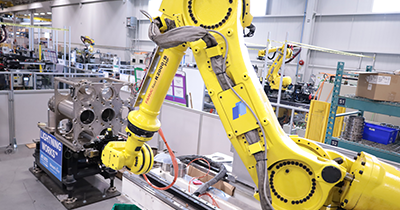


Manufacturing operations rely on a wide range of production assets, including machines, tooling, control systems, and supporting infrastructure. Understanding which of these assets pose the greatest risk to production remains essential for maintaining output, quality, and uptime. While finished products represent what leaves the factory, the performance of the equipment and systems behind them determines whether production targets, quality standards, and throughput goals are met. A structured asset criticality assessment helps manufacturers focus attention where it delivers the most value, improving efficiency, reducing downtime, and ensuring maintenance effort supports production goals.
Criticality extends beyond how essential an asset is to meet production targets. An asset’s impact on product quality, regulatory compliance, safety, and long-term operational continuity all influence risk. Exposure to obsolescence, availability of supplier support, and the likelihood of disruptive failure help determine which assets require increased oversight.
Reliability-centered maintenance practitioners consistently note that asset criticality underpins effective industrial asset management. When teams understand which assets introduce the highest operational or regulatory risk, they can align resources and maintenance strategies around the drivers of performance.
Why Criticality Matters in Manufacturing Systems
Across manufacturing environments, critical assets share a common trait: their failure disrupts production. Whether risk originates from an entire machine or a single component, structured operational analysis helps teams identify where attention delivers the greatest return.
Examples include:
- An aging controller with extended lead times presents greater risk than a low-cost, readily available replacement part.
- A chiller protecting perishable product carries higher criticality than a comfort cooling unit serving office space.
- A syringe filler head that contacts product requires tighter control than a non-contact support component.
Without prioritization based on criticality, teams may misallocate labor and focus on low impact issues, while high risk assets remain exposed.
Key Factors to Consider When Ranking Equipment Asset Management Priorities
To create a meaningful criticality ranking across an equipment asset management strategy, consider each asset’s:
- Impact on Process Performance: Assets influencing process control or overall equipment effectiveness (OEE) require closer monitoring.
- Repair and Replacement Cost: Downtime cost often exceeds component price and must factor into decision-making.
- Product Contact and Compliance Risk: Assets that touch the product or support validated processes carry higher criticality, particularly in regulated industries.
- Failure Likelihood and Predictability: Maintenance data can reveal recurring failure patterns and highlights where intervention matters most.
- Obsolescence and Lead Times: Components with long procurement timelines or limited supplier support increase operational exposure.
Reliability engineers often note that overlooking these factors separates stable production from repeated disruption. In automotive, manufacturing, supply chain/logistics, and high precision assembly environments, unmanaged criticality introduces risk to safety, compliance, and supply commitments.
Identifying When Critical Assets Are Likely to Cause Disruption
Effective criticality analysis will highlight early indicators of risk, including:
- Escalating operating temperatures
- Excessive cycles or mechanical wear
- Known failure modes reflected in historical data
- Extended procurement timelines
- Approaching end of life or software support expiration
Early visibility enables intervention before production or compliance starts to suffer.
Improving Operational Efficiency Through Criticality-Based Planning
A clear asset hierarchy enables teams to focus effort where impact is highest, including:
- Preventive assessments identifying likely failure points
- Failure modes and effects analysis that assign severity, likelihood, and detectability
- Condition-based monitoring for high-risk assets
- Preventive maintenance programs that align with operational impact
- Run-to-failure decisions for low-risk, low-impact equipment
This approach improves reliability, extends equipment life, and reduces wasted maintenance effort. At the same time, this approach can increase confidence across operations teams, as they become unleashed from reactive response cycles.
How FMEA Supports Industrial Asset Management
A well-run failure modes and effects analysis strengthens industrial asset management by evaluating:
- Severity: Does failure stop production or violate standards?
- Likelihood: How often does the failure mode occur?
- Detectability: Can sensors, operators, or technicians identify early warning signs?
An asset’s temperature range, vibration signature, pressure behavior, and cycle count all contribute to a clearer understanding of when intervention is required.
Using Condition-Based Monitoring to Enhance Reliability
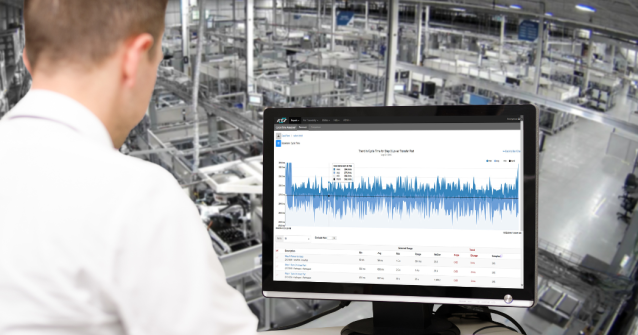
Modern asset management systems integrate machine data to generate real time insight that helps operations teams:
- Detect early failure indicators
- Trigger automated work orders
- Plan maintenance without disrupting production
- Track long-term equipment health trends
This connected approach improves decision making and allows upgrades or redesigns to be planned deliberately rather than reactively.
Embedding Criticality in Organizational Culture
Criticality analysis functions as an operating discipline rather than a one-time task. Long-term success depends on alignment across:
- Procurement decisions evaluating lifecycle risk and supportability.
- Financial planning prioritizing investment where failure carries the highest consequence.
- Cross-functional collaboration among maintenance, engineering, operations, and quality teams.
Reliability specialists emphasize that Maintenance Teams alone cannot own criticality. Consistent documentation, shared criteria, and cross-team accountability support sustainable outcomes.
FAQs
What is asset criticality analysis?
Asset criticality analysis is a structured approach to ranking assets based on their impact on safety, quality, production, and operational efficiency. This maintains focus on equipment that carries the greatest risk.
How does criticality improve operational efficiency?
By identifying which assets require the most attention, teams allocate labor, parts, and monitoring effort more effectively, reducing downtime and improving throughput.
Why are factors like obsolescence and lead time important?
Outdated or long lead components increase downtime risk because replacement or repair cannot occur quickly. These assets often receive higher criticality rankings.
Is criticality analysis only for large facilities?
No. Any operation with machinery benefits from understanding which assets pose the greatest threat to performance.
How often should criticality assessments be updated?
At least annually, or whenever new assets enter service, production processes change, or failure data indicates shifts in equipment behavior.
Next Steps: Applying Criticality Across Your Operation
Manufacturers adopting criticality practices often begin with:
- Defining clear evaluation criteria: function, repair duration, operational impact, replacement costs, SME dependencies.
- Ranking all assets at the site according to these criteria.
- Conducting FMEA, starting with the highest-risk assets.
- Reviewing resource allocation to eliminate time spent on non-critical equipment.
- Updating preventive strategies based on findings.
- Leveraging condition-based monitoring for high-impact components.
Embedding this structure supports a more reliable, efficient, and predictable operation.
Ready to strengthen your operation with clearer asset priorities?
Explore how ATS Industrial Automation helps improve reliability, reduce downtime, and optimize maintenance strategy.
Connect with the reliability engineering team to begin building a more efficient, future-ready operation.
Every project is unique. Allow us to listen to your challenges and share how automation can launch your project on time.

Rajiv Daljeet
Lifecycle Sales Manager
ATS Industrial Automation
Rajiv partners with manufacturers to strengthen asset management programs by connecting strategy, reliability engineering, and operations. He helps organizations quantify residual risk, align maintenance and capital investments, and build practical roadmaps that improve reliability and total cost of ownership.