

Drone manufacturing often brings a level of complexity that places pressure on overall equipment effectiveness, or OEE. High product mix, frequent design updates, and a blend of manual and automated processes tend to introduce instability across availability, performance, and quality. These conditions shape how consistently a production line operates from shift to shift.
OEE performance depends on how well the operations manufacturing team manages variation, maintains consistent cycle times, and meets strict quality requirements. When production capacity increases without a structured approach to addressing these challenges, losses tend to grow. Downtime increases, throughput becomes less predictable, and quality issues surface in downstream processes.
Why OEE Matters in Drone Manufacturing Operations
OEE measures how effectively production performs across availability, performance, and quality. Together, these factors provide a practical view of where losses occur and how those losses affect throughput and delivery.
In drone manufacturing environments, OEE is often influenced by several recurring conditions:
- Frequent product changeovers driven by customization and configuration options.
- Manual assembly steps that introduce cycle time variation between operators and shifts.
- New technologies that reduce process stability during early production phases.
- Strict quality requirements that limit tolerance for defects or rework.
Without clear visibility into these losses, production teams often focus on output volume rather than the constraints limiting sustainable performance.
Understanding The OEE Formula
OEE combines three factors:
- Availability measures losses from downtime, changeovers, and equipment disruptions.
- Performance measures speed losses caused by cycle time variation or minor stops.
- Quality measures losses from scrap, rework, and startup defects.
In drone assembly operations, quality losses often have an outsized impact. Defects frequently lead to failed testing, compliance concerns, or extended rework cycles that affect downstream stations.
Understanding Losses in Drone Manufacturing
The Six Big Losses framework organizes OEE losses across availability, performance, and quality. This structure helps teams isolate where variation enters the process.
Availability losses include:
- Changeovers driven by design updates or configuration changes.
- Equipment downtime linked to reactive maintenance or inconsistent systems.
Performance losses include:
- Reduced speed from manual handling and inspection.
- Minor stops during alignment, fastening, or wiring.
Quality losses include:
- Startup defects during new product introduction.
- Scrap and rework caused by unstable processes or incomplete validation.
A detailed breakdown of these losses is outlined in Improving OEE by Analyzing the Six Big Losses.
Key Constraints Limiting OEE in Drone Manufacturing
Product Variation and Changeover Frequency
Drone manufacturers frequently build multiple variants on the same production line. Differences in payloads, battery sizes, and sensor packages increase changeovers and reduce repeatability. Over time, this variability drives inconsistent OEE results across shifts and product runs.
Limited Production Visibility
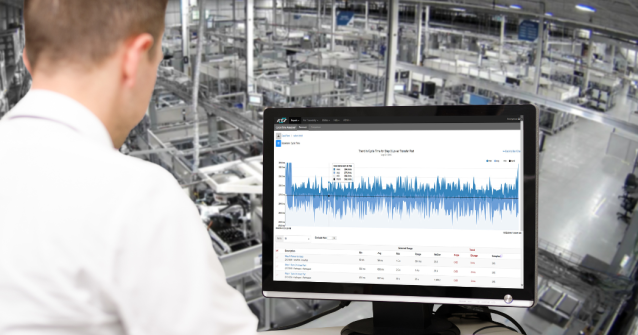
Disconnected systems and manual data collection reduce insight into downtime, defects, and recurring disruptions. Limited visibility makes root cause analysis more difficult and slows improvement efforts.
Cycle Time Variability
Manual assembly steps such as wiring, fastening, and calibration introduce operator-dependent cycle times. Without standardized work and digital guidance, performance losses increase as demand rises.
Inconsistent Part Quality
Variation with in-house manufactured components affects downstream assembly stability. Small deviations in incoming parts often lead to alignment issues, rework, or testing failures later in the process.
Strict Quality Requirements
Drone manufacturers operate under strict internal and external quality requirements. Failures during functional testing or validation increase rework and reduce overall quality rates.
New Technology Integration
Emerging propulsion, battery, and sensor systems often enter production before process capability fully stabilizes. Early phases of production tend to experience higher losses as teams refine processes.
Practical Approaches to Improve OEE in Drone Manufacturing
Pre-Automation for Early Stability
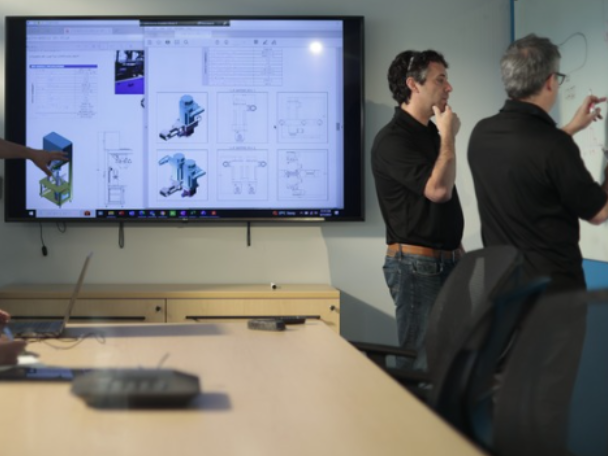
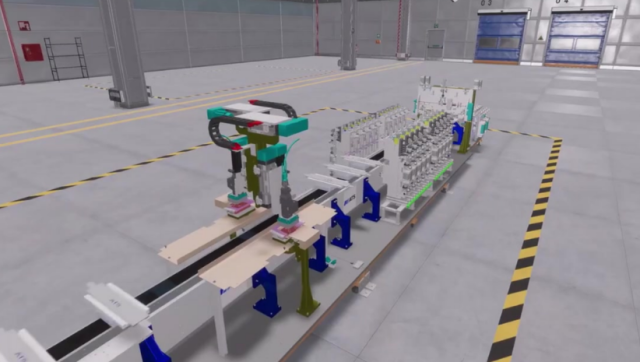
Pre-automation helps teams identify process risks before committing to full automation. During RFQ and development phases, pre-automation can:
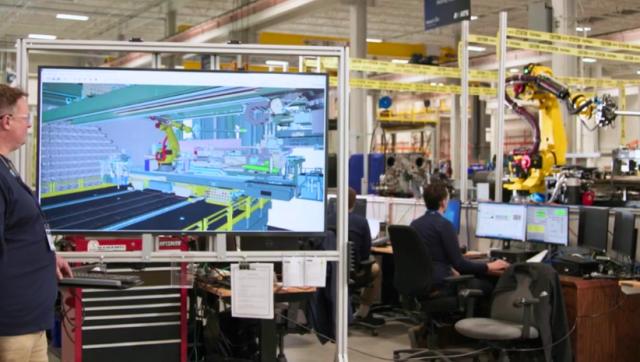
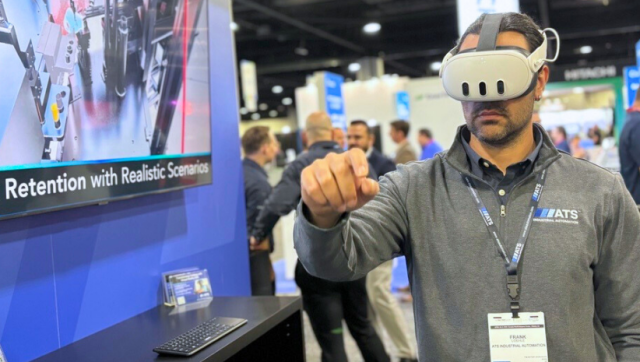
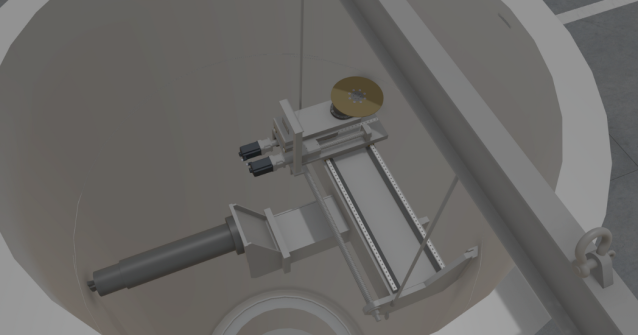
- Validate cycle times through process simulation.
- Identify manual steps that limit performance.
- Reduce assembly and test complexity through DFMA.
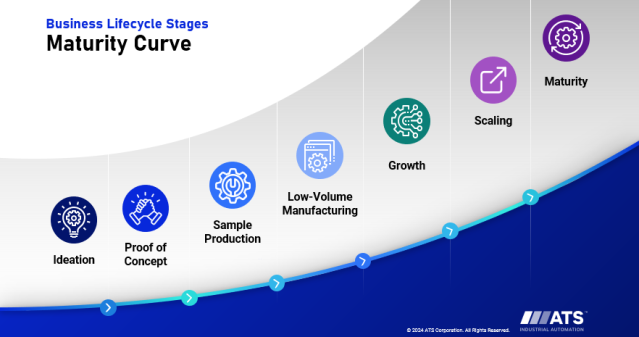
Early planning reduces delays, lowers cost of change, and improves efficiency as production scales.
Reliability Engineering
Reliability engineering improves manufacturing performance by identifying line constraints before downtime occurs. Applying reliability engineering helps with:
- Identifying high-risk components and processes.
- Defining preventive maintenance strategies based on failure data.
- Reducing unplanned downtime during critical production periods.
Lifecycle Management
Asset lifecycle management connects design, production, testing, and service data. Managing assets and processes across the lifecycle improves OEE by:
- Reducing startup losses during new product introductions.
- Aligning maintenance strategies with equipment usage.
- Improving spare parts planning and asset utilization.
Standardized Training and Work Instructions
Standardized training and digital work instructions reduce cycle time variability and quality losses. In drone assembly, effective training supports:
- Reduced operator-dependent performance losses.
- Improves first-pass yield.
- Accelerating ramp up for new technology.
Targeted Automation
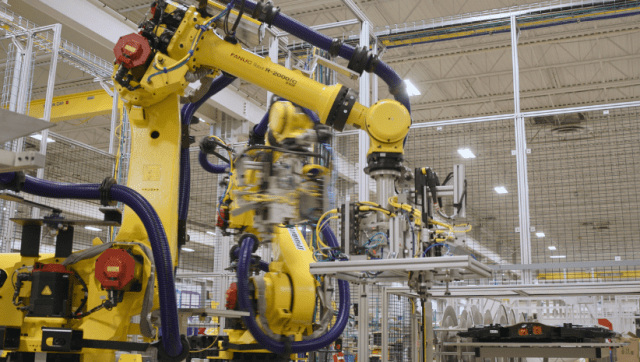
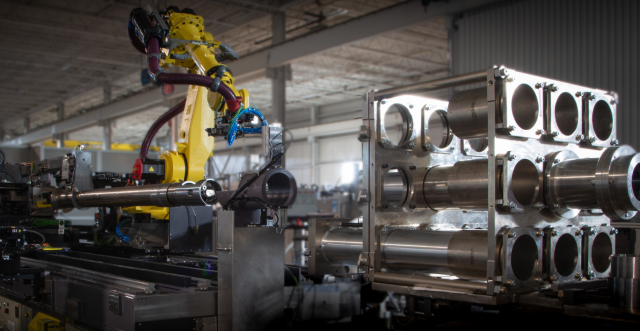
Moving from manual to automated processes improves performance and quality when applied strategically. In drone manufacturing, this often includes:
- Automated fastening and torque verification.
- Vision inspection for alignment and defect detection.
- Automated test stations.
Integrated Testing and Validation
Testing and validation directly affect OEE. Integrating testing earlier in the process supports:
- Earlier detection of defects before value-added steps.
- Reducing warranty costs and product recall risk.
- Supporting process capability development.
FAQs
How Do You Improve OEE in Drone Manufacturing?
Reducing changeover time, standardizing processes, and validating performance before scaling production improves stability.
How Does Testing Impact OEE Performance?
Testing improves quality rates by identifying defects earlier, reducing rework and scrap losses.
Why Does Low Tech Manufacturing Reduce OEE?
Low tech systems limit visibility into downtime, cycle time, and defects, making loss reduction difficult.
Why Does Limited Visibility Reduce OEE?
Without clear production data, teams struggle to identify downtime, bottlenecks, and recurring disruptions.
How Does Reliability Engineering Support OEE Improvement?
Reliability engineering reduces unplanned downtime and improves asset performance through structured preventive maintenance strategies.
What Role Does Pre-Automation Play in OEE?
Pre-automation identifies mechanisms to stabilize processes early, reduces startup losses, and supports consistent production performance.
Sustaining OEE Improvement in Drone Manufacturing
Improving OEE requires focus on real production constraints. Identifying one limiting factor and addressing it through maintenance, process design, or testing establishes a repeatable path to improvement.
Aligning design, production, and validation activities supports stable performance as product variation increases. Over time, this approach reduces losses, improves process capability, and supports consistent output.
Working with an automation partner who understands variable products, quality compliance, and lifecycle management helps teams reduce losses faster and build a foundation for continuous improvement as drone programs evolve. Contact us today to get started.
Every project is unique. Allow us to listen to your challenges and share how pre-automation can launch your project on time.

Ryan Tavares
Director, Pre-Automation Services
ATS Industrial Automation
For over 20 years, Ryan has helped top-tier manufacturers and industry innovators transform their operations through automation and process optimization. Ryan empowers manufacturing businesses to enhance efficiency, improve product quality, and scale production to drive sustainable growth and maximize returns.