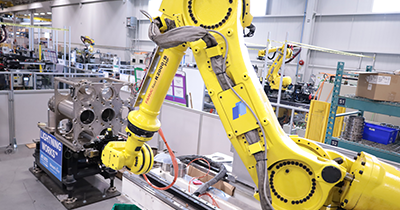


Manufacturing programs used to produce unmanned aerial systems and drones often operate under constant pressure. Technologies tend to evolve quickly, while product lifecycles continue to shorten. At the same time, production volumes can shift based on funding, program maturity, or changing mission needs. In many cases, manufacturers still rely on low-tech or legacy processes that struggle to keep pace with these combined demands.
Pre-automation offers a structured approach to modernize drone manufacturing without forcing early commitments to fixed automation. By strengthening process capability, validating designs earlier, and better connecting research and development to production, pre-automation can help improve cycle time, test readiness, and overall manufacturing confidence, while still preserving flexibility as programs evolve.
The Aerospace and Drone Terrain Is Shifting
Drone manufacturing operates within a distinct set of constraints. Programs often need to support rapid innovation while also maintaining strict quality, traceability, and compliance requirements. Designs for drones and unmanned systems frequently change before manufacturing processes fully stabilize, which can introduce uncertainty across the production environment.
Legacy production environments create friction when:
- Manual processes limit repeatability
- Test equipment does not reflect real operating conditions
- R&D outputs do not align with manufacturing capability
- Process risks remain undiscovered until late into the builds
These challenges can make it difficult to scale with confidence or respond quickly to program changes.
Why Pre‑Automation Matters in Drone Manufacturing
Pre-automation focuses on validating processes, tooling, and test strategies before teams commit to full automation investments. This approach tends to fit drone programs particularly well, especially when designs continue to evolve and production rates remain uncertain.
Pre-automation helps drone manufacturers:
- Modernize low-tech processes without locking designs too early
- Reduce cycle time through early process refinement
- Keep pace with changing technologies and evolving designs
- Strengthen process capability before scaling production
- Align R&D outputs with manufacturing reality
Early validation often reduces technical and schedule risk, while also improving downstream execution and decision-making.
Supporting R&D Through Pre-Automation
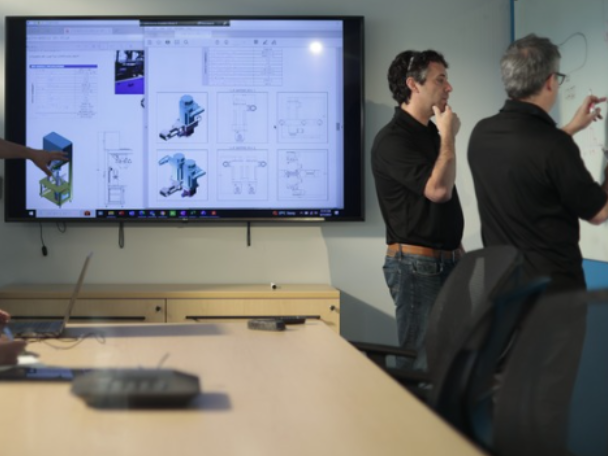
Research and development teams tend to benefit when manufacturing feedback arrives earlier in the development cycle. Pre-automation helps connect prototypes to production-intent processes, which can reduce redesign cycles and limit late-stage surprises.
Clear automation roadmaps also help teams plan scalable transitions that align with program maturity. When design for manufacturability and assembly (DFMA) considerations are considered earlier, product designs are more likely to reflect realistic production constraints, which supports greater simplicity and stability as programs move forward.
Over time, this approach can help reduce launch delays and ease scaling challenges.
Manual To Automated Technology Transitions
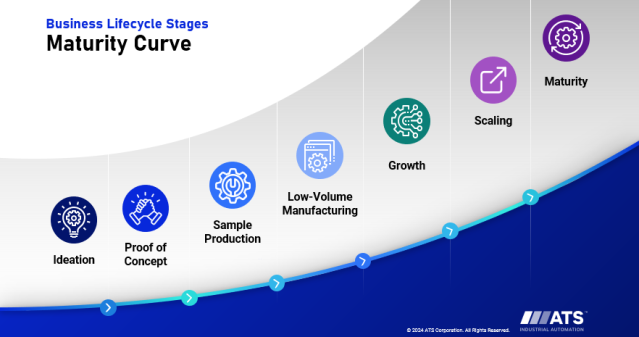
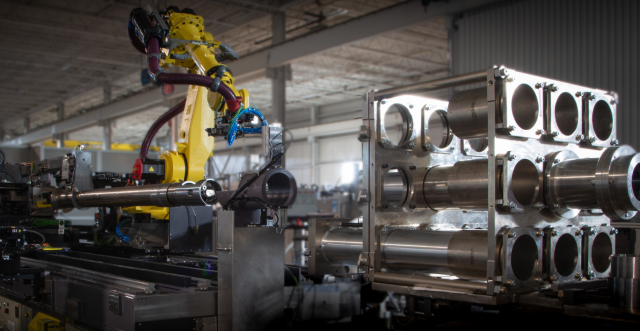
Many drone programs begin with manual or semi manual processes. Pre-automation supports more controlled transitions by stabilizing these processes first, then identifying where automation is likely to deliver the most value.
- Technical risk assessments identify process gaps early, reducing uncertainty.
- Proof of principle studies validate feasibility before capital investment.
This measured progression allows teams to learn, adjust, and refine before committing to full automation.
Make Manufacturability Excellence Repeatable
Repeatable manufacturing depends on clear acceptance criteria and well-defined process limits. When teams document how parts are expected to be assembled and function, production variation tends to decrease. This shared understanding also improves alignment across engineering, manufacturing, and quality functions.
Digital Twin and System Validation
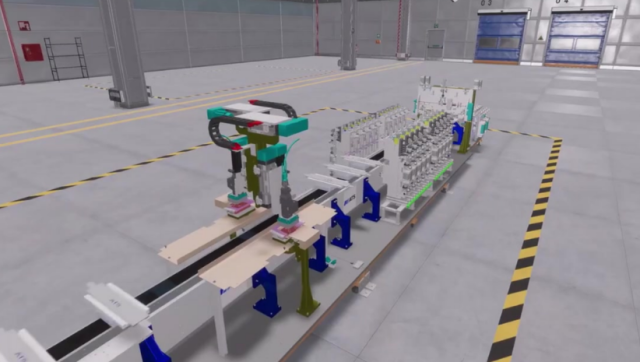
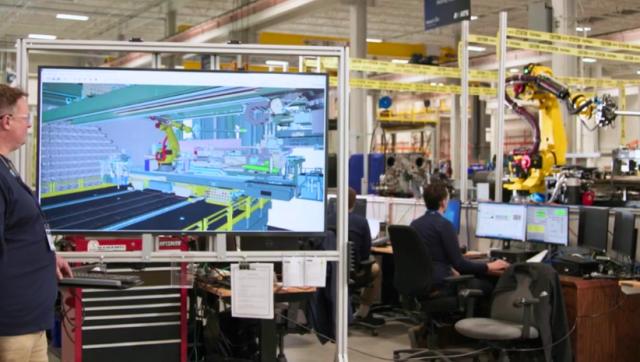
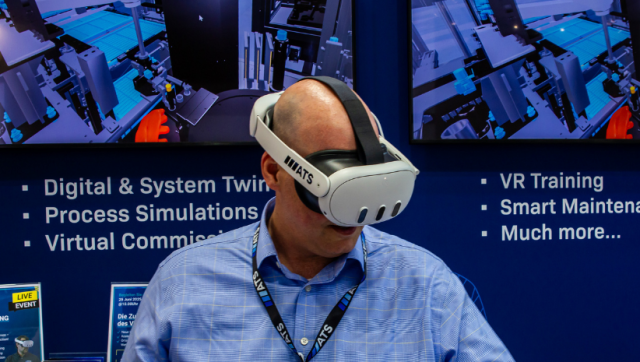
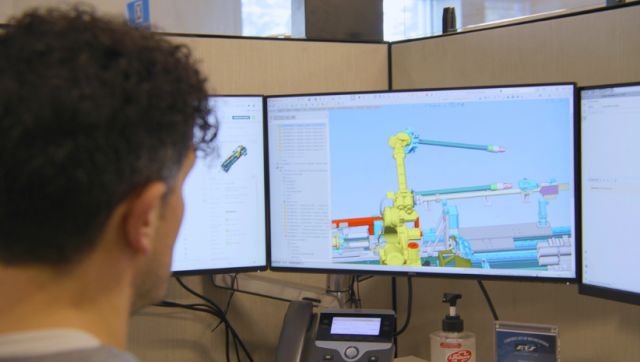
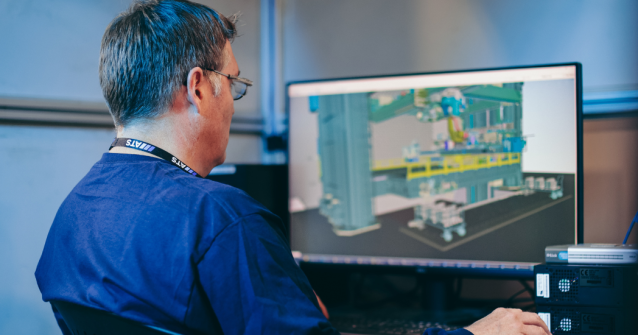
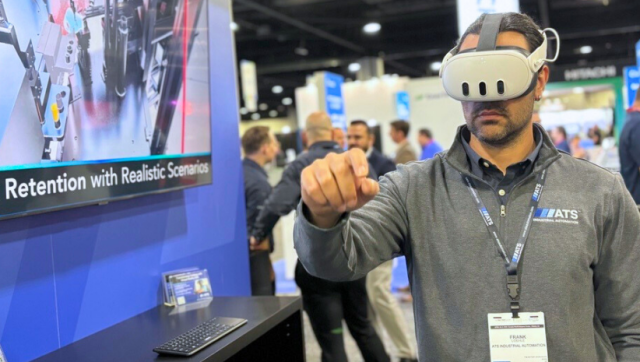
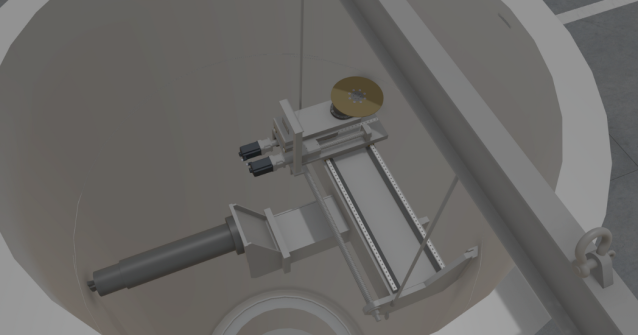
Digitalization tools allow teams to evaluate assembly sequences, tooling access, and test flow before physical builds begin. Early digital validation often shortens iteration cycles and reduces late design changes.
System twins simulate entire production environments, including machines, controls, and test stations. This level of visibility helps improve confidence during scale-up and changeover activities.
Virtual commissioning further supports this effort by allowing teams to test control logic and system behavior before installation.
Gain Reliability Through Precision Manufacturing
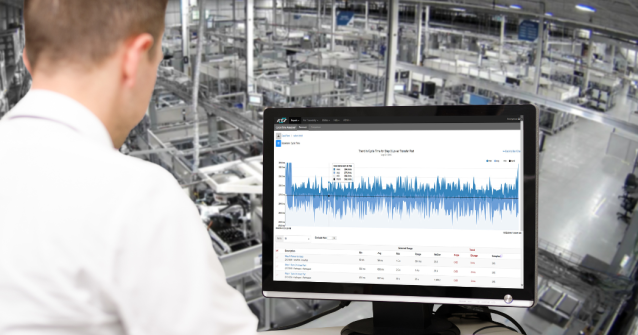
Precision manufacturing relies on consistent inputs and verified outputs. Early in-process testing strategies reduce downstream quality risk, particularly for flight-critical components where variation can carry greater consequences.
FAQs
What Is Advanced Manufacturing for Drone Applications?
Advanced manufacturing combines digital tools, validated processes, and scalable automation to support complex drone products with high reliability requirements.
Why Is Strategic Design Critical in Drone Manufacturing?
Early design decisions define manufacturability, test strategy, and scalability. Pre-automation reduces late changes by validating these decisions early.
What Enables the Precision Required for Drone Manufacturing?
Precision comes from stable processes, verified tooling, and early testing strategies supported by simulation and digital twins.
How Do Manufacturers Transition from Prototype to Certified Production?
Pre-automation bridges this gap by validating processes, test equipment, and system behavior before scaling.
Building a Smarter Path Forward for Drone Manufacturing
Drone manufacturing programs tend to perform best when production systems evolve at a pace that matches the technology they support. Pre-automation provides a practical way to modernize low-tech environments, reduce cycle time, and strengthen process capability without overcommitting to fixed automation too early.
By combining early validation, digital twins, and structured transitions from manual to automated processes, drone manufacturers can improve readiness across research and development, production, and testing, while still maintaining flexibility for future programs.
Download our Free eBook to learn more about how pre-automation can be support your product development.

Ryan Tavares
Director, Pre-Automation Services
ATS Industrial Automation
For over 20 years, Ryan has helped top-tier manufacturers and industry innovators transform their operations through automation and process optimization. Ryan empowers manufacturing businesses to enhance efficiency, improve product quality, and scale production to drive sustainable growth and maximize returns.