- Industries
- Capabilities
- Technologies
- Service
- Resources


Successful assembly automation depends on how each manufacturing process performs within the production line. Materials, tolerances, tooling, cycle time, inspection requirements, and surrounding operations all influence final results.
At ATS Industrial Automation we utilize our 45+ years of automated manufacturing and testing experience to help evaluate your product, establish process parameters, design tooling and fixtures, and validate high-risk operations. We then integrate material handling, controls, inspection, testing, and traceability into one coordinated assembly system.
This approach supports stable production across dispensing, joining, pressing, welding, soldering, inspection, testing, and other complex assembly operations.
Address Assembly Process Challenges Before Production
Every process station must meet its quality and cycle-time requirements while staying coordinated with upstream and downstream operations. Early process development helps reduce technical risk before full system integration.

Validate Processes Before Production
A process developed on a sample or benchtop fixture still may not be able to scale to meet production requirements for quality, repeatability, and cycle time. Proof-of-principle studies, prototype tooling, and process trials help establish a stable operating window before the process moves into line integration.

Managing Product & Material Variation
Part tolerances, surface conditions, material properties, adhesive viscosity, and component geometry may affect process performance. Tooling, recipe controls, sensing, and inspection need to accommodate these variables while maintaining consistent production results.

Preventing Process Bottlenecks
Dispensing, welding, pressing, inspection, and testing processes need to support the line’s target takt time. Station balancing, material flow, buffers, and equipment recovery strategies reduce the risk of individual processes restricting overall throughput.

Maintaining Quality at Production Speed
Higher production rates leave less time to identify issues such as misalignment, incomplete bonds, weak welds, surface defects, or missing components. In-process monitoring and inspection provide earlier detection, allowing quality issues to be identified closer to their source.

Plan for Product Changes
New product variants may require changes to fixtures, motion paths, process parameters, inspection methods, and testing requirements. Modular tooling and recipe-based controls provide flexibility to accommodate planned variants and evolving production requirements.

Coordinating Multiple Engineering Disciplines
Materials, tooling, controls, robotics, safety, inspection, and testing decisions are closely connected. Coordinating these disciplines during process development reduces the risk of conflicts emerging during system build and commissioning.
Integrated Assembly & Processing Capabilities
ATS Industrial Automation develops each manufacturing process as part of the complete production system. Our teams combine process knowledge, tooling, material handling, controls, inspection, and testing to support repeatable and scalable production.
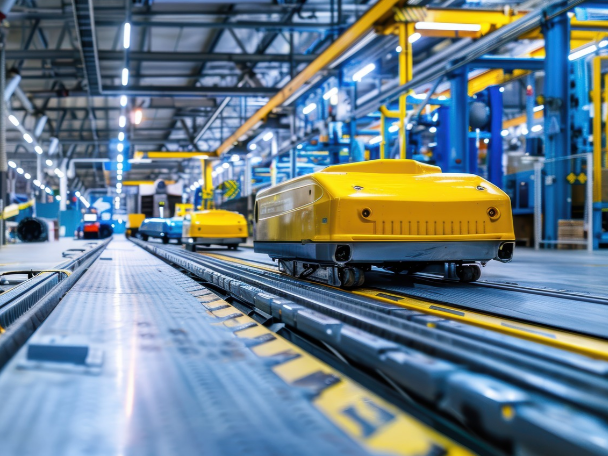
AGV Integration
Automated guided vehicles support the movement of components, work in progress, tooling, and finished products. ATS integrates AGVs with production equipment, controls, safety systems, and material flow strategies to support coordinated line operation.
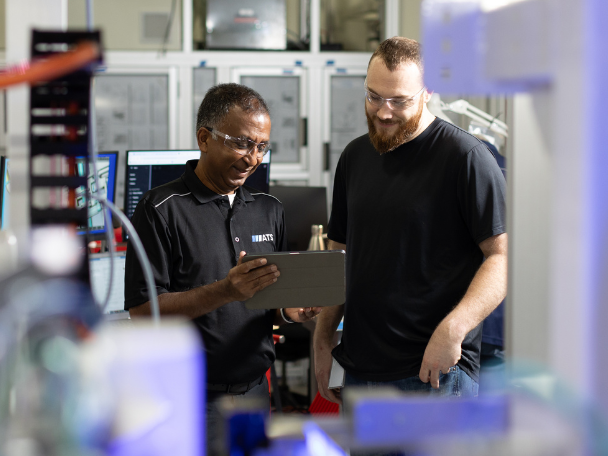
Bar Code Production
Enhance operations with barcode production, grading, and reading solutions integrated seamlessly by ATS. High-quality, reliable barcodes ensure seamless data capture.

Dispensing
Material properties, part geometry, bead profile, temperature, and dispensing speed all affect application quality. With expertise in dispensing and material science, we help manufacturers choose the best dispensing method and technologies for their applications.
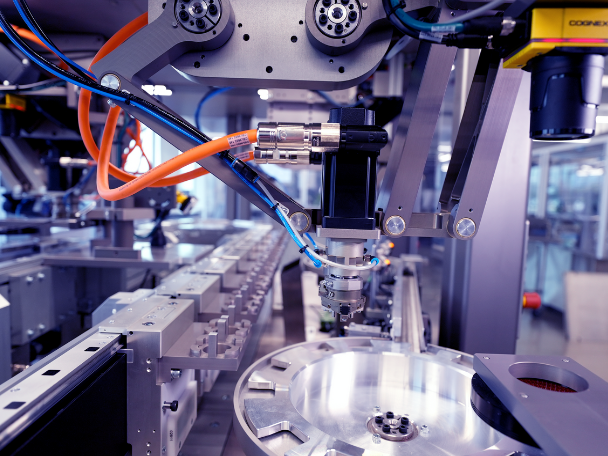
High Speed Assembly
With over 3,000 assembly systems in operation, we are leaders in high-speed assembly. Our configurable, scalable assembly asset platform accommodates one or multiple products for maximal utilization. Discover the benefits of an automated, modular digital assembly platform that can adapt to your requirements while providing speed, precision, and versatility.
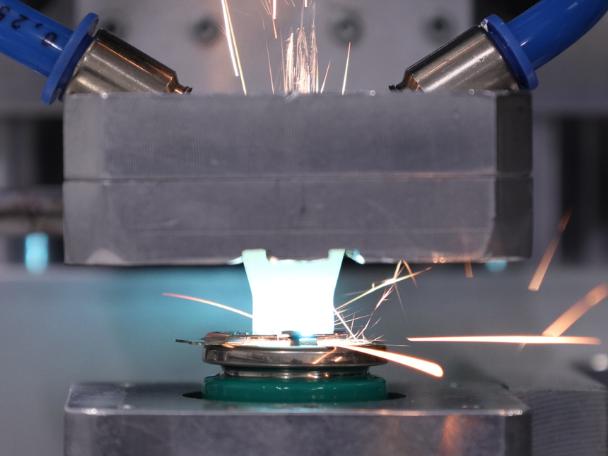
Laser Welding
Weld quality depends on material selection, joint design, part presentation, clamping, laser parameters, and motion control. ATS develops these elements together and integrates process monitoring and inspection to verify weld quality during production.

PCB Handling & Soldering
Printed circuit board (PCB) assembly requires controlled handling, accurate positioning, and stable soldering parameters. ATS integrates PCB transport, component protection, soldering, inspection, and testing into automated assembly systems for automotive, electronics, and industrial applications.
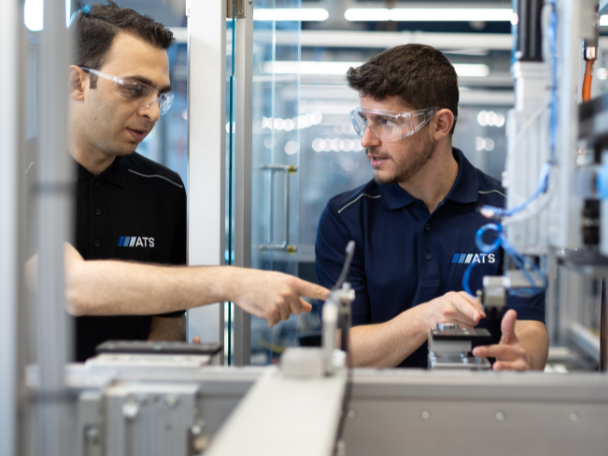
Pin Pressing & Staking
Pin pressing and staking operations require accurate alignment and controlled force. ATS combines part presentation, tooling, servo control, force and distance monitoring, and inspection to verify each assembly operation.
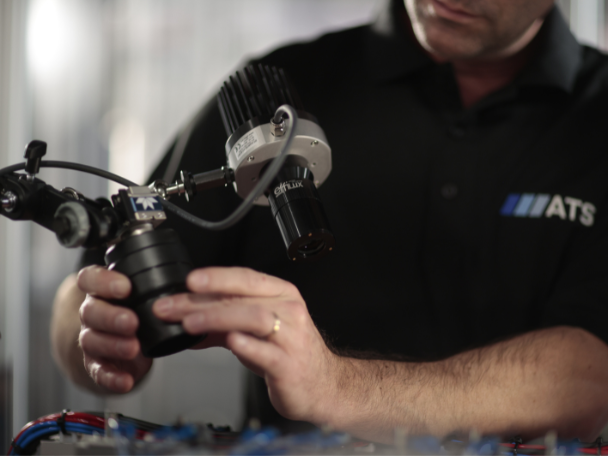
Profilometry
Non-contact profilometry measures surface height, shape, flatness, bead geometry, and other product features. ATS integrates profilometry into assembly lines to inspect components and process results without interrupting production flow.
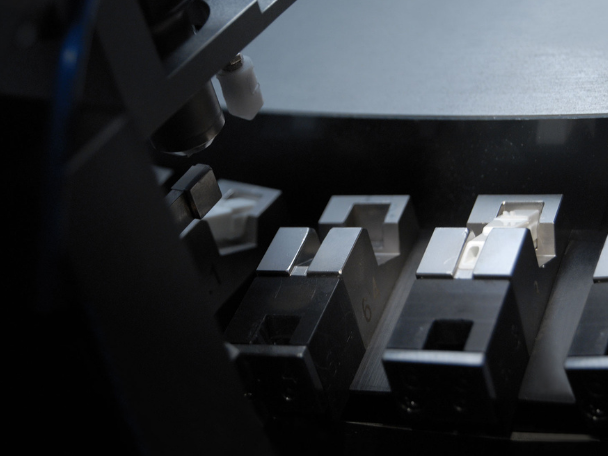
Ultrasonic Welding
Ultrasonic welding supports fast joining of compatible plastics and metals. ATS evaluates joint design, material behaviour, tooling, energy delivery, and process monitoring before integrating the operation into the complete assembly sequence.
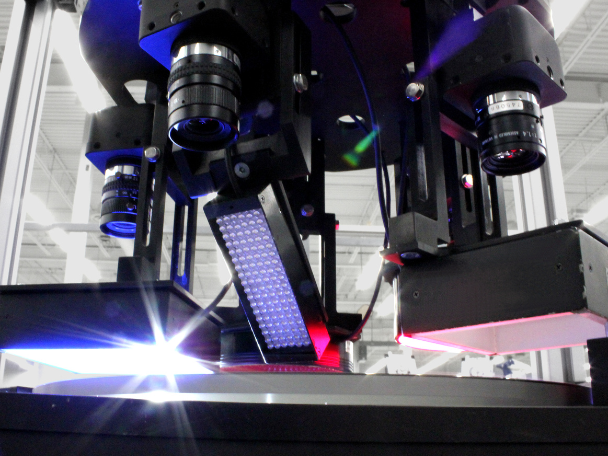
Vision
Vision systems support part location, robot guidance, measurement, defect detection, and assembly verification. ATS selects and integrates cameras, lighting, optics, software, and handling methods based on the application and production environment.
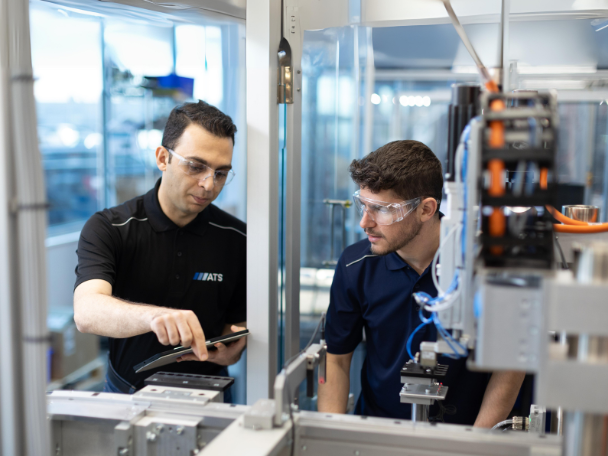
Vane Blade Insertion
Vane blade insertion requires accurate orientation, controlled handling, and precise placement. ATS integrates feeding, alignment, insertion, and verification processes to support consistent fluid transfer pump assembly.
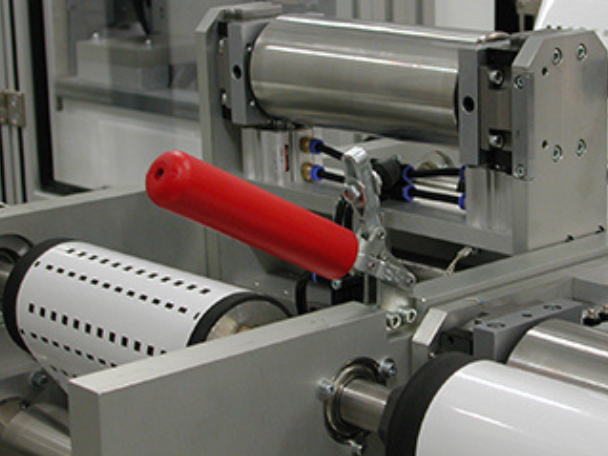
Web Handling
Web-based materials require controlled tension, alignment, speed, and positioning throughout production. ATS integrates unwinding, feeding, tracking, processing, inspection, and rewinding operations to protect material quality and maintain process stability.
Build a More Stable Assembly Process
Integrated process development addresses quality, throughput, traceability, and maintainability before equipment enters production.

Reduce Technical Risk
Validate high-risk processes, tooling concepts, and product interactions before committing to the complete production system.
Improve Product Quality
Control force, position, temperature, motion, material delivery, and other critical parameters while inspecting results during assembly.

Increase First-Pass Yield
Identify defects near their source and prevent non-conforming components from continuing through to additional value-added operations.

Support Production Targets
Balance process time, part movement, buffers, inspection, and equipment recovery to support the required production rates.

Simplify Product Changeovers
Use adaptable tooling, stored recipes, and modular process stations to support product variants and changing production requirements.

Connect Production Data
Link process parameters, inspection results, and traceability records to support troubleshooting, quality reporting, and continuous improvement.
Build Your Assembly Process for Scalable Production
Move from a validated process to a production-ready assembly system. ATS Industrial Automation works with manufacturers to establish process requirements, validate critical operations, and integrate them into a line designed to meet your required quality, throughput, and production volumes.

