

Asset management programs underpin operational reliability and cost control, yet many organizations struggle to achieve maturity despite significant investment in technology and processes. Rising maintenance costs, difficulty recruiting skilled technicians, and challenges with knowledge transfer all increase risk and reduce asset performance.
With infrastructure systems spanning thousands of assets across facilities, utilities, and processes, the complexity is substantial. Every asset carries inherent risks and failure modes that can disrupt operations if not managed effectively.
The question is simple: Is your asset management program mitigating these risks, or operating in the danger zone?
The Challenge: Managing Risk Across Complex Asset Systems
A site’s infrastructure system is built over years of capital projects handed over to operations. Assets across Facilities, Utilities, and Processes often number in the tens of thousands, each with components and sub-components that carry an inherent risk profile.
The objective of an asset management program is to address these risks based on likelihood, severity, and operational impact.
Automation equipment manufacturers identify many of these risks in maintenance manuals, but real-world conditions demand more than generic recommendations. Effective programs evolve to include:
- Asset criticality which ensures maintenance, is prioritized from most to least critical.
- Asset monitoring for early detection of issues.
- Maintenance programs tailored to criticality and operating context.
- Failure Mode and Effect Analysis (FMEA) or similar methodologies for prioritization.
These measures reduce inherent risk to an acceptable level, known as residual risk. Without them, vulnerabilities persist, increasing the likelihood of failures and downtime.
Why Measuring Residual Risk Is Critical
Quantifying residual risk is essential for developing a defensible mitigation plan. Many organizations assume existing procedures are adequate; however, operational assessments often uncover gaps in maturity. Using frameworks such as ISO 55000, programs are rated on a continuum from Innocent to Excellent. A significant proportion of programs fall within Aware or Developing—far from the optimized state required for sustainable reliability.
Reliability Engineering Studies: A Proven Approach
The primary objective of any asset management program is confirming that operating, monitoring, and maintenance procedures effectively address inherent risks across the asset base, leaving only an acceptable level of residual risk. Residual risk represents the vulnerabilities that remain after preventive and preventive measures—quantifying it is the basis for targeted mitigation.
Without understanding residual risk, organizations cannot prioritize investments or optimize maintenance strategies. Measuring residual risk supports:
- Capital planning: Highlighting assets requiring near-term replacement or upgrades.
- Maintenance optimization: Adjusting strategies to reduce downtime and extend asset life.
- Cost control: Aligning operating and capital expenditures with business objectives.
Leveraging Existing Practices
Building on current successful asset management practices accelerates transformation and help achieve reliability goals faster. One proven method is the State of Good Repair (SGR) analysis, widely used in sectors such as transit to identify and prioritize infrastructure recapitalization.
How SGR Analysis Works
The process begins by reviewing the master asset list and categorizing assets by boundary—Facilities, Utilities, and Processes. Historical data is then analyzed, including:
- Installation date
- Mean Time Between Failure (MTBF)
- Mean Time to Repair (MTTR)
- Work order count and type
- Maintenance, Repair, and Operations spending over the past five years
Additional considerations include useful life expectancy, obsolescence, and single point of failure status. These factors are combined into a composite score using a simple scale, creating a clear view of residual risk across the asset base.
Visualizing Residual Risk
Composite scoring highlights residual risk levels that can be visualized as:
- Red: High risk—address through capital projects and maintenance strategy optimization (Years 1–2).
- Yellow: Moderate risk—schedule for medium term action (Years 3–5) term action (Years 3–5).
- Green: Low risk—can be deferred beyond Year 5.
This prioritization ensures resources are directed where they have the greatest impact.
Protecting Capital Investments
Understanding how assets reached their current condition is essential. Gaps in the asset management program, such as insufficient maintenance or lack of monitoring, accelerate deterioration and increase total cost of ownership. Addressing these gaps protects capital investments and helps assets achieve or exceed their useful life.
The Big Picture: Linking Maintenance and Capital Strategies
An effective asset management program balances operating expenses and capital investments to minimize total cost of ownership while achieving useful life expectations. Deficiencies in either area can lead to overspending or premature asset failure.
Applying methodologies like DMAIC (Define, Measure, Analyze, Improve, Control) helps organizations:
- Measure program maturity and residual risk.
- Analyze maintenance and replenishment investment strategies.
- Implement improvements through a prioritized roadmap.
A sustainable asset management program requires understanding the interdependency between capital investment and operating investment:
- Capital investment defines operating investment
Infrastructure quality and equipment selection set the baseline for operating costs. Poor capital planning often results in higher maintenance demands and reduced reliability. - Operating investment optimizes capital investment
Effective maintenance programs and monitoring strategies protect capital assets, extend useful life, and reduce the need for premature replacement.
Capital Investment Considerations
- Annual baseline capital cost as a percentage of Replacement Asset Value (RAV)
- Asset useful life effectiveness
- State of Good Repair backlog
- Site master plan
- Long‑term capital planning
- Capital project engineering standard
Operating Investment Considerations
- Annual asset management cost as a percentage of RAV
- Zero-based budgeting model
- Asset management gap analysis
- Asset management improvement plan
- Risk-based reliability strategy
- Asset management standards
Analyzing these factors together enables a balanced strategy that minimizes total cost of ownership while achieving reliability and compliance objectives. This integrated approach aligns capital projects and maintenance programs, reduces risk, and improves performance across the asset lifecycle.
Key Metrics: Your Program’s Speedometer
Maintaining the status quo of maintenance and reliability puts organizations at risk of falling behind as the culture of continuous improvement should always be practiced. The next step is developing a comprehensive business case that connects targeted improvements to organizational objectives. Benefits Realization Planning ensures the value of an optimized asset management program is clearly understood across the organization by answering the question: What’s in it us?
A quantitative evaluation of current program performance—using tools such as an Asset Performance Analysis and a State of Good Repair Analysis—provides the foundation for defining the baseline. From there, leadership can establish the future state and build a roadmap for benefits realization.
One key metric is E1, defined in European Standard EN 15341: Maintenance KPIs. E1 measures maintenance cost as a percentage of Replacement Asset Value and functions as a program “speedometer.” When combined with recapitalization rates and maturity scores, E1 helps:
- Identify underspending or overspending.
- Correlate maintenance costs with program maturity.
- Strengthen the business case for improvement.
Benefits of Advancing Your Asset Management Program
Targeted improvements deliver measurable benefits across performance dimensions, including:
- Knowledge, skills, and abilities improvement
- MRO material cost optimization
- Regulatory compliance improvement
- Planning and scheduling compliance improvement
- State of good repair improvement
- Unplanned outage reduction
- Internal labor cost optimization
- Health, safety, and environment improvement
- External labor cost optimization
- Critical asset failure rate reduction
- Capital expenditure requirements optimization
- Asset class availability improvement
Together, these improvements reduce operational risk, strengthen reliability, optimize costs, and align asset management strategies with long-term objectives.
Asset Management Program FAQs
How do I know if my asset management program is in the danger zone?
Frequent unplanned downtime, rising maintenance costs, or the absence of a formal risk assessment process may signal concern. Operational assessments help establish maturity and residual risk.
What is residual risk in asset management?
Residual risk reflects the vulnerabilities that remain after maintenance and monitoring strategies are implemented. Quantifying it helps prioritize improvements and capital investments.
Why is asset monitoring important?
Monitoring provides real-time visibility into asset health, enabling early detection of issues and reducing the likelihood of costly failures.
How do reliability engineering studies improve asset management?
These studies evaluate asset history, failure modes, and performance data to identify risks and refine maintenance strategies, helping maximize asset uptime over its lifecycle.
What role does ISO 55000 play in asset management?
ISO 55000 provides a framework for assessing program maturity and guiding progress toward best practice asset management systems.
Where Do We Go From Here?
Maintaining the status quo is no longer viable for organizations managing rising costs and increasing reliability risks. The next step is building a business case that connects targeted improvements to organizational objectives. Benefits Realization Planning ensures stakeholders understand the value of enhancing asset management practices.
Leadership for reliability requires:
- Quantitative analysis of current program performance.
- Operational assessments to identify gaps and residual risk.
- A clear roadmap tied to measurable business outcomes.
Is your asset management program in the danger zone? Start with an operational analysis to quantify risk and set priorities. These tools provide the foundation for reducing vulnerabilities, optimizing costs, and achieving sustainable reliability.
Every project is unique. Allow us to listen to your challenges and share how automation can launch your project on time.

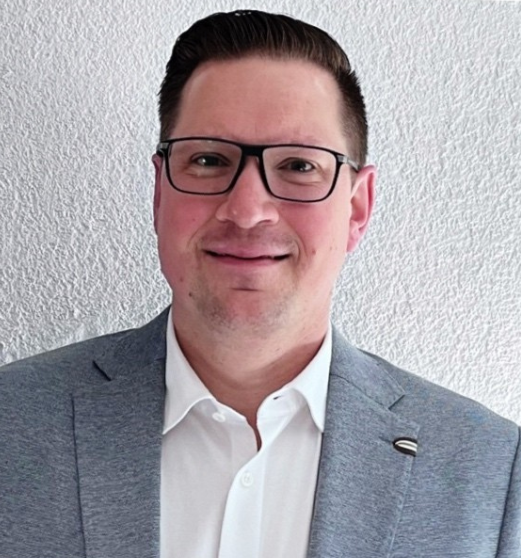
Rajiv Daljeet
Lifecycle Sales Manager
ATS Industrial Automation
Rajiv partners with manufacturers to strengthen asset management programs by connecting strategy, reliability engineering, and operations. He helps organizations quantify residual risk, align maintenance and capital investments, and build practical roadmaps that improve reliability and total cost of ownership.